Single-portion reheaters
If you usually heat one potato or another plated leftover, plate fit and simple timed controls may matter more than extra cooking modes.


For reheating one baked potato, start with a solo microwave that fits your usual plate and available worktop; a compact model can suit straightforward timed heating. Consider an inverter solo model if its size and controls suit you, without assuming it will heat a potato more evenly. Choose a grill or combination microwave if you also want to crisp or brown the skin.
If you usually heat one potato or another plated leftover, plate fit and simple timed controls may matter more than extra cooking modes.
If a thick potato is your regular meal, you may want more control over heating and room to check the food before serving. Panasonic describes even heating as a feature of its applicable inverter models, but that is a manufacturer claim, not a result to assume for every potato.
If you want browned or crisped skin as well as a hot centre, look at grill or combination functions rather than expecting a basic solo microwave to do both. Which? distinguishes these cooking functions from basic microwave heating.
Check your plate and worktop space first, then decide whether you need only reheating or also want crisping. Whatever the controls or output, follow GOV.UK food-safety guidance by checking that reheated food is steaming hot all the way through.
| Concern | What to check | Who this matters to |
|---|---|---|
| Plate fit and space | Measure your usual plate against the turntable and cavity, and check the appliance dimensions against your worktop. | If I heat one plated potato and have limited worktop space, I need the plate to fit without choosing a larger appliance than I can accommodate. Around 40% of consumers put plate fit and space first. |
| Thorough reheating | Compare the exact model's power levels and controls; check the potato is steaming hot throughout before eating. | When I reheat a thick potato, I want to check that its centre is hot rather than rely on an output figure alone. Roughly 30% of consumers prioritise thorough reheating. |
| Crisping and other cooking | Decide whether you will regularly use grill or convection functions, and check that your dish fits the usable cavity. | If I want crisp skin as well as reheating, I need a cooking function beyond basic microwave heating. Around 30% of consumers make crisping and broader cooking their main concern. |
A stated capacity does not tell you whether your dinner plate will fit or turn inside the cavity.
Measure the plate you use for a baked potato, then compare it with the exact model's turntable and interior dimensions.
Grill and convection functions address browning and other cooking tasks; they add controls you may not use for a routine leftover.
Choose a solo microwave if heating and defrosting are your regular tasks. Consider grill or combination functions if crisping or browning matters to you.
A warm exterior does not establish that a thick potato is hot through the centre.
Check that the food is steaming hot all the way through. GOV.UK food-safety guidance also says to reheat food only once.
The cited Panasonic solo models offer different sizes: the NN-ST21QWBPQ is a 20L, 800W model, while the NN-SD27HSBPQ is a 23L, 1000W inverter model.
The cited RHM1731B is a 17L, 700W solo model for buyers considering manual controls.
The cited MS23T5018AC/EU is a 23L solo model with touch controls and Quick Defrost.
These solo microwaves offer options for heating one plated potato, from 20L models to larger-capacity choices. Check your plate and available worktop space against the exact model before choosing; this selection does not include a grill or combination microwave for crisping the skin.
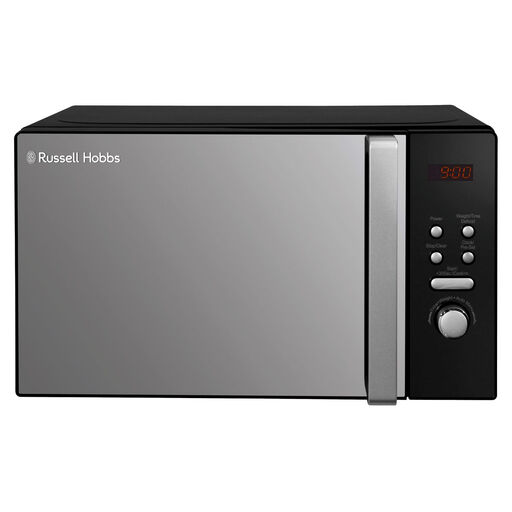 No image available
A 20L solo option to consider for one plated portion if your plate and worktop space suit the appliance.
The listed output is 800W, with five power levels. Check plate clearance before ordering.
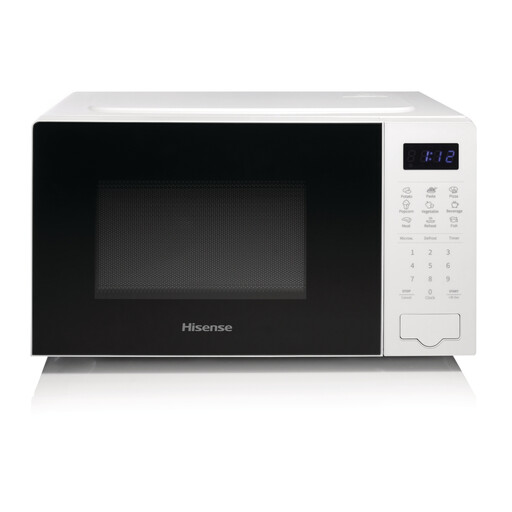 No image available
Consider this solo model for routine single-portion heating if its controls suit how you prefer to use a microwave.
Its listed output is 700W; the title also specifies auto defrost and nine cook menus. Confirm that your usual plate fits.
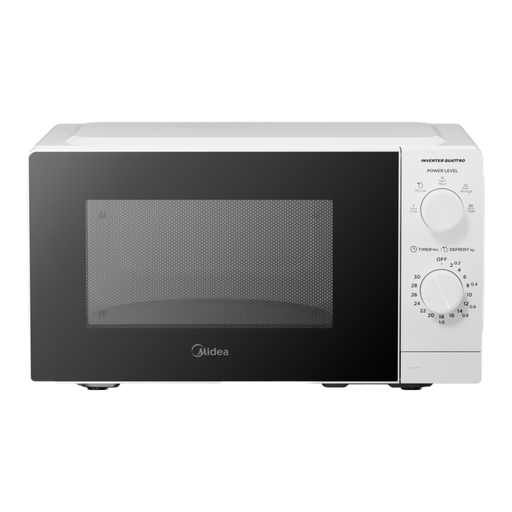 No image available
This model may interest someone who wants a 20L solo microwave with an inverter design while retaining manual controls.
Its title specifies 700W, MET Inverter Technology and an energy-saving mode. Confirm the turntable size and plate clearance; an inverter designation does not guarantee even reheating of a potato.
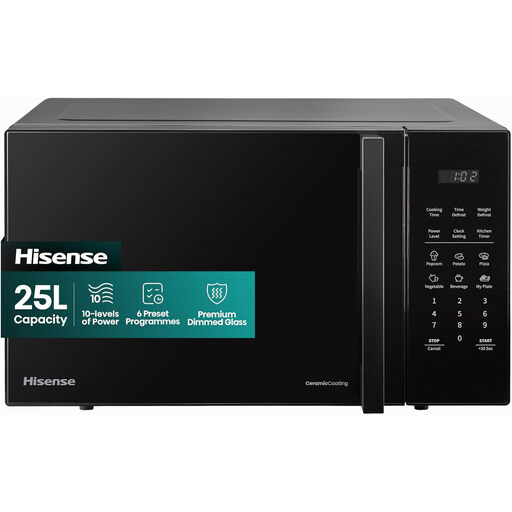 No image available
Consider this larger solo model if you want room for other dishes as well as a single potato, subject to plate and worktop fit.
The title specifies 900W, auto defrost and Smart Cook. Higher stated output does not guarantee a particular reheating result.
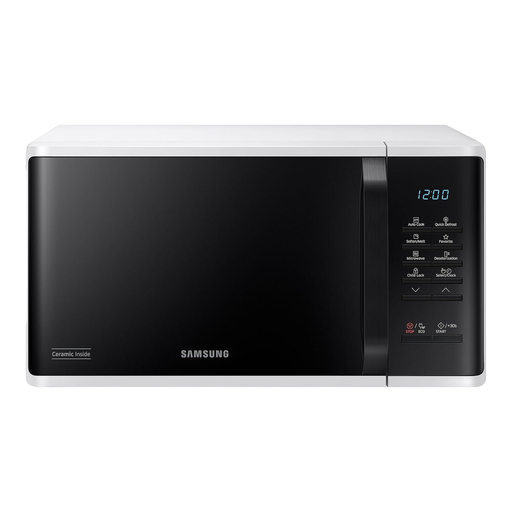 No image available
This solo model is an option if you want a 23L cavity and place value on the stated interior finish.
Its title specifies 800W and a Triple Distribution System; the feature name does not establish an even-heating result. Check turntable size, plate fit and the controls before choosing.
No: capacity alone does not establish plate fit. Compare your plate with the exact model's turntable and cavity; Russell Hobbs says its RHM1731B fits a round plate up to 11 inches, while Panasonic lists a 255mm turntable for the NN-ST21QWBPQ.
Not if your aim is simply to reheat the potato. If you regularly want browned or crisped skin, consider grill or combination functions instead; Which? describes basic solo microwaves as appliances for heating and defrosting.
No: an output figure alone does not guarantee that a thick potato will heat evenly or thoroughly. Check the model's controls and your plate fit, then make sure the food is steaming hot throughout. Panasonic's descriptions of even inverter heating are manufacturer claims.
Check that it is steaming hot all the way through, not merely warm on the outside. GOV.UK gives that advice in its food-safety guidance for businesses and says food should be reheated only once.