Small-kitchen bread defrosters
If you usually thaw one or a few slices, you need controls you can use for small portions and an appliance that fits your worktop. A larger cavity need not drive the decision unless your usual dishes require it.


For a few frozen bread slices, start with a solo microwave that has a defrost function and selectable power levels; a bread/cake programme is a useful shortcut if you defrost baked goods regularly, but it is not essential. Choose capacity around the other dishes you actually use, and do not treat wattage or an automatic setting as proof of good results: Which? reports that some microwaves struggle with defrosting.
If you usually thaw one or a few slices, you need controls you can use for small portions and an appliance that fits your worktop. A larger cavity need not drive the decision unless your usual dishes require it.
If you often defrost bread, rolls or cake, a food-specific setting may be more convenient than choosing the time and power yourself. Check that the programme appears on the exact model you plan to buy.
If the same microwave must also accommodate larger dishes and regular reheating, cavity and turntable size matter alongside bread-defrost controls. Those broader uses, rather than a few slices alone, give you a reason to consider a larger model.
For consumers choosing a microwave to defrost sliced bread, check how the exact model controls defrosting before deciding how much space you need for other dishes.
| Concern | What to check | Who this matters to |
|---|---|---|
| Controlled defrosting | Look for a defrost function and selectable power levels. If you want a shortcut, check whether the exact model offers a bread/cake category. | If I thaw individual slices, I want to check them before parts become warm while others remain frozen. Keeping defrosting under control would be the primary concern for around 46% of consumers. |
| Worktop space | Compare external dimensions and required ventilation space, as well as whether your usual plate fits. | When space is tight and I only need to heat small portions, I would rather check the appliance’s footprint than choose by cavity capacity alone. Compact everyday use would come first for roughly 36% of consumers. |
| Room for other meals | Check cavity and turntable size against your regular dishes, then check which defrost controls the model offers. | If I also reheat larger household portions, the microwave needs to accommodate those dishes, not just bread slices. Broader household use would be the main concern for about 18% of consumers. |
Rated output does not tell you how a particular microwave will handle a bread slice. Which? reports that some models struggle with defrosting.
Check the exact model’s defrost controls and any credible model-level testing available. During use, check the bread rather than leaving it through a long cycle without looking.
Panasonic’s 20L NN-ST22QBBPQ has auto defrost and five power levels, illustrating that a compact model can offer the controls needed for this task. A larger cavity is more relevant if your regular dishes need the room.
Measure your available worktop and compare it with the appliance’s external dimensions and ventilation instructions. Check that your largest regularly used dish fits before choosing extra capacity.
Samsung says its Power Defrost setting calculates a general time and power from food type and weight, but results can vary with actual conditions.
Select the appropriate category and enter the weight as instructed, then check the bread during defrosting. Adjust future use according to the model’s manual and the bread you are thawing.
The Joybuy-listed Daewoo SDA2085GE is described as freestanding and not for placement inside a cabinet or built-in unit. Its installation instructions matter independently of its capacity or defrost setting.
Check the installation and ventilation instructions for the exact microwave. Choose a built-in appliance only when the manufacturer specifies that installation type.
These product lines illustrate different controls and capacities to compare; a brand name alone does not establish how a particular microwave defrosts bread.
Panasonic offers both compact solo models and larger inverter models relevant to this choice.
The MS32DG4504ATE3 is relevant if selecting bread/cake as a defrost food type matters to you.
The RHM2076B provides an example of a compact solo microwave with selectable power and weight or time defrost options.
These solo microwaves include compact models with defrost controls and larger options for households that use the same appliance for other dishes. Choose by the controls and capacity you need; check the exact manual if a bread/cake programme or weight-based setting is decisive.
 No image available
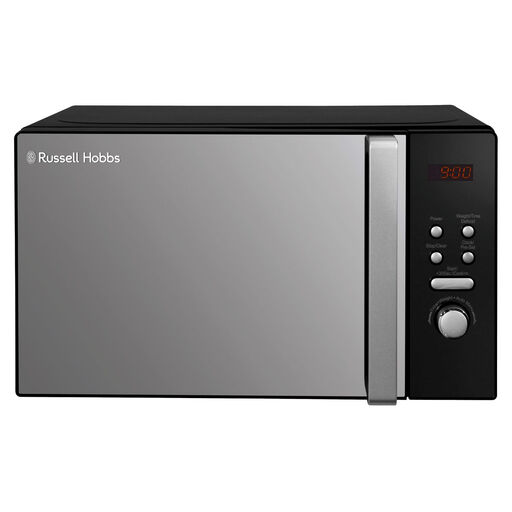
A compact-capacity option to consider if you mainly defrost a few slices and reheat smaller portions.
The product name specifies five power levels. If you want a bread/cake programme, confirm it in the RHM2063-AH manual; check the bread during defrosting rather than assuming a particular result.
 No image available
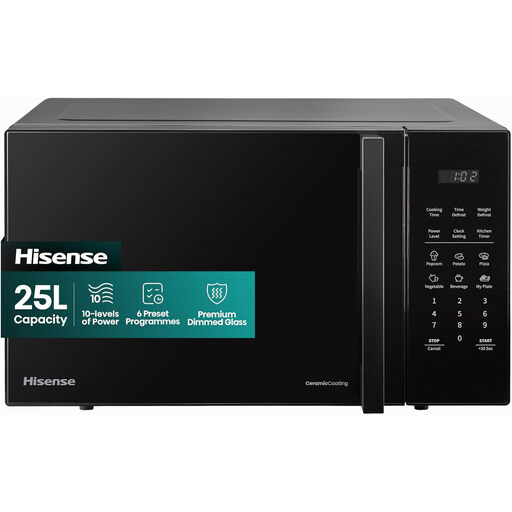
Consider the 25L capacity if your microwave also needs room for dishes beyond a few bread slices.
The product name specifies auto defrost. Check the H25MOBS7HUK manual if selecting bread/cake separately is important, and compare its external dimensions with your available space.
 No image available
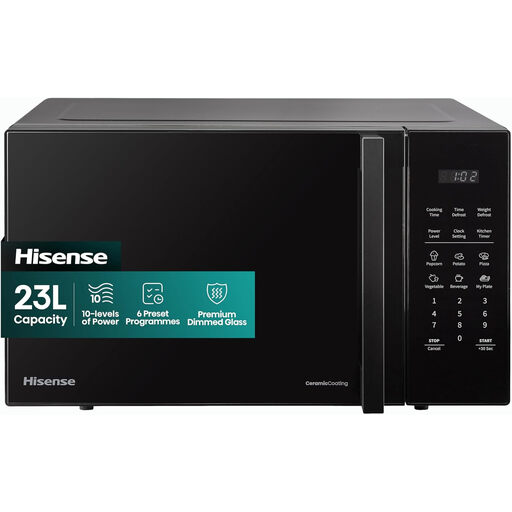
This 23L model is an option when bread defrosting is one of several everyday microwave tasks.
The product name specifies auto defrost. Check the H23MOBS5HUK manual for its food categories and the installation instructions for the space it needs.
 No image available
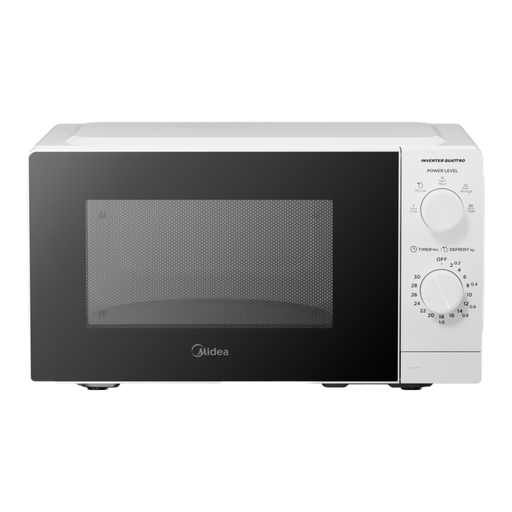
Consider this manual model if you prefer to control defrosting yourself in a 20L solo microwave.
The product name identifies MET Inverter Technology. Check the MMOP01MZ-WH manual for how its defrost setting works; the technology name alone does not establish the result for sliced bread.
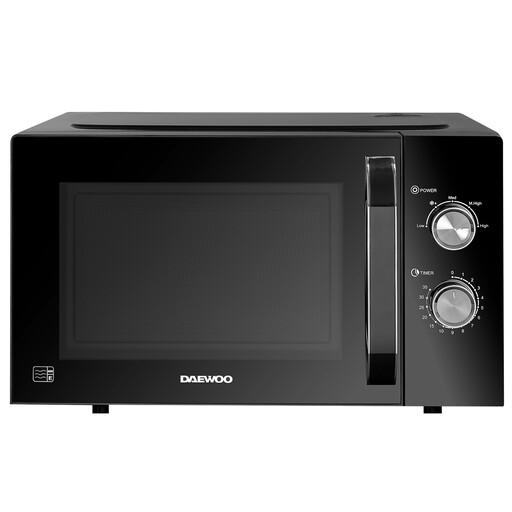 No image available
The 23L capacity is worth considering if you need the microwave for larger dishes as well as bread.
The product name mentions five power settings and both manual controls and auto defrost. Confirm how defrosting operates in the SDA2085GE manual before relying on automatic weight entry. This freestanding appliance must not be placed inside a cabinet or built-in unit.
Look for a defrost function and selectable power levels so you can choose how to run and check the cycle. A bread/cake category, such as the one Samsung lists for its MS32DG4504ATE3, can reduce the need to set the time yourself if you defrost baked goods often.
A 20L model can provide auto defrost and several power levels, as Panasonic’s NN-ST22QBBPQ illustrates. Check that your usual plate fits and that the appliance’s external dimensions and required ventilation space suit your kitchen.
Check the bread during the cycle rather than relying on the programme without looking. Samsung says its Power Defrost settings are general calculations based on food type and weight, and results can vary with actual conditions.
Only do so if the exact appliance’s installation instructions permit it. The Joybuy-listed Daewoo SDA2085GE, for example, is described as freestanding and not for placement inside a cabinet or built-in unit.