For warming prepared custard, start with a freestanding solo microwave whose power settings and cavity suit the serving vessel you intend to use. Consider a flatbed if a turntable restricts that vessel, or a combination microwave if you also need its cooking modes for the wider meal. Whichever type you choose, stir the custard during reheating and check that it is heated through before serving.
Who needs which type?
Hosts who only need reheating
If the microwave will warm prepared custard, sauces or leftovers rather than cook the meal, a solo model is the starting point. Electrical Safety First describes solo microwaves as appliances for simple heating and reheating.
Hosts using a large serving vessel
If you plan to warm custard in a wide bowl, jug or square dish, check the space the vessel can actually use. Turntable diameter matters for a rotating dish; Russell Hobbs describes its flatbed format as useful for shapes that can be awkward on a conventional turntable.
Hosts planning a wider microwave-assisted menu
If you also intend to grill, bake or air-fry other courses, a combination microwave is relevant. Panasonic lists those modes on its NN-CD58RSBPQ, but they are separate requirements from warming custard.
What matters when choosing?
For custard, check that you can control and interrupt reheating, then measure the serving vessel. Only make additional cooking modes a priority if you expect to use them for other food.
| Concern |
What to check |
Who this matters to |
| Controllable reheating |
Check the power settings and how easily you can pause heating to stir. |
If I am warming thick custard, I want to stir and check it between short intervals rather than leave it heating continuously; for around 43% of consumers, that control is the primary concern. |
| Serving-vessel fit |
Measure your microwave-safe bowl or jug against the turntable or usable cavity space, and check the appliance footprint. |
A wide jug or square serving dish needs room to fit and, on a turntable, rotate; vessel fit comes first for around 29% of consumers. |
| Cooking the wider meal |
Decide whether you will use grill, convection or air-fry modes, and check whether the appliance needs worktop space or built-in installation. |
If I want the same appliance to help cook other courses, reheating alone will not settle the choice; around 28% of consumers would make wider cooking capability their primary concern. |
Mistakes to avoid
-
Choosing by cavity capacity alone
A stated capacity does not tell you whether a wide bowl can rotate or a square dish will fit. Vessel shape is one reason to consider a flatbed.
Measure the microwave-safe vessel you will use, then compare it with the turntable diameter or interior dimensions before choosing a format.
-
Adding cooking modes just for custard
A combination microwave adds functions such as grilling and convection cooking, but those modes do not replace the need to control and stir custard as it reheats.
Start with a solo microwave if reheating is the main task; consider combination cooking when you also plan to use those modes for other dishes.
-
Heating custard without stirring or checking it
Food Standards Scotland advises checking that reheated food is heated all the way through. Its microwave guidance for childminders notes that food can be hot at the edges while remaining cold in the centre, and that stirring helps address this.
Stay nearby, heat in short intervals, stir thoroughly and check the centre before serving.
-
Using an unsuitable serving bowl
Decorative metallic trim can make an otherwise familiar bowl unsuitable for microwave use. Panasonic also cautions against microwaving glass containers with metallic decoration.
Choose a vessel clearly marked microwave-safe, avoid metallic trim and inspect glass or ceramic ware for damage before heating.
Brands to consider for these microwave types
Samsung
A reference point for freestanding solo microwaves: Samsung UK lists the MS23K3513AK/EU as a 23 L solo model.
- The cited model offers the straightforward solo format relevant to reheating.
- A solo model does not add grill, convection or air-fry modes for other courses.
Russell Hobbs
Its cited solo models offer a choice between a conventional turntable and a flatbed layout.
- Russell Hobbs lists a 27 cm turntable on the 23 L RHM2362S and describes the RHFM2363B flatbed as useful for square plates and casserole dishes.
- Check the external dimensions as well as vessel fit when choosing the flatbed format.
Panasonic
Relevant when the appliance will do more than reheat: Panasonic lists the NN-CD58RSBPQ as a combination model.
- The cited 27 L model combines a microwave with grill, oven and air-fry functions and has a stated 34 cm turntable.
- Those additional modes address wider cooking needs, not a requirement specific to warming custard.
Bosch
A reference for fitted kitchens: Bosch GB lists the CMA583MB0B as a built-in microwave oven with hot-air cooking.
- The cited model has a 44 L cavity and a stated maximum microwave power of 900 W.
- Its 454 × 594 × 570 mm installation dimensions make cabinet fit an essential check; built-in cooking capability is a separate need from custard reheating.
Joybuy solo microwaves
These freestanding solo models are choices for warming prepared custard and other foods. Compare their controls and the fit of your own microwave-safe serving vessel; the combination and built-in options discussed above serve different cooking or installation needs.
 No image available
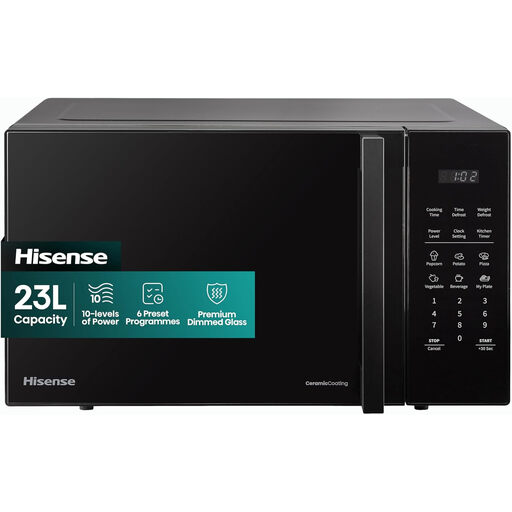
Hisense H23MOBS5HUK 23 L solo microwave, black
A solo option to consider if reheating is the main job; check how the supplied controls let you pause and stir custard.
- 23 L capacity and 800 W stated in the product name.
- Check the control type before ordering, as the available product details describe it differently.
- Measure your bowl or jug against the usable space rather than relying on capacity alone.
Joybuy
 No image available
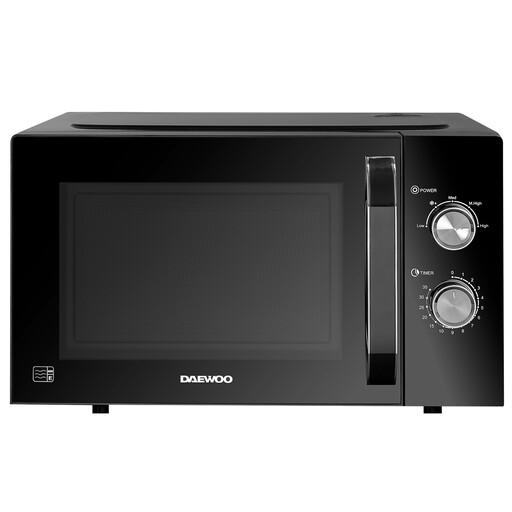
DAEWOO SDA2085GE 23 L solo microwave, black
Its manual controls and stated power settings are relevant if you want to adjust heating while warming custard.
- 23 L capacity, 800 W and five power settings stated in the product name.
- Check the turntable space against your serving vessel and allow for the required ventilation when positioning it.
Joybuy
 No image available
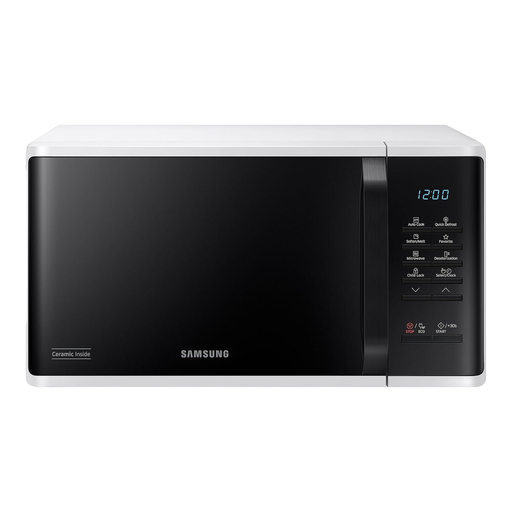
Samsung MS23K3513AW/EU 23 L solo microwave, white and black
A solo model to consider for prepared custard if your serving vessel fits and its controls suit your stirring routine.
- 23 L capacity and 800 W stated in the product name.
- Check the usable cavity space and how to interrupt heating before choosing it for a particular bowl or jug.
Joybuy
Frequently asked questions
Is a solo microwave enough to warm custard for guests?
Yes, if reheating is the main task and the microwave accommodates your serving vessel. Electrical Safety First describes solo microwaves as suitable for simple heating and reheating; choose controls you can use to interrupt heating and stir.
How should I warm custard in a microwave?
Warm it in a microwave-safe vessel in short intervals, stirring thoroughly and checking that it is heated through before serving. Food Standards Scotland advises care with reheated food because microwave heating can leave the centre cooler than the edges.
Can I use any glass or ceramic serving bowl?
No; use a vessel clearly marked microwave-safe, without metallic paint or trim. Panasonic warns that metallic decoration on glass containers can make them unsuitable, so check the vessel itself rather than assuming its material makes it safe to microwave.


