People who freeze bread in portions
If you thaw slices for breakfasts, sandwiches or prepared meals, focus on defrost controls and a timer you can adjust. Grill and convection functions matter only if you will use them for other cooking tasks.


If thawing a few slices and reheating food are the main jobs, start with a solo microwave that offers a defrost function and lower power settings. Consider a larger cavity if your batch-cooking dishes need the space; choose a built-in or combination model only if its installation or extra cooking functions meet a separate need. Check the controls, dish clearance, worktop space and model instructions before buying.
If you thaw slices for breakfasts, sandwiches or prepared meals, focus on defrost controls and a timer you can adjust. Grill and convection functions matter only if you will use them for other cooking tasks.
A compact solo microwave may suit small daily portions, provided your usual microwave-safe plate fits and the appliance has enough space around it for placement as directed by its manual.
If bread is only one part of your batch-cooking routine, compare the turntable and cavity with the dishes you actually use. A larger microwave is worth considering only if its exterior also fits your kitchen.
Start with the way you will thaw bread, then check whether your cookware and kitchen space call for a compact, larger or built-in appliance.
| Concern | What to check | Who this matters to |
|---|---|---|
| Controllable defrosting | Look for a defrost function, lower power settings and instructions for the portions you normally thaw. | If I thaw only a few slices, I want to check them before the edges become too warm. Around 42% of consumers put defrost control first. |
| Worktop and dish fit | Compare exterior dimensions and placement instructions with your worktop, then check the turntable against your plate. | When worktop space is tight, I need an appliance that fits without ruling out my usual plate; roughly 25% of consumers prioritise this fit. |
| Space for batch-cooking dishes | Check cavity capacity and turntable diameter against your larger microwave-safe dishes, as well as the appliance footprint. | I also reheat larger prepared dishes, so bread-sized capacity alone will not settle the choice. About 25% of consumers put broader cooking space first. |
| Built-in installation | Confirm the model's cabinet, ventilation, electrical and installer requirements before choosing an integrated design. | If I am planning a fitted kitchen, preserving worktop space may justify installation planning; around 8% of consumers make integration their primary concern. |
Maximum output does not tell you how much control you have over a small portion of bread. Panasonic advises reducing power for manual defrosting; its NN-ST21QWBPQ has settings down to 100W.
Compare the defrost controls and power levels, then read the exact model's instructions for the food and quantity you intend to thaw.
Panasonic lists a 255mm turntable for the 20L NN-ST21QWBPQ and a 288mm turntable for the 29L NN-SD35. Those dimensions matter if the microwave will also hold your larger dishes.
Measure your usual microwave-safe dish and intended location; compare both with the chosen model's turntable, cavity and exterior dimensions.
Electrical Safety First warns against unsuitable containers and advises against powering a microwave through an extension lead.
Use a container marked as microwave-safe, keep metal out of the microwave and follow the appliance instructions for connection to an appropriate wall socket.
A built-in microwave needs a compatible cabinet and appropriate ventilation. The Samsung MS22M8054AK/EU also calls for professional installation of that model.
Check the exact cabinet, electrical and installation requirements before choosing a built-in microwave.
Planning the cabinet and arranging installation add work that a freestanding countertop model does not require.
Its named solo models illustrate the choice between a compact bread-thawing appliance and more space for batch-cooking dishes.
The FFL023MW0B is a freestanding solo option for someone considering a 20L appliance.
The built-in MS22M8054AK/EU is relevant when an integrated kitchen layout is already part of the plan.
These solo microwaves cover compact bread-thawing setups and larger cavities for other batch-cooking tasks. Compare each model's controls and dimensions with your routine, and consult its instructions before relying on a defrost setting for sliced bread.
 No image available
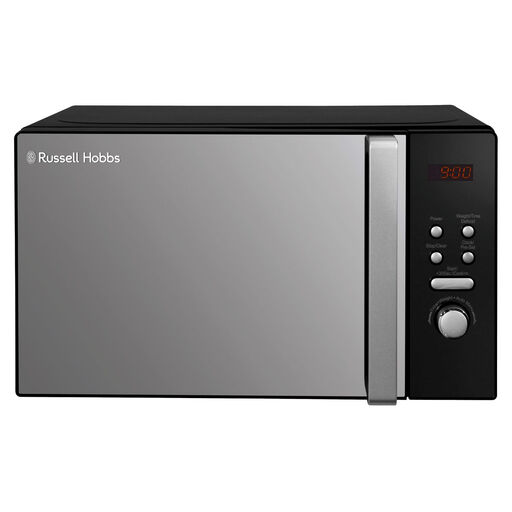
Consider this 20L model if you usually thaw small bread portions and need to assess a compact appliance for your worktop.
The title specifies 800W maximum output and five power levels. Check the model instructions for sliced-bread defrosting and confirm that your plate fits.
 No image available
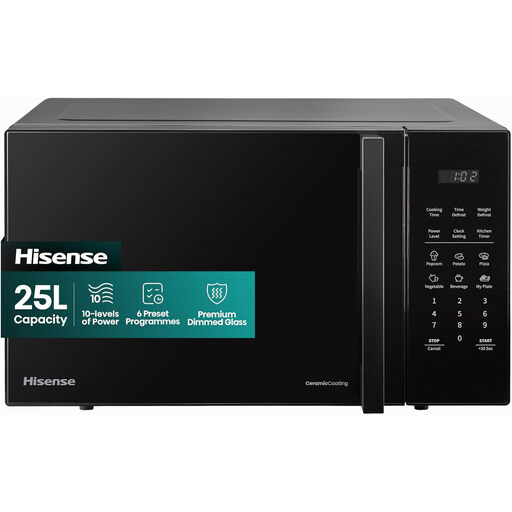
Consider its 25L cavity if you also use the microwave for batch-cooking dishes, subject to checking cookware and worktop fit.
The title specifies 900W maximum output and auto defrost. Check the manual for bread instructions and compare the appliance dimensions and power connection with your kitchen.
 No image available
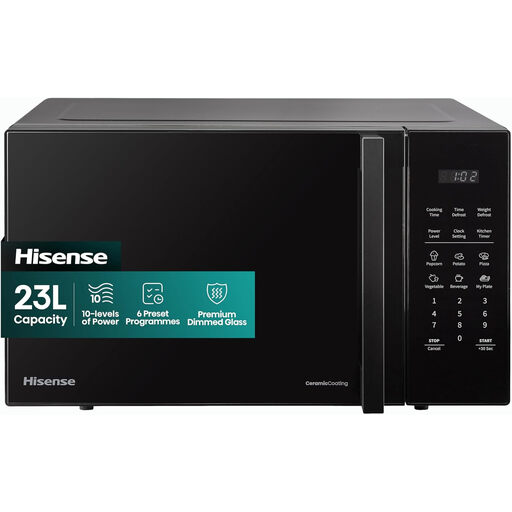
This 23L model is worth checking if you thaw bread but also need room for other prepared food.
The title specifies 800W maximum output and auto defrost. Compare its dimensions with your plate and worktop, and use the manual to establish suitable bread settings.
 No image available
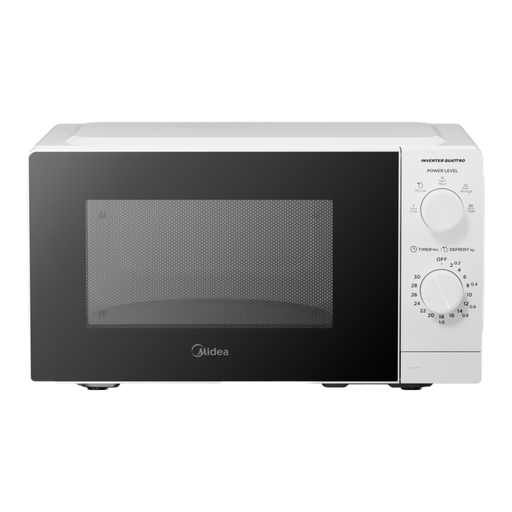
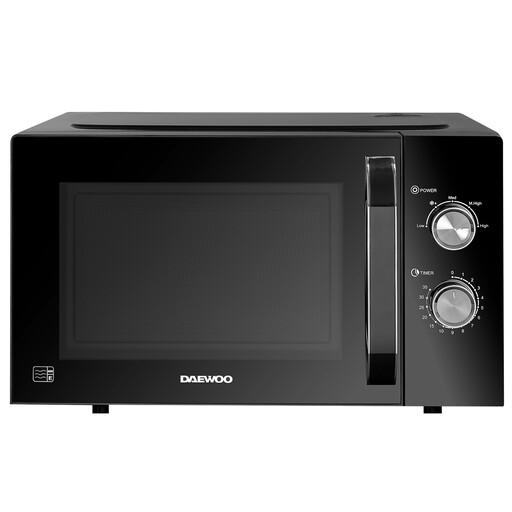
Consider this 20L option if a smaller cavity suits your portions and you prefer manual controls.
The title specifies 700W maximum output and MET Inverter Technology. Those features do not establish how it will thaw your bread: check the model instructions, turntable size, exterior dimensions and plug arrangement.
 No image available
This 23L model may suit a routine that includes bread portions and other microwave-safe dishes, provided it fits the intended space.
The title specifies 800W maximum output, five power settings, auto defrost and a glass turntable. Confirm its exterior dimensions, plug arrangement and bread-defrost instructions before buying.
No: a solo microwave with usable defrost and lower-power controls addresses the bread-thawing task. Consider grill or convection functions if you will also use them for cooking such as browning or baking.
Use a microwave-safe plate and the defrost setting or a lower power level where the model instructions allow it, checking the slices at short intervals. Panasonic advises reduced power for manual defrosting; follow your appliance manual and bread packaging rather than assuming one time works for every slice count or thickness.
Check the appliance's plug and connection instructions before purchase, and plan to use an appropriate wall socket. Electrical Safety First advises against powering a microwave through an extension lead.
Only use a bag or container if it is clearly suitable for microwave use under its stated conditions. Electrical Safety First warns against plastic storage bags and containers not designed for microwaves; a microwave-safe plate is an alternative when the packaging is unsuitable.
No: do not turn general guidance for perishable foods into a bread-specific storage rule. The Food Standards Agency warns that microwave defrosting can heat food unevenly; follow the bread packaging instructions and check any partly warmed slices before deciding how to use them.