Reheaters short on worktop space
You usually warm one portion or a small casserole dish and need to check both the microwave’s outside dimensions and the space available around it.


For straightforward reheating, start with a solo microwave that fits your worktop and lets your casserole dish rotate freely; the capacity in litres alone will not establish either. Consider a grill if you want to brown the topping, or inverter controls if lower-power reheating matters more, but still stir where practical and check that the centre is hot before serving.
You usually warm one portion or a small casserole dish and need to check both the microwave’s outside dimensions and the space available around it.
You want enough control to reheat a creamy dish without relying on the timer alone. Selectable power levels are useful to compare, while stirring and checking the food remain part of reheating.
You want to heat the cauliflower cheese and brown its topping in the same appliance, so a grill function matters more to you than it would for reheating alone.
Check the worktop and your dish first, then decide how much control you want over reheating and whether you will use a grill for the topping.
| Concern | What to check | Who this matters to |
|---|---|---|
| Worktop and dish fit | Measure the available width and depth, allowing for the model’s ventilation instructions. Compare your dish’s widest measurement, including handles, with the turntable and cavity dimensions. | I need my casserole dish to rotate without putting a microwave too large for my worktop in the kitchen; around 42% of consumers put physical fit first. |
| Reheating control | Compare selectable power levels and timer controls. Check and stir the food where practical rather than treating a preset programme as proof that the centre is hot. | When reheating a creamy portion, I want to adjust the cycle and check its centre before eating; controllable reheating comes first for around 33% of consumers. |
| Topping browning | Look for an actual grill function and check the instructions for suitable cookware and any supplied rack. | If I want the cheese browned as well as the dish heated, a solo microwave will not provide that grill function; around 25% of consumers make browning their primary concern. |
A 17L or 20L label does not tell you whether your casserole dish, including its handles, can rotate or whether the appliance will fit its intended position.
Measure the dish and worktop, then compare them with the model’s external dimensions, turntable, cavity and placement instructions.
Electrical Safety First distinguishes solo microwaves for heating and reheating from grill microwaves, which add an element for grilling and toasting.
Choose a grill model if you expect to brown the topping; otherwise, prioritise dish fit and the reheating controls you will use.
A microwave needs a suitable position as well as enough worktop space. An awkward socket location is not a reason to overlook the appliance’s electrical and ventilation instructions.
Plan its position near an appropriate mains socket and follow the manufacturer’s instructions for connection and clearance.
A completed cycle does not establish that a cauliflower-cheese portion is hot throughout. NHS guidance for food prepared for children specifically calls for thorough reheating, stirring microwave-heated food and checking its temperature.
Use microwave-safe cookware, stir where practical and check the centre before serving, taking particular care with food for young children.
Its range includes compact solo models and separate inverter models.
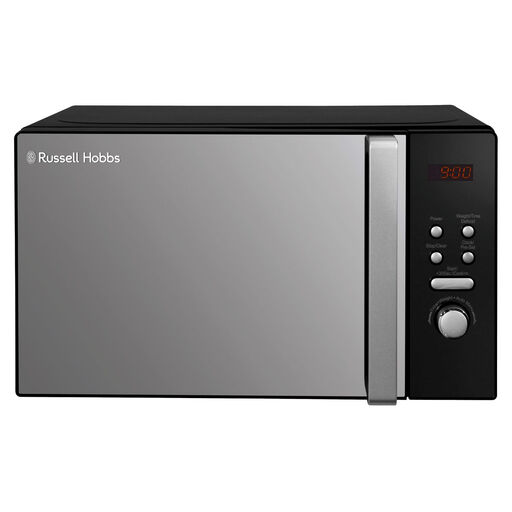
Its RHM1725B is a compact solo option for straightforward reheating.
Its FFL020MS2B is a freestanding 20L solo microwave.
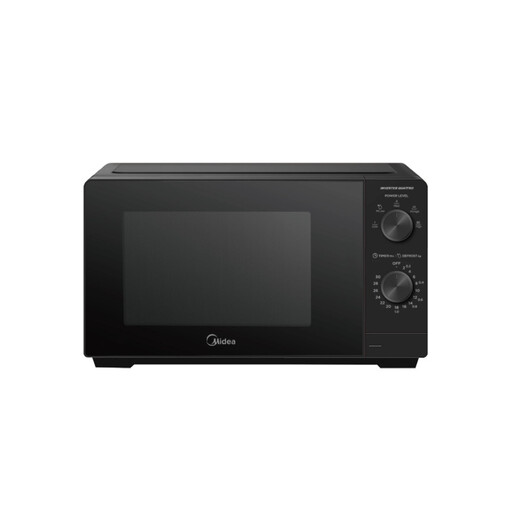
Its MMOP01MZ-BK is a 20L, 700W solo model marketed with MET Inverter technology.
These models cover solo reheating, inverter-equipped solo microwaves and a combination model with a grill. For a small kitchen, compare each one with your available worktop space and the dish you intend to use.
 No image available
A solo option for reheating when you want selectable settings. The product name specifies 800W maximum power and five power levels; measure your dish, including handles, and check the model’s placement instructions before choosing its worktop position.
 No image available
Consider this 700W solo model if lower-power settings matter more than browning a topping. MET Inverter technology is identified in its product name; check the turntable size against your dish and confirm the controls you prefer before ordering. Inverter claims do not replace checking the food’s centre.
 No image available
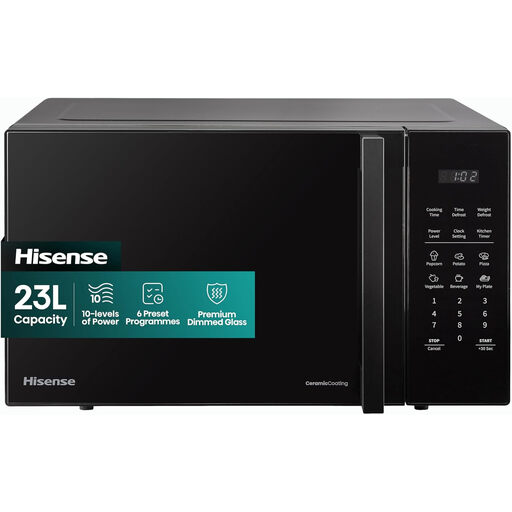
This 800W solo model is worth comparing if your dish needs more room than a smaller turntable offers. Check the dish against its cavity and turntable measurements, and measure the worktop and required ventilation space before committing to a 23L appliance.
 No image available
Consider this model if you want to reheat cauliflower cheese and also use a grill to brown its topping. Its product name specifies 900W microwave power and a 1000W grill; check its external dimensions, ventilation requirements and cookware instructions for the mode you intend to use.
 No image available
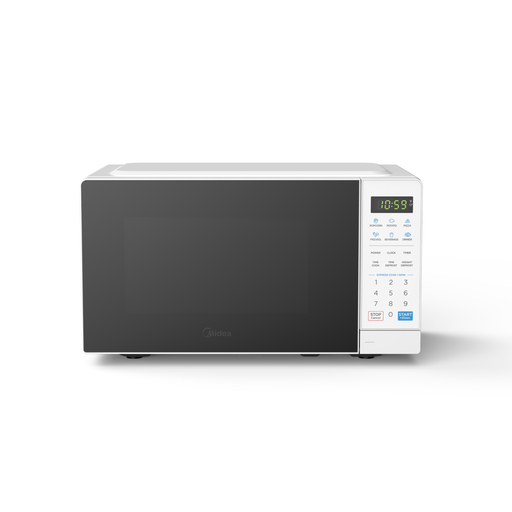
This solo model suits a comparison focused on reheating controls rather than a browned topping. Its product name specifies digital controls and a 245mm turntable; measure your dish including handles, and confirm external dimensions and ventilation space before placing it on a small worktop.
It can be if your dish fits and rotates freely. The product information lists a 245mm turntable for the 17L Russell Hobbs RHM1725B, while Panasonic specifies 255mm for its compact 20L NN-ST22QBBPQ; measure the dish at its widest point, including handles, rather than choosing by litres alone.
You do not need a grill just to reheat the dish. Electrical Safety First describes solo microwaves as suitable for heating and reheating; a grill microwave adds an element for browning or toasting, which matters if you want that finish on the cheese topping.
Check that the cauliflower cheese is hot through to its centre, stirring where practical so heat can distribute through the dish. For food prepared for children, NHS guidance specifically calls for reheating until steaming hot throughout, stirring microwave-heated food and checking its temperature.
Plan a suitable worktop position near an appropriate mains socket rather than assuming an extension lead will suit the appliance. Follow the microwave manufacturer’s connection, placement and ventilation instructions before deciding where it will stand.