One-bowl reheaters
If beans, soup or leftovers are your main use, a solo microwave keeps the choice focused on reheating rather than grilling or oven-style cooking. Solo models are described as suitable for reheating food and drinks.


For one person mainly reheating baked beans, start with a freestanding solo microwave: a simple 17L manual model can be sufficient if your bowl rotates freely and the appliance fits your worktop with the required clearance. Consider a 20L digital model if you also want room for a dinner plate or prefer presets and digital timing; those features are not necessary for one bowl of beans. Follow the food and appliance instructions, stir the beans and check that they are steaming hot throughout.
If beans, soup or leftovers are your main use, a solo microwave keeps the choice focused on reheating rather than grilling or oven-style cooking. Solo models are described as suitable for reheating food and drinks.
External dimensions matter as much as cavity capacity when counter space is tight. For a concrete reference, the Cookworks 17L model is listed at H24.3 × W44.6 × D32.3cm; check the clearance required by the model you choose as well as its footprint.
If the microwave will also heat meals on a dinner plate, check the stated plate fit and controls. Swan says its Retro SM22030LGRN 20L digital model accommodates a 10-inch dinner plate; that specification applies to that model, not every 20L microwave.
Choose it when: You mainly reheat one bowl and prefer to set the time and power with dials.
Accept: The exact cavity and turntable may limit larger plates, and timing is set manually.
Choose it when: Plated meals and button-led timing will be regular uses alongside heating beans.
Accept: The additional capacity and programmes do not remove the need to stir and check the food.
| Concern | What to check | Who this matters to |
|---|---|---|
| One-bowl reheating | Check that a microwave-safe bowl fits and rotates freely. Follow the food and appliance instructions, then stir and check that the beans are steaming hot throughout. | When I am heating one portion, straightforward controls matter more to me than extra cooking functions. Around 42% of consumers would put simple, thorough reheating first. |
| Worktop and dish fit | Compare the exact model’s outer dimensions and required ventilation clearance with your space; check its turntable against your usual dish. | In a small kitchen, I need the microwave to fit without sacrificing the bowl or plate I actually use. Compact fit would be the primary concern for around 33% of consumers. |
| Wider use and controls | Check plate fit and whether the available digital settings match the meals you expect to heat. | If plated meals will be a regular task, I would value the extra room and prefer digital timing. Around 25% of consumers would prioritise that wider-use convenience. |
A grill or combination microwave adds cooking functions, but solo microwaves are identified as suitable for reheating food and drinks.
Start with a solo model unless grilling, browning or oven-style cooking is also a regular need.
Cavity capacity does not tell you whether the appliance fits the counter or whether your dish can turn inside it.
Measure the worktop and your usual dish, then check the exact model’s external dimensions, turntable size and installation clearance.
Appliance power and the amount of food affect timing. GOV.UK advises reheating food until it is steaming hot all the way through.
Use the food and microwave instructions, stir the beans and check the centre before serving.
An old microwave needs an appropriate electrical-waste route rather than an assumption that it can go with ordinary household rubbish.
Ask the retailer about its take-back arrangements or find a suitable electrical recycling collection point.
The Cookworks 700W 17L Standard Microwave is an example of a basic manual model for small-portion reheating.
The Haden 70017WHT illustrates a 17L, 700W microwave with mechanical controls.
The Swan Retro SM22030LGRN illustrates a 20L digital option for people who also reheat plated meals.
These solo microwaves offer manual and digital options for reheating small portions, with larger capacities to consider if you also use plates. Check each model’s controls, dish fit and worktop clearance before choosing.
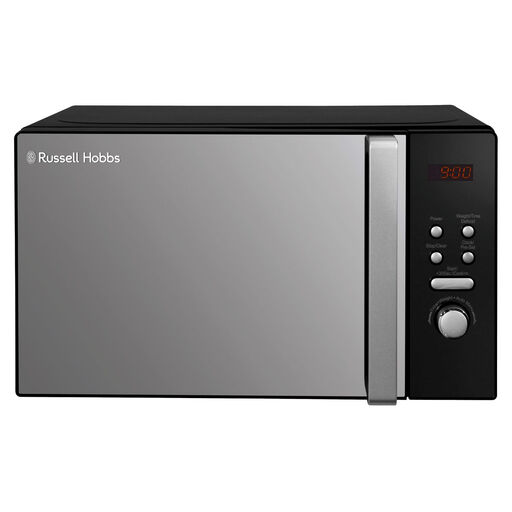 No image available
Consider this model if you want digital controls for reheating and expect to use the microwave for more than one-bowl portions.
The product name specifies five power levels. Check that your usual dish fits and allow the clearance required by the appliance instructions.
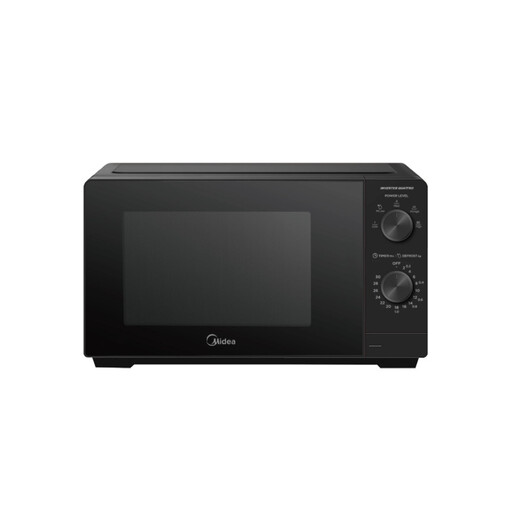 No image available
Consider this manual solo model if straightforward reheating matters more to you than digital controls.
Its stated 20L capacity does not establish whether your usual bowl rotates freely or whether the appliance fits your worktop with ventilation clearance; check both.
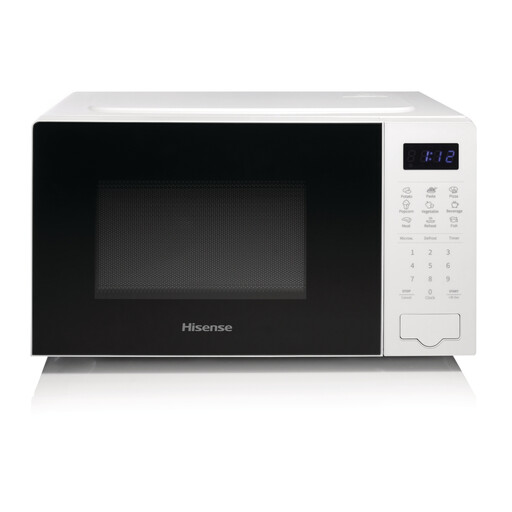 No image available
This is a 20L solo option if you want to compare dish fit and settings for reheating.
The product title mentions digital controls and nine cook menus, while the control descriptions differ; confirm how this exact model operates before buying.
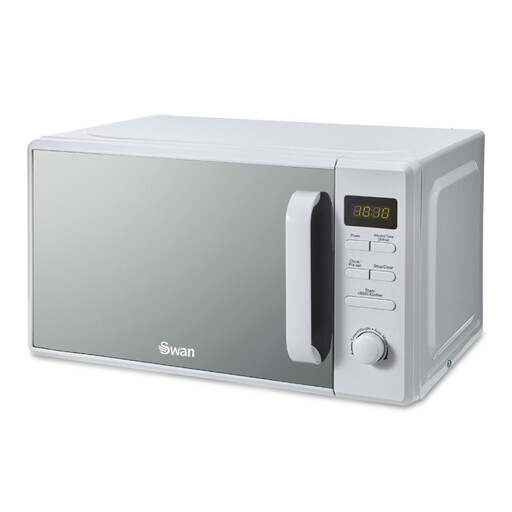 No image available
Consider this digital model if timed settings and occasional plated meals matter alongside heating beans.
The product name specifies a 95-minute timer and five power levels. Check its outer dimensions and your usual dish before ordering; its stated plate fit does not establish that every bowl will rotate freely.
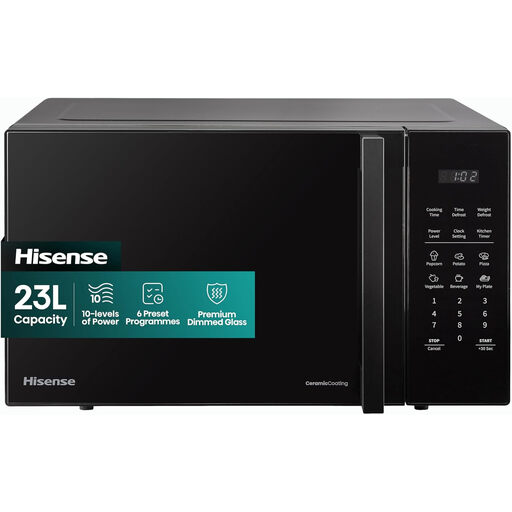 No image available
Consider the 23L capacity if you also expect to use larger dishes; a single bowl of beans alone does not call for it.
The title describes touch controls, but the detailed control description says rotary dials. Confirm the controls and check worktop and dish fit before buying.
A freestanding solo microwave is a sensible starting point when reheating is the main task. A 17L model can work if your usual bowl fits and rotates freely; check the exact appliance rather than assuming all models with the same capacity have the same dimensions.
Follow the food and microwave instructions, stir the beans and check that they are steaming hot throughout before serving. GOV.UK advises that reheated food should be steaming hot all the way through and should only be reheated once.
No: the larger capacity and digital settings are more relevant if you also reheat plated meals or prefer those controls. Check the dish fit and settings on the exact model; a preset does not replace stirring and checking the food.
Arrange an appropriate electrical-waste recycling route rather than putting it in ordinary household rubbish. Ask the retailer about its take-back arrangements or check for a suitable local electrical recycling collection point.