Single-portion curry reheaters
If you usually heat one bowl, a compact solo microwave may cover the task. Look for a dish that fits, adjustable power and controls that make it straightforward to stop and stir.


For reheating vegetable curry, start with a solo microwave whose controls let you pause to stir and whose cavity fits your usual dish. A compact 20 L model is worth considering if the bowl can turn freely; a larger flatbed addresses wide-dish fit, while a combination model makes sense if you will also use its grill or oven functions. Whichever type you choose, stirring and checking the centre matter: the Food Standards Agency warns that microwaved food can be hot at the edges but cold in the middle.
If you usually heat one bowl, a compact solo microwave may cover the task. Look for a dish that fits, adjustable power and controls that make it straightforward to stop and stir.
If you use broad plates or larger bowls, usable dish space matters more than capacity in litres alone. Compare cavity dimensions and turntable clearance, or consider a flatbed.
If reheating curry is only part of what you need, a combination microwave may be worth considering for its additional grill or oven functions. Those functions do not replace stirring and checking reheated curry.
Consider it when: You mainly reheat one or two portions and your usual dish fits the turntable.
Trade-off: The dish must have room to rotate; a 20 L capacity does not establish that a wide bowl will fit.
Consider it when: A broad plate or awkwardly shaped bowl is the main obstacle. The manufacturer describes the turntable-free Russell Hobbs RHFM2365B as offering more room for bigger dishes.
Trade-off: Check the appliance footprint and the actual cavity dimensions before assuming the dish will fit.
Consider it when: You will regularly use grill or oven functions as well as reheating; the product information distinguishes these functions from the straightforward reheating and defrosting uses of a solo microwave.
Trade-off: Additional cooking modes add controls to learn without removing the need to stir and check curry.
| Concern | What to check | Who this matters to |
|---|---|---|
| Thorough reheating | Look for adjustable power and controls that let you stop to stir. Follow the food and appliance instructions for standing and checking before serving. | When I heat a thick curry, I want to stir it rather than find a cold centre beneath hot edges; around 50% of consumers put thorough reheating first. |
| Dish fit | Compare your usual bowl or plate with the turntable diameter, internal dimensions and door opening. | My broad curry bowl needs enough clearance to fit and, on a turntable model, rotate freely; for around 30% of consumers, dish fit is the main concern. |
| Everyday upkeep | Check whether the controls suit you and whether the turntable can be removed for cleaning. | If reheating leaves splashes, I want controls I can use easily and parts I can clean; simplicity leads for around 20% of consumers. |
A wide curry bowl may not rotate on a turntable even when the microwave's stated capacity sounds sufficient. Retailer specifications for the Beko MOC20240G and Panasonic NN-E28JM range give turntable diameters of 245 mm and 255 mm respectively.
Measure your regular microwave-safe dish and compare it with both the turntable and cavity dimensions. If rotation is the obstacle, consider a flatbed.
The Food Standards Agency warns that microwaved food can be hot at the edges while remaining cold in the centre. A programme setting cannot confirm the temperature throughout your portion.
Stir during reheating, follow any standing-time instructions and check several areas, including the centre, before serving.
A storage container that suits the fridge is not necessarily suitable for the microwave. Electrical Safety First advises using only items clearly marked as microwave-safe.
Check the container's microwave-safe marking and any stated limits before transferring or reheating curry.
A combination microwave's grill and oven functions serve other cooking tasks; they do not solve dish-fit problems or remove the need to stir and check curry.
If reheating and defrosting are your regular uses, compare solo models first. Consider a combination model if you will use its additional modes.
The NN-E28JM range is a compact solo-microwave reference for curry reheating.
Its cited models provide both compact turntable and larger flatbed solo-microwave points of comparison.
The MOC20240G is a compact solo-microwave comparison point.
The Starbeck is a manual-control, 20 L solo-microwave feature reference rather than a current purchase suggestion.
These solo microwaves are options for reheating vegetable curry, ranging from compact 20 L models to larger turntable models. Compare each one with your usual dish; none of the products shown here represents the flatbed or combination route.
 No image available
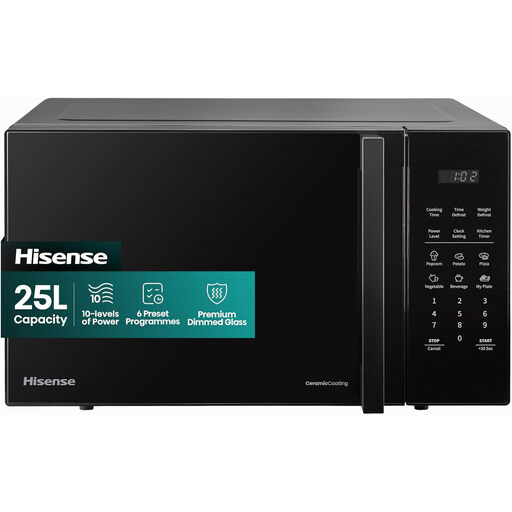
Consider this model if you reheat curry in a larger bowl and want to compare a 25 L turntable model with compact alternatives.
The product name specifies 900 W output. Check your bowl against the turntable and cavity dimensions before choosing.
 No image available
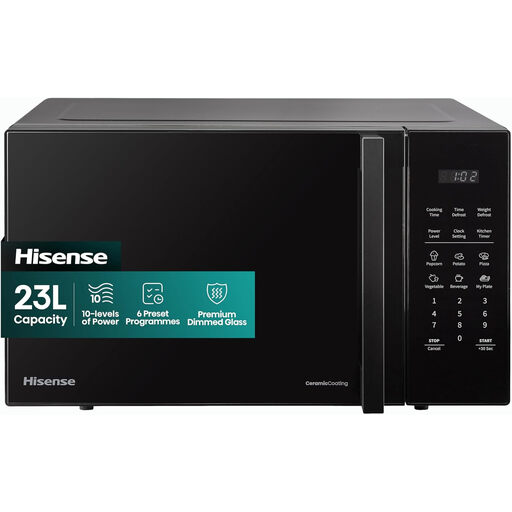
Consider this 23 L solo model if your curry dish needs more room than a compact turntable model offers.
The product name specifies 800 W output and touch controls. Confirm that your usual dish fits inside and can rotate.
 No image available
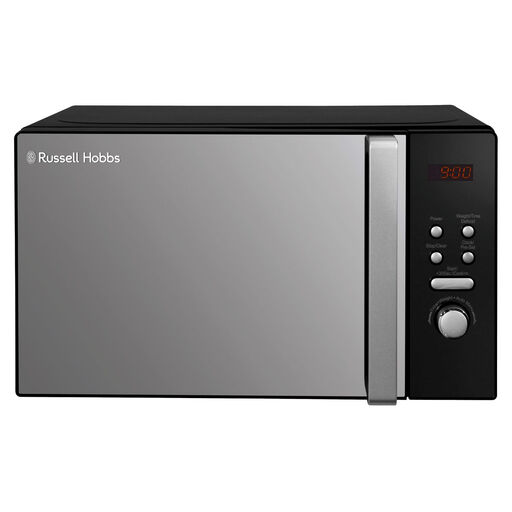
This compact model is a choice to examine if you mostly reheat individual portions and your bowl fits a turntable microwave.
Its product name specifies 800 W output and five power levels. Check dish clearance before buying.
 No image available
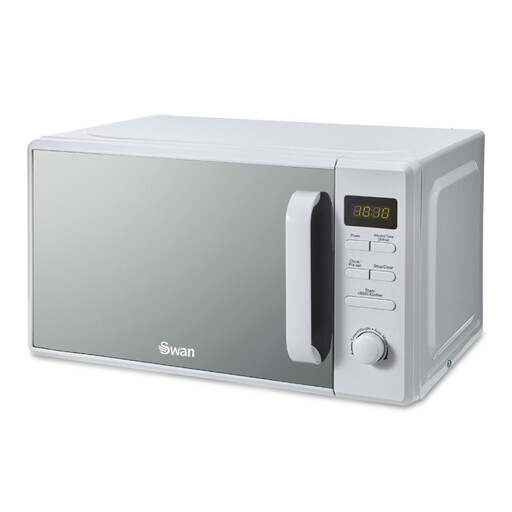
Consider this compact model if you want to set the reheating cycle with digital controls and can accommodate your usual curry bowl.
Its product name specifies 800 W output, five power levels and a 95-minute timer. Check bowl clearance separately from the appliance's capacity.
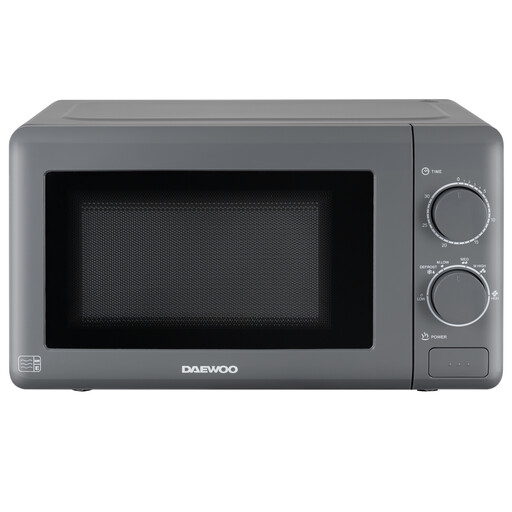 No image available
Consider this model if you prefer manual controls for reheating curry and want to stop the cycle to stir.
Its product name specifies 800 W output and a defrost function. Confirm that your regular bowl fits and can rotate.
Stir it during reheating and check several areas, including the centre, before serving; follow any food and appliance instructions for standing time. The Food Standards Agency warns that microwave heating can leave food hot at the edges but cold in the middle.
It can be if your bowl fits and can rotate freely. The product information lists a 245 mm turntable for the 20 L Beko MOC20240G, while Panasonic specifies a 255 mm turntable for a cited 20 L NN-E28JM variant; compare the dimensions of your own dish and the cavity before choosing.
A solo microwave is the more direct choice when reheating and defrosting are your regular tasks. The product information identifies grill and oven functions as additions offered by combination models, so consider one if you will use those modes for other cooking.
Use a container clearly marked as microwave-safe and follow any stated use limits. Electrical Safety First advises microwaving only items identified as safe for that purpose; do not assume an ordinary storage container qualifies.