Breakfast and drink shoppers
If you use coconut products in cereal, tea, coffee or smoothies, compare drink cartons rather than assuming a cooking milk will suit the same use. Check the exact carton’s fat, saturates, sugars and flavour description.


For cereal and drinks, start with an unsweetened coconut drink and check its fat and saturated fat per 100ml: Alpro Coconut No Sugars lists 1.2g fat and 1.1g saturates per 100ml, according to Alpro UK. For a curry or sauce that needs coconut milk for body, choose a cooking product instead, but compare its saturated fat and the amount your recipe uses; a light or reduced-fat name does not make it equivalent to a drink carton.
The first distinction is whether the coconut product will go into a cup or breakfast bowl, or provide body in a cooked dish.
If you use coconut products in cereal, tea, coffee or smoothies, compare drink cartons rather than assuming a cooking milk will suit the same use. Check the exact carton’s fat, saturates, sugars and flavour description.
If a recipe needs coconut milk for texture, look at cooking products, including those labelled light or reduced fat. Compare saturated fat on their nutrition panels and account for the quantity going into the dish.
If you regularly use a coconut drink in place of dairy milk, check the exact carton for calcium, vitamins and protein. Fortification and nutrition values differ between products.
Choose for: cereal, tea, coffee, smoothies or drinking when a less rich format suits the use.
Trade-off: a drink may leave a curry or sauce thinner than a recipe using cooking coconut milk.
Choose for: curries, soups and sauces that need a cooking coconut milk rather than a drink.
Trade-off: a lighter cooking product can still contribute substantial saturated fat, so the label and recipe quantity matter.
| Priority | What to check | Your needs |
|---|---|---|
| Saturated fat | Compare fat and saturates using the units on each panel, and consider the amount used. The NHS describes more than 5g saturates per 100g as high on food labels; do not apply a per-100g threshold directly to a per-100ml figure. | I’m keeping an eye on saturated fat, so a light or reduced-fat name alone is not enough to make the choice. |
| Format | Check whether the pack is a coconut drink or a cooking milk, then read its suggested uses and your recipe requirements. | For cereal or tea, I need a drink; for a sauce that relies on coconut milk for body, I need a cooking product. |
| Flavour and sugars | Read the exact product’s flavour description, ingredients and sugars per 100ml. Alpro UK lists 0g sugars per 100ml for Coconut No Sugars; that figure does not describe other Alpro variants. | I’d prefer a mild-tasting drink without assuming that a product called coconut milk has a particular flavour intensity. |
| Fortification | If choosing a dairy alternative, compare calcium, vitamin D, vitamin B12 and protein on the exact carton. Koko Dairy Free lists 120mg calcium and 1.2g protein per 100ml for Koko Original Like Milk. | If this will be my regular dairy-free drink, I want to know what the particular carton contains rather than relying on its category name. |
| Pack instructions | Check the current label for storage after opening and how soon to use the contents. M&S Food instructs shoppers to refrigerate its Reduced Fat Coconut Milk and eat it within two days of opening. | When I need only some of a cooking milk, the opened-pack instructions affect whether the pack size works for my plans. |
M&S Food lists 8.2g saturates per 100g for its Reduced Fat Coconut Milk. That exceeds the NHS food-label threshold of more than 5g per 100g for a high saturated-fat content.
Compare the nutrition panel and the amount your recipe uses. Keep per-100g and per-100ml figures distinct when looking at different packs.
A coconut drink can give a sauce a thinner result when the recipe relies on cooking coconut milk for body.
Choose the format around the dish: a drink for beverages and breakfast uses, or a cooking milk when the recipe calls for it.
Alpro Coconut No Sugars and Koko Original Like Milk have their own stated nutrition and fortification profiles; neither profile applies to all coconut drinks.
For a regularly used dairy alternative, compare calcium, vitamins, protein and sugars on the exact carton.
Ingredients and storage instructions can change. M&S Food tells shoppers to check the label of its Reduced Fat Coconut Milk and specifies refrigeration and use within two days after opening.
Read the current pack before use, particularly for ingredients you need to avoid and instructions for leftovers.
These examples illustrate different coconut drink and cooking-milk formats; the figures belong to the named products, not every item under each brand.
Alpro Coconut No Sugars is a coconut drink for uses such as cereal and beverages, rather than a cooking milk intended to give sauces body.
Koko’s range includes both a dairy-alternative drink and Cuisine Light Coconut Milk for cooking.
M&S Reduced Fat Coconut Milk is a cooking product positioned for dishes such as curry.
Tesco Groceries lists coconut drinks separately from coconut milk and cream for cooking.
These options cover two different uses: a barista coconut drink for coffee and a reduced-fat coconut milk for cooking. Check the individual pack rather than transferring nutrition figures from the different products discussed above.
 No image available
A coconut drink to consider for coffee rather than a cooking milk for a thick sauce. Check the exact pack’s sugars, ingredients and flavour description if you want an unsweetened or mild-tasting option.
 No image available
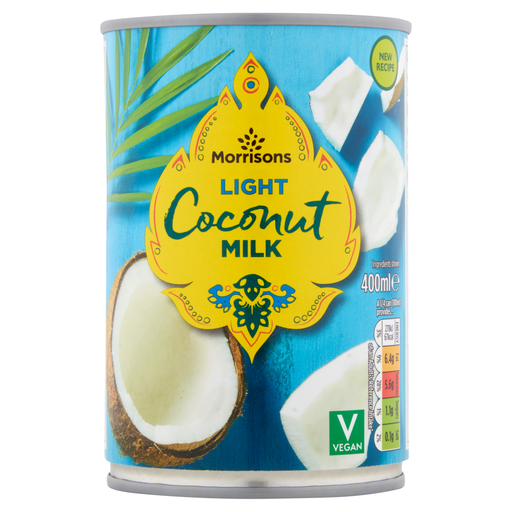
A cooking-milk option for a curry, soup or sauce that calls for coconut milk. Reduced fat is not a substitute for checking saturated fat on the current pack, the amount used and the instructions for storing leftovers.
No. M&S Food lists 8.2g saturates per 100g for its Reduced Fat Coconut Milk, above the NHS food-label threshold of more than 5g per 100g for a high saturated-fat content. Check the exact product’s panel and how much your recipe uses.
For cereal, tea or a chilled drink, start with a coconut drink and check its flavour and nutrition panel. If a curry or sauce relies on coconut milk for body, choose a cooking product instead; a drink can give a thinner result.
Do not assume it does. The named Alpro Coconut No Sugars and Koko Original Like Milk products list calcium, while Koko Dairy Free lists 1.2g protein per 100ml for Koko Original. Compare protein and fortification on the exact carton if you use it regularly in place of dairy milk.
Follow the instructions on the particular pack. M&S Food says its Reduced Fat Coconut Milk should be refrigerated and eaten within two days after opening; that instruction should not be applied to every coconut product.
Read the ingredients and allergen information on the current pack before use. A dairy-free description or an older online listing is not a substitute for checking the product you are buying.