For a mild after-school yoghurt, start by considering a plain or natural recipe; Rachel's Organic describes its Natural Low Fat yoghurt as mild tasting, though a child's preference may differ. If an individual portion is more practical, compare the exact no-added-sugar or fruit-flavoured product's ingredients and total sugars rather than relying on its packaging. Do not serve dairy yoghurt to a child who must avoid cow's milk.
Who is this choice for?
The useful starting point depends on whether flavour, a ready portion or avoiding milk governs the snack.
Families looking for a mild flavour
A plain or natural yoghurt gives you a base without a fruit flavour already mixed in. Rachel's Organic describes its Natural Low Fat product specifically as mild tasting; that description does not apply to every plain yoghurt or predict what every child will like.
Families who need an individual portion
A small pot or pouch may be easier to serve after school than a larger tub. Compare the portion, ingredients and nutrition panel of the exact product: a child-sized format says little on its own about added sugar or flavour.
Families managing a milk allergy
Milk is a common yoghurt ingredient, according to the Food Standards Agency. If a child must avoid cow's milk, check the current pack's allergen declaration and follow their allergy plan and the school's food-allergy arrangements rather than choosing a dairy yoghurt for its flavour or format.
What to check when choosing
Check whether the flavour is likely to be accepted, then read the ingredients alongside the nutrition panel and decide which serving format works for the snack.
| Priority |
What to check |
Your needs |
| Mild flavour |
Look for a plain or natural recipe, or a mild-tasting description that applies to the exact product. Check any fruit or flavour additions. |
I'm looking for a spoonable snack without a strong fruit flavour. A plain yoghurt lets me decide separately whether to add familiar fruit. |
| Sugars |
Read the ingredients for added sugar and compare the total-sugars figure per 100g and per serving where shown. The NHS explains that naturally occurring milk sugars appear in total sugars but are not free sugars. |
I want to distinguish milk sugar from added sugar, rather than treating the total-sugars figure as an added-sugar figure. A no-added-sugar claim applies to the labelled product, not every yoghurt in its range. |
| Serving format |
Check the individual pot or pouch size against the portion you intend to serve. A larger tub needs portioning and storage according to its pack instructions. |
An individual portion would simplify our after-school routine, but I still want to check the recipe. If we serve from a larger tub, I can portion it into a bowl. |
| Milk allergen |
Read the current ingredients and allergen declaration before serving. If cow's milk must be avoided, follow the child's allergy plan and check any proposed substitute. |
Milk avoidance takes precedence over a yoghurt's taste or convenience. I need a product that fits the child's established allergy arrangements. |
Common buying mistakes
-
Taking “mild” to mean low in added sugar
Mild describes flavour, not the amount or type of sugar in a yoghurt. The NHS notes that a label's total-sugars figure includes naturally occurring milk sugars, which are not free sugars.
Use flavour descriptions to shortlist products, then read the ingredients and nutrition panel of each one.
-
Judging sugar by child-focused packaging
A small pot and child-friendly presentation do not establish its sugar content. For example, Onken lists sugar among the ingredients of its Raspberry & Banana yoghurt, while Yeo Valley describes a separate Little Yeos range as no added sugar.
Compare the exact pack's ingredients, portion size and nutrition panel when added sugar matters to your choice.
-
Choosing dairy yoghurt when cow's milk must be avoided
The Food Standards Agency identifies milk as a common yoghurt ingredient. A lactose-free description alone is not a reason to assume a product is suitable for someone with a cow's-milk allergy.
Check the current allergen declaration and follow the child's allergy plan and school procedures. The NHS advises avoiding a food if you are unsure whether it contains an allergen the child must avoid.
-
Buying a large tub without a serving plan
A larger natural yoghurt tub needs portioning, and the remainder must be stored as its pack directs. The Food Standards Agency warns that storing food too long or at the wrong temperature can make it unsafe.
Serve the intended portion into a clean bowl, follow the pack's refrigeration instructions and check its use-by date.
Brand and product-line references
These examples illustrate different recipes and formats; descriptions and nutrition figures belong to the named products or ranges, not every yoghurt from the brand.
Rachel's Organic
Rachel's Organic calls its Natural Low Fat Bio-Live Yogurt mild tasting. It is a natural-yoghurt example for families considering a flavour-neutral snack.
- The manufacturer lists 7.1g sugars and 5.0g protein per 100g for this exact product.
- Its 450g tub needs portioning, and the yoghurt contains milk.
Yeo Valley
Yeo Valley describes no-added-sugar Little Yeos products in 6 × 42g child-sized formats.
- The individual portions offer an alternative to serving from a larger tub.
- No added sugar does not mean sugar-free or establish that a particular fruit flavour will taste mild to a child. Check the exact pack.
Onken
Onken Raspberry & Banana illustrates a fruit-flavoured yoghurt route rather than a plain one.
- Onken lists fruit in this product's ingredients and gives 7.6g sugars per 100g.
- Its ingredients also include sugar and milk, so it is not interchangeable with a plain or no-added-sugar product.
Müller
Müller describes its Light range as fat free and 0% added sugar; its wider yoghurt range includes different flavours and topping formats.
- A Müller Light product may be worth comparing when its stated fat and added-sugar characteristics are relevant to the choice.
- Those range descriptions do not establish mild flavour or describe every Müller yoghurt. Check the individual recipe, including sweeteners and toppings.
Activia
Tesco lists Activia fat-free and low-fat flavoured multipacks among its yoghurt products.
- The listed multipacks provide individual portions to compare by flavour and pack label.
- Their retail category does not establish mildness or suitability for a child. Check the exact recipe and milk declaration.
Tesco
Tesco lists a Greek Style Plain Yogurt in a 4 × 90g pack, illustrating a plain, individually portioned option.
- The listed format combines a plain recipe with separate pots.
- Confirm the current pack's ingredients, nutrition information and availability when shopping.
A ready-portioned Joybuy option
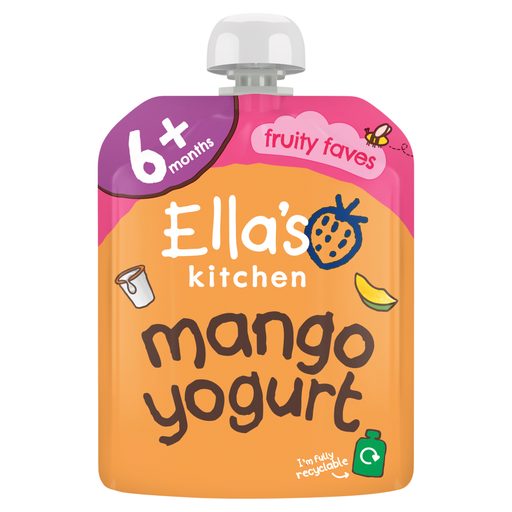
This fruit-flavoured yoghurt pouch represents the individual-snack route. Its mango recipe is a different choice from plain yoghurt, so check the current pack and whether the child likes the flavour.
 No image available
Ella's Kitchen Organic Mango Greek Style Yoghurt Pouch, 6+ Months, 90g
The 90g pouch offers an individual after-school serving for a child who accepts its mango flavour. Check the current pack's ingredients and milk allergen declaration; do not serve dairy yoghurt to a child who must avoid cow's milk.
View on Joybuy
Frequently asked questions
Does “total sugars” mean all the sugar in yoghurt was added?
No. The NHS explains that naturally occurring milk sugars are included in the total-sugars figure on food labels but are not free sugars. Read the ingredients alongside the nutrition panel when comparing a plain yoghurt with a sweetened or fruit-flavoured one.
Where should I start if a child prefers mild yoghurt?
A plain or natural yoghurt is a useful starting point if you want to avoid a fruit flavour already mixed into the snack. Rachel's Organic specifically describes its Natural Low Fat yoghurt as mild tasting; check the exact product and the child's preference rather than assuming all plain yoghurts taste alike.
Can a child with a cow's-milk allergy have ordinary yoghurt?
Not if they have been advised to avoid cow's milk. The Food Standards Agency identifies milk as a common yoghurt ingredient, and the NHS advises checking labels carefully and avoiding foods when their allergen content is uncertain. Follow the child's allergy plan and school arrangements.
Does “lactose-free” make a yoghurt suitable for a milk allergy?
No: lactose-free does not mean milk-free. Check the product's milk allergen declaration and use a substitute only if it fits the child's diagnosed condition and allergy plan.
How should I store yoghurt for an after-school snack?
Follow the current pack's storage instructions and use-by date, keeping yoghurt refrigerated as directed until it is served. The Food Standards Agency warns that food stored for too long or at the wrong temperature can become unsafe.


