If you need to avoid cow’s milk because of an allergy, neither filtered nor UHT skimmed cow’s milk is a suitable choice; lactose-free cow’s milk is not a milk-free alternative either. If you can consume cow’s milk, choose between chilled filtered milk and UHT milk according to how you need to store unopened cartons, then check the current pack’s allergen and after-opening instructions.
Who needs to check what?
People avoiding cow’s milk because of an allergy
Focus on whether milk is an ingredient, not whether a carton says filtered or long-life. Cambridge University Hospitals NHS Foundation Trust distinguishes allergy to cow’s-milk proteins from lactose intolerance; the cow’s-milk products discussed here are not milk-free choices.
People who can consume milk but need longer storage
Compare the storage instructions for unopened filtered and UHT cartons, then choose a carton size you can use within its stated period after opening.
People shopping for a lactose-related need
Check whether a product is lactose-free rather than assuming filtered milk has reduced lactose. Lactose-free cow’s milk can still contain milk: M&S explicitly warns that its lactose-free products are not suitable for a dairy allergy.
What matters when choosing?
Establish whether cow’s milk itself must be avoided before comparing carton formats. If milk is suitable for you, storage and pack instructions become the deciding checks.
| Priority | What to check | Your needs |
|---|
| Milk allergy |
Read the ingredient list and milk allergen declaration. Filtered and UHT describe processing, not removal of cow’s milk. |
If milk is my allergen, I need a genuinely milk-free product rather than another type of skimmed cow’s milk. |
| Lactose |
Distinguish a lactose-free claim from a milk-free claim. M&S lists milk in its lactose-free semi-skimmed product and warns that it is unsuitable for dairy allergy. |
If my concern is lactose rather than milk protein, I need to check the product’s lactose claim while still accounting for its milk ingredient. |
| Unopened storage |
Check whether the carton needs refrigeration before opening. Arla Cravendale describes its filtered skimmed milk as a chilled product; Tesco describes its UHT skimmed milk as suitable for cool, dry storage before opening. |
Do I have fridge space for an unopened carton, or do I need one that can stay in a cupboard until opened? |
| After opening |
Follow the specific carton’s refrigeration and consumption instructions. Arla Cravendale states seven days for its opened filtered product; Tesco and Sainsbury’s state three days for their cited UHT products. |
I want a carton size I can use within its own after-opening instructions, rather than relying on a general long-life claim. |
| Current label |
Check the physical pack’s ingredients, highlighted allergens and any precautionary statement. The Food Standards Agency explains that precautionary allergen labelling concerns possible unintended allergen presence, which differs from milk listed as an ingredient. |
When avoiding an allergen, I need to check the carton I receive, not rely solely on an online listing. |
Mistakes to avoid
-
Treating “filtered” or “long-life” as a milk-free claim
Arla Cravendale lists milk as an ingredient and allergen in its filtered skimmed product, while Sainsbury’s lists cows’ milk in its UHT skimmed product. Neither processing description changes what those ingredient lists mean for someone avoiding milk.
If milk is your allergen, check for a genuinely milk-free product rather than choosing between these cow’s-milk formats.
-
Confusing lactose-free with dairy-free
Lactose intolerance and cow’s-milk protein allergy concern different components of milk, as Cambridge University Hospitals NHS Foundation Trust explains. M&S warns that its lactose-free milk is not suitable for a dairy allergy.
Consider a lactose-free cow’s-milk product only if cow’s milk itself is suitable for your dietary needs.
-
Relying on an online listing instead of the carton
Product information can change between viewing a listing and receiving a carton, so an older ingredient description may not describe the pack in hand.
Read the current pack’s ingredients, allergen information and any precautionary statements before use.
-
Leaving an opened UHT carton in the cupboard
UHT’s cupboard-storage distinction applies before opening. Tesco and Sainsbury’s instruct shoppers to refrigerate their cited skimmed-milk products after opening and use them within three days; Waitrose specifies refrigeration below 5°C and consumption within five days for its cited product.
Refrigerate an opened carton and follow its own instructions when choosing a size.
Brand and product references
These examples illustrate label and storage differences; a brand name alone does not establish the ingredients of every product it sells.
Arla Cravendale
A filtered, chilled skimmed cow’s-milk option for people who can consume milk.
- Arla Foods UK states that its filtered skimmed milk stays fresh for up to three weeks unopened and seven days after opening.
- The cited product lists milk as an ingredient and allergen, so it is not a milk-free option.
Tesco
Its cited British skimmed long-life product is UHT milk for cool, dry storage before opening.
- Tesco instructs shoppers to refrigerate this product after opening and consume it within three days.
- It remains a milk product; check the current carton’s ingredients and allergy information.
Sainsbury’s
Its cited long-life skimmed product is ultra-heat-treated cows’ milk.
- Sainsbury’s specifies refrigeration and use within three days after opening.
- The listed ingredient is skimmed British cows’ milk, not a milk-free alternative.
Asda
Its cited long-life skimmed product is described as UHT milk.
- Asda states that this product should be refrigerated after opening and used within three days.
- Check the current pack’s ingredients and allergy advice before use.
Waitrose
Its cited Essential Long Life Skimmed Milk is a UHT cow’s-milk product.
- Waitrose specifies refrigeration below 5°C and consumption within five days after opening for this product.
- People avoiding milk still need a milk-free product; the UHT description is not an allergen claim.
M&S
Its cited lactose-free product is semi-skimmed cow’s milk, not a filtered or UHT skimmed-milk example.
- The ingredient list identifies milk, reconstituted lactose-reduced milk and lactase enzyme.
- M&S states that its lactose-free products are not suitable for dairy allergy or galactosaemia.
UHT skimmed milk on Joybuy
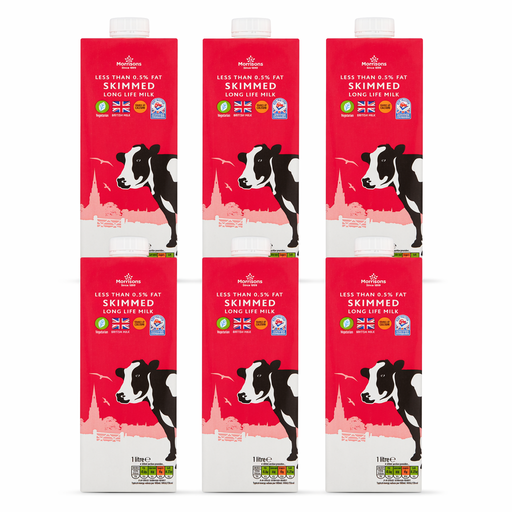
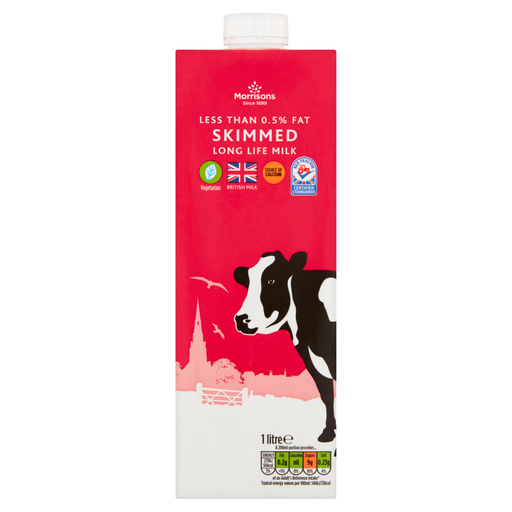
These Morrisons UHT skimmed-milk options are for shoppers who can consume cow’s milk and want to compare a single carton with a multipack. Neither is a milk-free choice; check the current carton’s allergen and storage instructions before use.
 No image available
Morrisons British UHT Skimmed Milk, 6 × 1 litre
A multipack to consider if you can consume cow’s milk and want several UHT cartons. Check each carton’s allergen information and storage instructions before use.
View on Joybuy
 No image available
Morrisons British UHT Skimmed Milk, 1 litre
A single carton to consider if you can consume cow’s milk and do not need the six-pack. Check its current allergen information and after-opening instructions before use.
View on Joybuy
Questions about milk and allergens
Can someone with a cow’s-milk allergy drink filtered skimmed milk?
Not if it contains cow’s milk. Arla Cravendale lists milk as the ingredient and allergen in its filtered skimmed product; filtering is not a milk-free claim. Check the current pack when choosing an alternative.
Is UHT skimmed milk a milk-free alternative?
No. UHT describes processing, not the absence of milk. Sainsbury’s lists skimmed British cows’ milk as the ingredient in its cited long-life product, so it is not suitable for someone avoiding cow’s milk.
Does lactose-free mean suitable for a dairy allergy?
No. Cambridge University Hospitals NHS Foundation Trust distinguishes difficulty digesting lactose from allergy to cow’s-milk proteins. M&S lists milk in its cited lactose-free product and warns that its lactose-free products are unsuitable for dairy allergy.
What should I read on the carton when avoiding an allergen?
Read the current ingredient list, allergen declaration and any precautionary statement on the physical pack. The Food Standards Agency distinguishes precautionary information about possible unintended allergen presence from an allergen used as an ingredient.
Does long-life milk need refrigerating after opening?
Follow the individual carton’s instructions: the cited Tesco and Sainsbury’s UHT skimmed products require refrigeration and use within three days after opening. Waitrose specifies below 5°C and within five days for its cited product; those periods should not be assumed for another carton.


