Who is choosing the drink?

Shoppers managing cow's-milk allergy

Cow's-milk allergy concerns milk proteins, as Arla UK explains. A lower fat content or a lactose-free label does not make cow's milk a suitable replacement; check the exact alternative's ingredients and allergen information.

Shoppers managing lactose intolerance

Lactose-free dairy may be an option when lactose, rather than milk protein, is the issue and dairy protein is tolerated. If the condition is uncertain, seek medical or dietetic advice before treating the two as interchangeable.

Caregivers choosing for a child aged 1 or over

For a child with diagnosed cow's-milk protein allergy, a dairy-free main drink needs more consideration than its fat content. NHS Norfolk and Waveney guidance highlights fortification, protein and energy when comparing alternatives; individual suitability still matters.

What should you check first?

Cow's-milk allergy

Choose this route: Look for an appropriate dairy-free alternative rather than a different fat level of cow's milk.

Keep in mind: Dairy-free drinks have their own ingredients and nutritional differences, particularly when they will be a child's main milk alternative.

Lactose intolerance

Consider this route: Lactose-free dairy may suit someone who needs to avoid lactose but tolerates milk proteins.

Keep in mind: It remains dairy and is not a substitute for someone with a cow's-milk allergy.

Lower-fat dairy

Consider this route: Semi-skimmed or skimmed cow's milk addresses a fat preference when cow's milk is tolerated.

Keep in mind: Reducing fat does not remove milk proteins; a young child's needs also call for age-appropriate advice.

Priority What to check Your needs
Milk-protein avoidance Identify whether cow's-milk allergy is diagnosed or suspected. Check the current drink's ingredients and allergen information; lower-fat and lactose-free cow's milk remain dairy. I'm buying for someone who must avoid cow's-milk protein, so a change in fat content will not answer the allergy question.
Lactose intolerance Confirm which condition is relevant before choosing lactose-free dairy. Arla UK distinguishes intolerance to milk sugar from allergy to milk proteins. If lactose is the issue and dairy protein is tolerated, I can consider lactose-free milk without mistaking it for dairy-free milk.
Fat content Compare the fat declaration on packs using the same quantity and unit. Choose a labelled semi-skimmed or skimmed variety if seeking less fat than whole cow's milk. I want a lower-fat dairy option for someone who can consume cow's milk, not an allergy substitute.
A child's main alternative For a child aged 1 or over with cow's-milk protein allergy, check age suitability, whether a drink is unsweetened and fortified, and its protein, energy, calcium, iodine, vitamin D and vitamin B12. NHS Norfolk and Waveney guidance identifies suitable fortified soya and pea drinks as first choices and treats oat drinks as a lower-protein option. For a child who regularly drinks a dairy-free alternative, I need to consider its full nutritional profile and individual suitability, not just whether it contains milk.
Current allergen details Read the ingredient list and allergen information on the exact pack, including any relevant precautionary statement. Request allergen information when buying food sold loose. I need to check the product actually being bought rather than rely on an earlier listing or a category name.

Mistakes to avoid

  • Reading 'low fat' as an allergy claim

    Semi-skimmed and skimmed cow's milk still contain the milk proteins relevant to cow's-milk allergy.

    Start with the allergen that needs avoiding, then check an appropriate dairy-free product's current label.

  • Replacing cow's milk with lactose-free dairy for an allergy

    Arla UK distinguishes lactose, a milk sugar, from the proteins involved in cow's-milk allergy. Lactose-free dairy is still dairy.

    Consider lactose-free milk only when lactose intolerance is the relevant issue and milk protein is tolerated.

  • Choosing a child's plant drink by its dairy-free label alone

    Plant-based drinks differ in protein, energy and fortification. Those differences matter when a child aged 1 or over uses one as a main milk alternative.

    Compare the nutritional declaration with the child's needs and seek professional advice about individual suitability, particularly when replacing formula.

  • Relying on an earlier product listing

    Ingredients and allergen information can change, so a previously viewed listing may not describe the pack in hand.

    Check the exact pack before purchase, and ask for allergen information when buying food sold loose.

Relevant brand references

These examples distinguish lower-fat cow's milk from lactose-free dairy; a brand name alone does not establish allergy suitability.

Cravendale

Cravendale filtered semi-skimmed milk is a cow's-milk option for someone who tolerates dairy.

  • A Waitrose & Partners listing gives 1.7g fat per 100ml for its filtered semi-skimmed milk.
  • Filtering and reducing fat do not make cow's milk suitable for cow's-milk allergy.

Tesco

Tesco own-label semi-skimmed milk is another lower-fat cow's-milk choice for shoppers who tolerate dairy.

  • Tesco Groceries describes its semi-skimmed milk as pasteurised and homogenised.
  • It remains milk; check the current pack rather than treating a lower-fat label as an allergy claim.

M&S

M&S own-label semi-skimmed milk belongs to the lower-fat dairy route, not the dairy-free route.

  • The Marks & Spencer listing states 1.8g fat per 100g; use the same unit when comparing it with another pack.
  • Lower fat does not address cow's-milk protein allergy.

Waitrose

Waitrose filtered semi-skimmed milk is a cow's-milk option for people who can consume dairy.

  • The Waitrose & Partners listing identifies semi-skimmed milk as its ingredient.
  • It is not a dairy-free replacement; consult the current packaging for allergen details.

Arla LactoFREE

Arla LactoFREE represents a lactose-free dairy route for someone who tolerates milk proteins.

  • Arla UK explains the distinction between lactose intolerance and cow's-milk allergy.
  • Lactose-free dairy is not a cow's-milk-allergy substitute.

Dairy-free drinks on Joybuy

These soya and oat drinks are options to examine when choosing a dairy-free alternative. Their ingredients, allergen information and nutritional suitability still need checking for the person who will drink them.

Alpro Soya No Sugars Long Life Drink, 8 x 1L

Alpro Soya No Sugars Long Life Drink 8 x 1L

This soya-based drink offers a dairy-free route to consider, but it contains soya and is unsuitable for someone who must avoid that ingredient. Its product information identifies calcium and vitamins B2, B12 and D; if choosing a child's main milk alternative, check the full current nutrition and allergen information and seek advice on individual suitability.

View on Joybuy
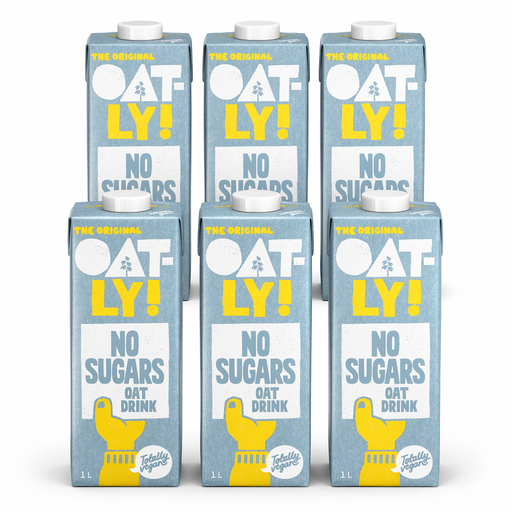
Oatly No Sugars Oat Drink, six 1L cartons

Oatly No Sugars Oat Drink 1L, pack of 6

This oat-based drink is presented as an alternative to cow's milk; check the current pack's allergen information, including its oat declaration. If it is intended as a child's main milk alternative, compare its protein and full nutritional declaration with age-appropriate guidance rather than choosing by the dairy-free route alone.

View on Joybuy

Alpro Oat No Sugars Long Life Drink, 8 x 1L

Alpro Oat No Sugars Long Life Drink 8 x 1L

This oat-based drink is described as dairy-free, but it contains oats; check the exact pack's allergen information before buying for someone with an allergy. Check its current sugars declaration before relying on the product name, and compare protein and fortification if it would be a child's main milk alternative.

View on Joybuy

Questions about milk and allergies

Does semi-skimmed or skimmed milk become suitable for cow's-milk allergy?

No. Removing some fat does not remove the milk proteins involved in cow's-milk allergy, so semi-skimmed and skimmed cow's milk are not allergy substitutes.

Is lactose-free milk the same as dairy-free milk?

No. Lactose-free milk remains dairy. Arla UK explains that lactose intolerance concerns milk sugar, while cow's-milk allergy concerns milk proteins; consider lactose-free dairy only when milk protein is tolerated.

Can goat's or sheep's milk replace cow's milk for an allergy?

Do not assume so. Royal United Hospitals Bath NHS Foundation Trust guidance says sheep's and goat's milk have similar proteins and are expected to cause symptoms in cow's-milk protein allergy.

What allergen information should I check when shopping?

Check the ingredients and allergen information on the exact pack, and ask for allergen information when buying food sold loose. GOV.UK identifies milk among the 14 allergens that food businesses must tell customers about.

What matters in a dairy-free drink for a child aged 1 or over?

For a child with diagnosed cow's-milk protein allergy, check that a potential main milk alternative is age-appropriate, unsweetened and fortified, then compare protein, energy, calcium, iodine, vitamin D and vitamin B12. NHS Norfolk and Waveney guidance identifies suitable fortified soya and pea drinks as first choices; individual allergies and nutritional needs still require consideration.