Who is choosing the milk?
The right starting point changes with who will drink the milk and how quickly the household will use it.
Adults moving away from whole milk
If you want cows’ milk for drinks, cereal or cooking but prefer a lower-fat option, compare semi-skimmed labels. Sainsbury’s lists 1.8g fat per 100ml for one filtered semi-skimmed product; check the nutrition panel on the bottle you choose.
Parents shopping for young children
Choose the milk with the child’s age in mind rather than treating every lower-fat variety alike. NHS guidance says skimmed and 1% milk are not recommended as main drinks for children under five. Before 12 months, breast milk or first infant formula should remain the main milk, according to nidirect’s child-feeding guidance.
Households unsure how much they will use
Start with the amount you expect to finish, then check the use-by date and instructions for storage after opening. For example, Marks & Spencer says its filtered semi-skimmed milk should be kept at 0°C to +5°C and used within seven days of opening; other bottles may give different directions.
What should you check before buying?
Decide who will drink the milk first. Then compare the fat information, bottle size and label directions on the products that fit that decision.
| Priority |
What to check |
Your needs |
| Child’s age |
Check who will use the milk as a main drink. NHS guidance advises against skimmed and 1% milk as main drinks for under-fives; before 12 months, cows’ milk should not replace breast milk or first infant formula as the main milk. |
There’s a young child at home, so I need to choose their main milk separately from milk bought for adults. |
| Fat content |
Compare the type of milk and the fat declaration per 100ml on the exact product. Sainsbury’s lists 1.8g fat per 100ml for one filtered semi-skimmed milk. |
I want a lower-fat cows’ milk for everyday household use without assuming that whole, semi-skimmed and skimmed are interchangeable. |
| Bottle and storage |
Compare bottle size, use-by date and opened-life instructions. Follow the refrigeration directions on the chosen product rather than applying one bottle’s directions to another. |
If this is my first shop, I would rather buy an amount I expect to finish than choose a larger pack solely by its price per litre. |
| Ingredients and allergens |
Read the current ingredients and allergen information on the exact variant. GOV.UK says food businesses must declare specified allergens when they are ingredients. |
If milk allergy is a concern, I need to check the product itself rather than assume that filtered, lower-fat or lactose-free means milk-free. |
Milk ranges to compare
These retailer ranges show different milk types and label details worth comparing; a range name alone does not settle which bottle fits your household.
Tesco
Tesco Groceries lists whole, semi-skimmed, skimmed, filtered, long-life and lactose-free milk categories.
- You can compare several milk types while deciding which category fits the household.
- Check the individual bottle for its size, nutrition and storage directions; a category listing does not supply one set of details for every product.
Sainsbury’s
Sainsbury’s lists standard semi-skimmed milk and a filtered semi-skimmed product.
- Its listed filtered product gives a per-100ml nutrition figure of 1.8g fat for comparison with other labels.
- Check the storage and opened-life directions of the bottle you buy rather than assuming all semi-skimmed products follow the same instructions.
M&S
Marks & Spencer lists a filtered semi-skimmed British milk with specific refrigeration and opened-life directions.
- The listed directions specify storage at 0°C to +5°C and use within seven days after opening.
- Apply those directions to that product, not to every filtered or semi-skimmed milk.
Waitrose
Waitrose lists Essential British Free Range Semi-Skimmed Milk, including a 2.272-litre pack.
- The stated pack size gives households a concrete quantity to compare with their expected use.
- A 2.272-litre bottle may be more than a small household expects to finish; check its date and label directions before choosing it.
Joybuy skimmed milk options
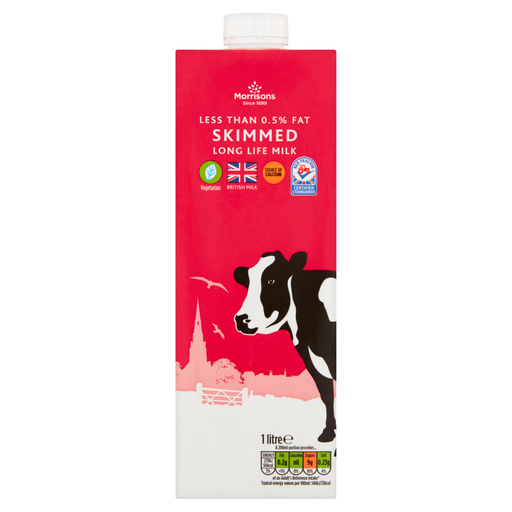
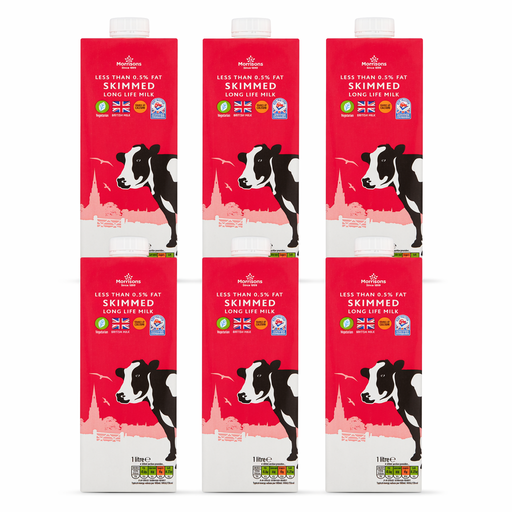
These Morrisons options are UHT skimmed milk for households considering the skimmed route. They are not semi-skimmed alternatives, and NHS guidance does not recommend skimmed milk as a main drink for children under five.
 No image available
Morrisons British UHT Skimmed Milk, 1 litre
One 1-litre carton gives an adult household a smaller quantity to start with if milk use is uncertain. It is UHT skimmed milk, rather than semi-skimmed; skimmed milk is not recommended by the NHS as a main drink for children under five. Follow the carton’s storage directions.
View on Joybuy
 No image available
Morrisons British UHT Skimmed Milk, 6 × 1 litre
Six 1-litre UHT skimmed milk cartons suit a planned larger quantity better than an uncertain first-shop estimate. Check how quickly you will use each carton after opening and follow its storage directions. NHS guidance does not recommend skimmed milk as a main drink for children under five.
View on Joybuy
Questions about choosing milk
Is whole milk a lower-fat choice?
No. If an adult household wants lower-fat cows’ milk, semi-skimmed is a starting point for comparison. Check fat per 100ml on the exact bottle; Sainsbury’s lists 1.8g per 100ml for one filtered semi-skimmed product.
Can I buy semi-skimmed milk for a young child?
Choose a child’s main milk according to their age, not just its fat level. Before 12 months, cows’ milk should not replace breast milk or first infant formula as the main milk. For children under five, the NHS advises against skimmed and 1% milk as main drinks; check its age-specific feeding guidance when choosing between whole and semi-skimmed.
How do I choose between standard and filtered semi-skimmed milk?
Compare the bottle size, use-by date, price per litre and directions for use after opening. For its filtered semi-skimmed milk, Marks & Spencer specifies refrigeration at 0°C to +5°C and use within seven days after opening; check the actual bottle rather than assuming the same period applies to another product.
Is lactose-free cows’ milk suitable for someone with a milk allergy?
Do not assume that lactose-free means milk-free. Read the current ingredients and allergen information for the exact product. If a child may have a cow’s-milk allergy, seek advice from a health professional rather than choosing a standard cows’-milk variant on that basis.
What should I read on a milk label before a first shop?
Check the milk type, quantity, nutrition information per 100ml, ingredients and allergen information, use-by date and storage directions. Those details help you compare the fat content and choose an amount you expect to use within the bottle’s instructions.


