
24/7 Customer Support

Free returns

Same-day & Next-day Delivery

Quality Guaranteed

Unlock Your Welcome Offers: FREE Delivery | Up to 80% OFF | Free 30-day JoyPlus trial
Download the APP
A milk frother can turn ordinary milk into foam for lattes, cappuccinos, hot chocolate and milkshakes. However, the product that looks most impressive on a listing may not suit your kitchen, drink habits or cleaning routine.
Before buying, look beyond phrases such as “barista-style” or “professional results”. The useful questions are more practical: does it heat as well as froth, is the stated capacity usable, and can the parts be cleaned without damaging the coating or whisk?
Many appliances list one large capacity, but the maximum amount can differ between foaming and heating. Milk expands as it aerates, so filling a jug to the brim may cause overflow or uneven foam.
Check both figures where available. For example, the GASTROBACK Latte Magic produces up to 350ml of milk froth or 250ml of heated milk per cycle. That is enough for one or two drinks, depending on your cup size, but may be limiting when preparing several cappuccinos at once.
A high wattage figure can indicate faster heating, but it does not by itself confirm foam texture. Whisk design, milk volume, temperature control and the type of milk used all affect the result.
A handheld milk frother may be affordable and flexible, but you normally need a separate jug and a way to heat the milk. An automatic electric milk frother can combine heating and foaming, reducing the number of steps but usually taking up more worktop space.
Milk residue can harden around whisks and jug edges. A non-stick interior, removable whisk or dishwasher-safe component can make regular use easier, but always check the care instructions before placing a part in a dishwasher.
For a microwave-safe glass milk frother, the glass may be suitable for microwave heating while the lid, plunger or other components may not be. Remove any non-microwave-safe parts and follow the manufacturer’s instructions. Never assume that an entire frother is microwave-safe simply because its carafe is made from glass.
Consider how many drinks you make in a normal session. A 200–350ml frother is generally suited to individual use, while larger households may prefer a model with a bigger working capacity or a handheld design that can be used in a separate jug.
Remember that the capacity for foam may be lower than the physical jug size. Keep below the marked maximum to allow the milk to expand.
A hot and cold milk frother is useful if you prepare iced coffees, chilled milkshakes and warm drinks throughout the year. Some models only aerate cold milk, meaning you must heat it separately.
If you want hot chocolate, check whether the appliance is designed to heat milk or only to create foam. Automatic shut-off can also be helpful when preparing breakfast or an evening drink, but it does not remove the need to use the appliance on a stable, dry surface and follow its instructions.
A manual model requires no electricity and can be convenient for occasional use, travel or small kitchens. An electric model may offer one-touch operation, automatic shut-off and dedicated heating or frothing programmes.
For UK homes, check the supplied plug, voltage information and manufacturer’s instructions before purchase. Keep electrical bases away from water, and do not immerse them during cleaning. A removable whisk or frothing spiral is particularly useful because milk often collects around moving parts.
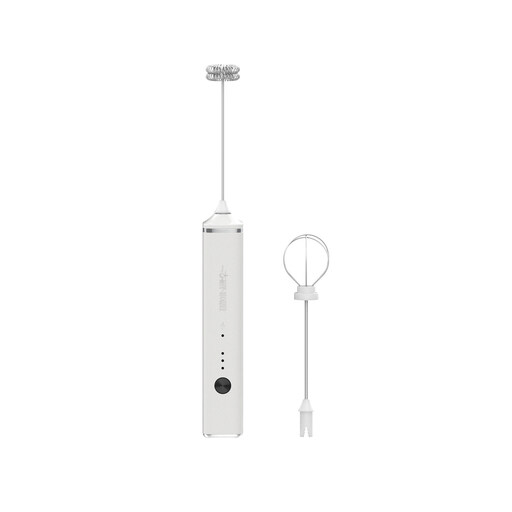
Why This Fits Their Persona: A handheld format suits first-time buyers who want a compact coffee frother for occasional lattes, cappuccinos or hot chocolate without a dedicated jug appliance.
It does not require you to pay for a larger heating jug when you already own a saucepan or microwave-safe container. Use a separate suitable vessel and clean the whisk promptly after use.
Listed as a 3-in-1 handheld foam maker with a stainless steel whisk; its compact design is suitable for limited worktop space.
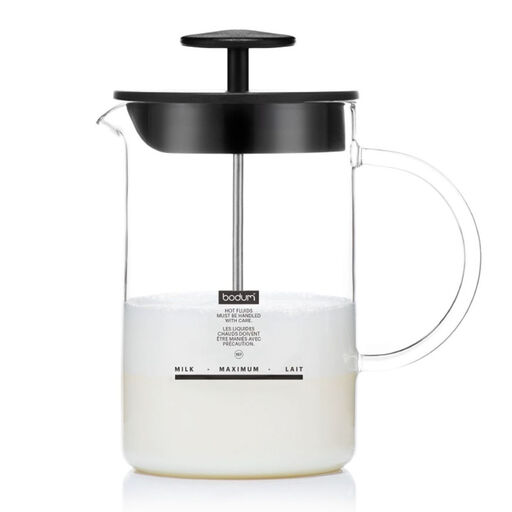
Why This Fits Their Persona: This manual milk frother is suited to drinkers who value a glass serving vessel, no electrical connection and a straightforward preparation ritual.
The stated process is visible and user-controlled rather than hidden behind an automatic programme. Fill only to the MAX mark, plunge 60–90 times, then rest the foam before serving.
The 250ml borosilicate glass carafe is described as microwave-suitable for heating, and the parts are listed as dishwasher safe. Check microwave instructions before use.
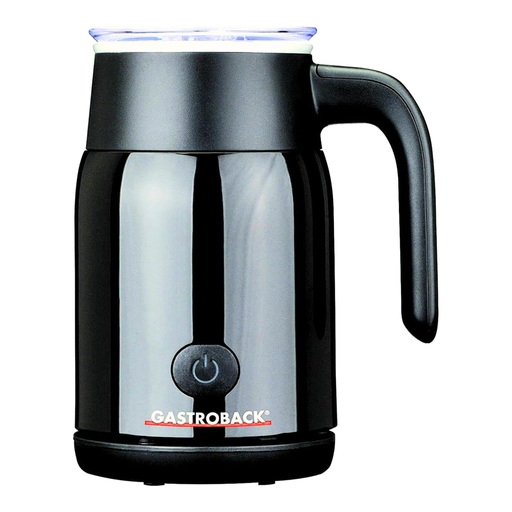
Why This Fits Their Persona: A suitable option for households making hot drinks regularly and wanting heating and frothing from one countertop appliance.
Separate figures show the difference between its frothing and heating limits, helping buyers plan realistic portions instead of relying on one headline capacity.
It offers hot or cold frothing, a heating function, automatic shut-off, a removable froth spiral and a non-stick interior. The listed model includes a 2-year manufacturer’s warranty.
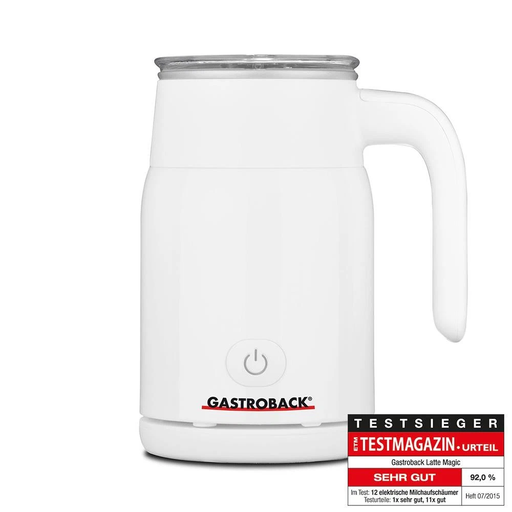
Why This Fits Their Persona: Its listed ultra-quiet magnetic drive and illuminated soft-touch switch may suit early risers, shared flats or evening drink preparation.
The automatic shut-off reduces the need to monitor each cycle, while the removable spiral addresses the common problem of residue around a fixed frothing mechanism.
The white model provides the same listed 350ml froth and 250ml heating capacities as model 62326, with hot and cold functions and a non-stick interior.
We have compiled a complete, real-time list of products that fully satisfy these strict selection criteria and UK safety regulations.
Use chilled milk for a handheld or manual frother unless the instructions specify otherwise. Do not exceed the marked fill line, as foam expands during aeration. Dairy milk and plant-based alternatives can behave differently; barista-style oat or almond drinks are often formulated with foaming in mind, but results still vary by product.
For a hot drink, heat the milk to a comfortable serving temperature rather than boiling it. With a manual glass model, allow the carafe to cool safely and use an oven glove if it has been heated in a microwave. Pour slowly so the liquid and foam combine rather than leaving all the foam at the bottom.
Clean the whisk, plunger and jug soon after use. Avoid abrasive pads on coated interiors, and keep electrical bases dry. These simple steps can help maintain performance and reduce lingering milk odours.
An electric milk frother generally uses less power per cycle than a full coffee machine, but the exact running cost depends on wattage, cycle length and your electricity tariff. A manual milk frother uses no electricity for foaming, although heating milk separately still consumes energy.
Some electric models include a heating function suitable for warmed milk or hot chocolate. A handheld milk frother can mix cocoa into warm milk, while a manual glass model may require the milk to be heated separately. Check the product instructions before adding powders or syrups, as thick mixtures can be more difficult to clean.
Lifespan depends on cleaning, frequency of use and the condition of moving parts. Removable whisks and dishwasher-safe components can simplify maintenance, but they do not eliminate wear. Stop using an electrical appliance if the cord, plug, casing or power base shows damage, and consult the manufacturer rather than attempting an unsafe repair.