Everyday comfort-food cooks
If porridge, hot drinks and home cooking use most of your milk, semi-skimmed offers a lower-fat dairy option for those routines. The NHS advises older children and adults to choose lower-fat milk.


For porridge, hot drinks and sauces, semi-skimmed milk is a lower-fat starting point if you want to reduce saturated fat; the NHS advises older children and adults to choose lower-fat milk. Keep whole milk where you prefer its fuller character in a recipe, or consider 1% or skimmed milk when reducing fat matters more. Whichever you choose, check the bottle’s storage instructions against how quickly your household uses milk.
If porridge, hot drinks and home cooking use most of your milk, semi-skimmed offers a lower-fat dairy option for those routines. The NHS advises older children and adults to choose lower-fat milk.
You may want semi-skimmed for routine use but prefer whole milk in a particular recipe. My Diabetes My Way Scotland, an NHS resource, says lower-fat milks contain similar amounts of protein, carbohydrate and calcium to whole milk, with less total and saturated fat.
A filtered lower-fat milk may be worth considering if its unopened life and instructions after opening suit your pace of use. Check the individual bottle: storage periods are product-specific.
Start with the role milk plays in your recipes, then compare the nutrition panel and choose a pack you can use within its labelled storage period.
| Priority | What to check | Your needs |
|---|---|---|
| Fat level | Compare total fat and saturates on a like-for-like nutrition basis, such as per 100ml. Whole, semi-skimmed, 1% and skimmed milk are different choices; the NHS suggests 1% or skimmed milk when cutting down on fat. | I want to use less saturated fat in the milk I have regularly, while still choosing dairy milk for drinks and cooking. |
| Recipe use | Decide whether you specifically want whole milk’s fuller character. M&S describes semi-skimmed milk for uses including coffee and porridge; check how a different milk works in your own recipe. | For porridge and hot drinks, I would try a lower-fat milk; for a particular sauce or pudding, the result I prefer may guide the choice. |
| Storage | Read the use-by date, refrigeration directions and period after opening. Waitrose says its filtered British free-range semi-skimmed milk keeps for up to one month unopened and 7 days opened; that claim applies to that product. | Milk lasts longer in my household when the pack size and the time allowed after opening match how much we actually use. |
| Allergens | Read the pack’s ingredients and allergen declaration, particularly if buying for someone with a milk allergy. The Food Standards Agency identifies milk as an allergen; lactose-free dairy milk is not milk-free. | I need to confirm that the milk is suitable for everyone who will eat the meal, rather than relying on a front-of-pack description. |
| Children’s use | Distinguish cooking from a child’s main drink. The NHS says 1% and skimmed milk can be used in cooking for children over 12 months, but should not be their main drink if they are under 5. | When cooking for a young child, I need to choose milk with the child’s age and intended use in mind. |
Whole milk does not serve the same fat-reduction aim as semi-skimmed, 1% or skimmed milk. The NHS advises older children and adults who want to cut down on fat to choose lower-fat milk.
Decide whether your priority is the character of milk in a particular recipe or reducing fat in routine use, then compare nutrition panels on the same basis.
Waitrose’s unopened-life claim applies to its own filtered semi-skimmed product. It does not replace the instructions for refrigeration and use after opening on another bottle.
Check the exact product’s use-by date, storage directions and period after opening before choosing a pack size.
Tesco and Sainsbury’s warn that product information can change, including ingredients and nutrition details.
Read the physical label before use, especially when checking allergens, nutrition or suitability for a child.
Lactose-free dairy milk remains a dairy product. The Food Standards Agency identifies milk as an allergen, so the phrase “lactose-free” alone cannot establish suitability for someone with a milk allergy.
Check the allergen declaration and follow the person’s clinical advice rather than substituting lactose-free dairy milk on that assumption.
These ranges illustrate milk formats to check when shopping; the label on the specific bottle determines its nutrition and storage instructions.
Tesco lists Cravendale filtered fresh semi-skimmed milk among its dairy options.
Tesco’s milk listings include whole, semi-skimmed, skimmed, filtered and long-life formats.
Sainsbury’s lists British whole and semi-skimmed milk, including 2.27L bottles.
Asda lists British whole milk and a filtered British semi-skimmed milk.
M&S lists whole, semi-skimmed and skimmed milk for uses including cereal, rice pudding and hot chocolate.
Waitrose lists whole milk and a filtered British free-range semi-skimmed product.
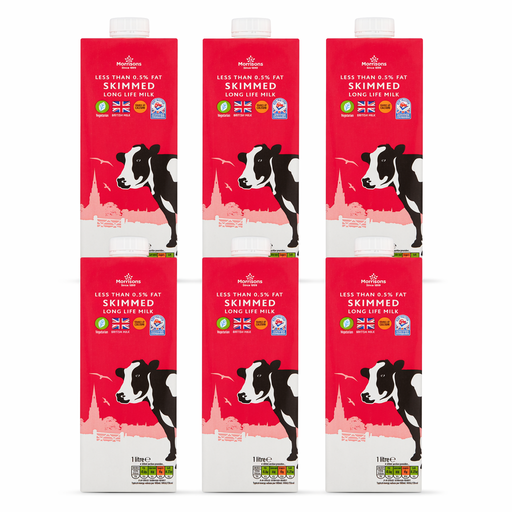
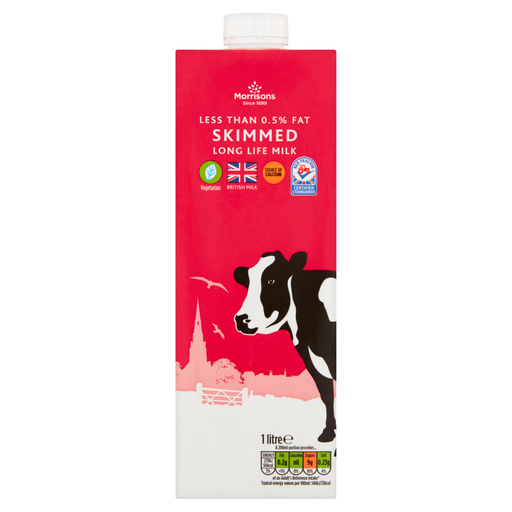
These Morrisons UHT skimmed milks represent the skimmed route for winter drinks and cooking. One listing is a six-pack; the other is a single 1 litre pack, so consider how much milk you expect to use.
 No image available
A six-pack to consider if you use skimmed milk regularly in hot drinks or cooking. Check the pack’s storage instructions after opening and its allergen declaration before use.
 No image available
A single 1 litre pack to consider for skimmed milk in drinks or recipes. Check the bottle’s storage instructions after opening and its allergen declaration before use.
Choose semi-skimmed if you want a lower-fat dairy milk for routine use; M&S describes semi-skimmed milk for coffee and porridge. Whole milk remains an option when you specifically prefer it in a recipe, while the NHS advises older children and adults to choose lower-fat milk when cutting down on fat.
Yes. My Diabetes My Way Scotland, an NHS resource, says lower-fat milks contain similar amounts of protein, carbohydrate and calcium to whole milk, while containing less total and saturated fat.
The NHS says 1% and skimmed milk can be used in cooking for children over 12 months, but should not be given as their main drink if they are under 5. Keep the distinction between an ingredient in a meal and a regular drink in mind.
Follow the individual bottle rather than one rule for all filtered milk. Waitrose says its filtered British free-range semi-skimmed milk keeps for up to one month unopened and 7 days opened; M&S instructs buyers of its filtered semi-skimmed British milk to refrigerate it at 0°C to +5°C and use it within 7 days after opening.
Do not treat “lactose-free” as “milk-free”: lactose-free dairy milk remains a milk product, and the Food Standards Agency identifies milk as an allergen. Check the specific product’s allergen declaration and follow the person’s clinical advice.