Brand and product-line references
These examples illustrate differences in pack size and labelling; a brand name alone does not establish the nutrition of every flavour or variant.
UFIT
UFIT describes its chocolate drink as a ready-to-drink protein milkshake in a 500ml bottle.
- UFIT lists 50g protein and 295kcal per 500ml chocolate bottle.
- The listed drink contains milk and is an individual bottle, not a 4-pint pack.
Arla Protein
Arla Protein’s UK catalogue describes a 482ml chocolate protein shake.
- Arla lists 26g protein per bottle and describes this variant as low fat.
- The chocolate shake contains milk; check the exact product rather than applying its details to other Arla drinks.
Pro Mlk
Sainsbury’s lists Pro Mlk Vanilla as a chilled 330ml protein shake.
- Its listing gives 25.5g protein and 199kcal per carton.
- The carton contains milk and must be kept at 0–5°C; Sainsbury’s says to use it within three days of opening.
Müller x Myprotein
Myprotein describes this collaboration as a 385ml ready-to-drink shake.
- Myprotein lists 25g protein per bottle.
- It contains milk and comes in an individual bottle rather than a 4-pint format.
Yazoo
Tesco lists Yazoo chocolate, banana and strawberry flavoured milkshakes in 1-litre bottles.
- The listed 1-litre format offers more drink in one bottle than the individual protein-shake examples above.
- Check the exact variant’s nutrition label before treating its larger format as evidence of a particular protein amount.
Ready-to-drink options on Joybuy
These are individual ready-to-drink shakes sold in multipacks. Compare each bottle or can with your intended serving; none of these packs is one 4-pint bottle.
 No image available
Applied Nutrition Strawberries & Cream Protein Nutrition Shake, 8 × 330ml
This multipack provides separate ready-to-drink bottles rather than one large bottle. The listing identifies milk as an allergen and says to refrigerate after opening and consume within 12 hours; check the pack’s nutrition panel for the amount you intend to drink.
View on Joybuy
 No image available
Applied Nutrition Vanilla Ice Cream Protein Nutrition Shake, 8 × 500ml
This option comes as separate 500ml ready-to-drink bottles, not one 4-pint bottle. The listing identifies milk as an allergen and directs users to refrigerate after opening and consume within 24 hours; compare nutrition figures for the whole bottle.
View on Joybuy
 No image available
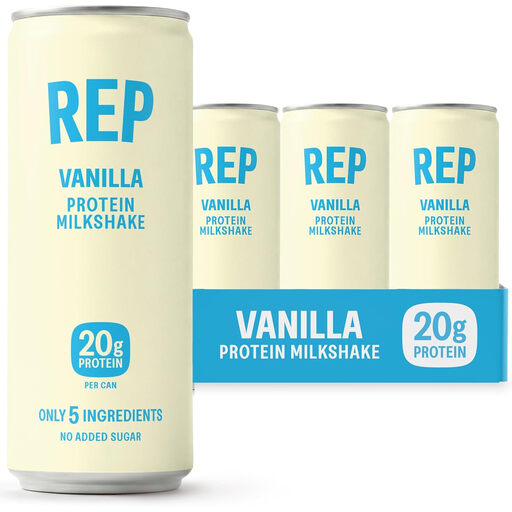
REP Vanilla Protein Shakes, 8 × 250ml
These are individual ready-to-drink cans rather than one large bottle. Check the protein amount on the current can label before using it to compare servings. The listing identifies milk as an allergen and says to refrigerate after opening and consume within 24 hours.
View on Joybuy
Questions about formats and labels
Is a 4-pint bottle of milk the same as a ready-to-drink protein shake?
No. Tesco lists 2.272L/4-pint plain milk, while the cited ready-to-drink protein shakes are smaller products with stated nutrition per pack. If a single 4-pint prepared shake is essential, check the exact product listing and label rather than assuming a large milk bottle meets that requirement.
Should I choose the bottle with the most protein?
Not on protein grams alone. Cambridge University Hospitals NHS Foundation Trust notes that protein requirements vary with factors including age, activity and health status; compare the protein, energy, sugars and fat for the amount you plan to drink.
How should I store a protein milkshake?
Follow the directions on the exact pack. Sainsbury’s says to keep Pro Mlk Vanilla at 0–5°C and use it within three days of opening; UFIT says its drinks can be stored in a cupboard or fridge while unopened. Those instructions should not be applied to other products without checking their labels.
Do the cited protein shakes contain milk?
Yes. The cited Pro Mlk, Arla Protein, UFIT and Müller x Myprotein products list milk ingredients. Check the complete ingredient and allergen declaration for the exact flavour and pack if milk or another ingredient is a concern.
Does “no added sugar” mean there are no sugars in the drink?
No. Sainsbury’s lists 20.7g total sugars per 330ml Pro Mlk Vanilla carton despite its no-added-sugar statement. Compare the total-sugars line on the nutrition panel as well as any front-of-pack wording.


