If reducing milk fat is your priority, choose semi-skimmed rather than whole milk, or consider 1% or skimmed milk for a further reduction. Milk.co.uk lists typical whole milk at 3.7g fat and 2.4g saturates per 100ml, compared with 1.8g and 1.1g for semi-skimmed milk. For a ploughman’s lunch that includes cheese, compare the milk’s label alongside the rest of the meal, then choose a pack you can use within its storage instructions.
Who is choosing the milk?
Adults reducing fat in a cheese-based lunch
If your ploughman’s lunch includes cheese and you also want to reduce fat in your milk, compare semi-skimmed, 1% and skimmed milk with whole milk. The NHS advises older children and adults to choose lower-fat milks; check the figures on the carton you intend to buy.
Households using milk occasionally
A carton bought for one lunch may also need to serve later drinks or meals. Compare pack size and the exact product’s storage instructions: fresh, filtered fresh and UHT milks can have different directions after opening.
Shoppers buying for adults and young children
The milk chosen to reduce fat in an adult’s lunch need not be the right main drink for a young child. Check age-specific guidance before choosing 1% or skimmed milk for a child, as well as any directions on the carton.
What should you check?
Start with the milk type and its per-100ml nutrition panel, then choose a pack and storage format that fit how your household will use it.
| Priority |
What to check |
Your needs |
| Milk fat |
Compare the milk type, fat and saturates per 100ml. Milk.co.uk lists typical whole, semi-skimmed and skimmed milk at 3.7g, 1.8g and 0.3g fat per 100ml respectively; individual cartons have their own figures. |
I want less fat in the milk served with a cheese-based lunch. Semi-skimmed offers a reduction from whole milk; I would compare 1% or skimmed milk if reducing milk fat further matters more to me. |
| Pack and storage |
Check the pack size, unopened storage directions and how soon to use it after opening. Waitrose & Partners lists three days for its Essential fresh semi-skimmed milk, five days for its Essential UHT semi-skimmed milk and a best-consumed-within-seven-days instruction for the cited Cravendale filtered milk. |
For an occasional lunch, I need a carton I can use within its stated opened period. If I am buying ahead, I would check whether the particular UHT carton can be stored unopened in the cupboard. |
| Children’s drinks |
Check age-specific guidance if milk will be a young child’s main drink. Do not assume the adult lower-fat choice meets that separate need. |
The adults and children in my household may need different milk choices, even when we are shopping for the same lunch. |
| Dates and allergens |
Follow the carton’s date marking and storage directions. The Food Standards Agency says date guidance depends on following storage instructions; GOV.UK identifies milk as an allergen that food businesses must disclose when it is an ingredient. |
I need to check the current label before serving the milk, especially if someone must avoid milk as an ingredient. |
Common buying mistakes
-
Assuming plain whole milk is a lower-fat choice
Milk.co.uk lists typical whole milk at 3.7g fat and 2.4g saturates per 100ml, compared with 1.8g and 1.1g for semi-skimmed milk. Whole milk therefore does not meet a goal of reducing milk fat relative to semi-skimmed.
Compare the fat and saturates figures per 100ml on the cartons you are considering, particularly when cheese is also part of lunch.
-
Choosing a large pack without checking its opened period
Storage directions differ by product. The cited Waitrose & Partners fresh semi-skimmed milk says to consume it within three days of opening, while its UHT semi-skimmed milk says five days; the cited Cravendale filtered milk says it is best consumed within seven days.
Match the pack size to how quickly your household will use the milk, and follow that carton’s own directions.
A pack that lasts longer than you can use it may leave milk to discard.
-
Applying an adult’s choice to a young child
A choice made to reduce fat in an adult’s lunch does not settle which milk should be a young child’s main drink.
Check age-specific NHS guidance separately before serving 1% or skimmed milk as a child’s main drink.
-
Overlooking the milk ingredient
Lower-fat dairy milk still contains milk. GOV.UK lists milk among the allergens that food businesses must disclose when present as an ingredient.
If someone needs to avoid milk, check the current product label rather than treating a lower-fat carton as a dairy-free alternative.
Brand and range references
These examples help distinguish milk types and storage formats; a brand name alone does not establish the nutrition or instructions of every carton in its range.
Cravendale
The cited Cravendale filtered semi-skimmed milk is an option to compare when you expect to use milk across several days.
- Waitrose & Partners lists 1.7g fat and 1.0g saturates per 100ml for this product, with an instruction that it is best consumed within seven days of opening.
- It is semi-skimmed, not a 1% or skimmed milk; check the particular pack if you want to reduce milk fat further.
Waitrose Essential
The cited fresh and UHT semi-skimmed cartons illustrate why storage format matters alongside the fat figure.
- Waitrose & Partners lists 1.8g fat and 1.1g saturates per 100ml for each cited carton.
- Their opened instructions differ: three days for the cited fresh milk and five days, with refrigeration below 5°C, for the cited UHT milk.
Tesco
Tesco Groceries separates whole, semi-skimmed and skimmed milk into categories, which can help you compare types within its range.
- Its cited semi-skimmed category includes Tesco own-label, Cravendale and Arla product listings.
- A category listing does not establish the nutrition, storage directions or availability of the carton you choose; check its product information.
Joybuy milk option
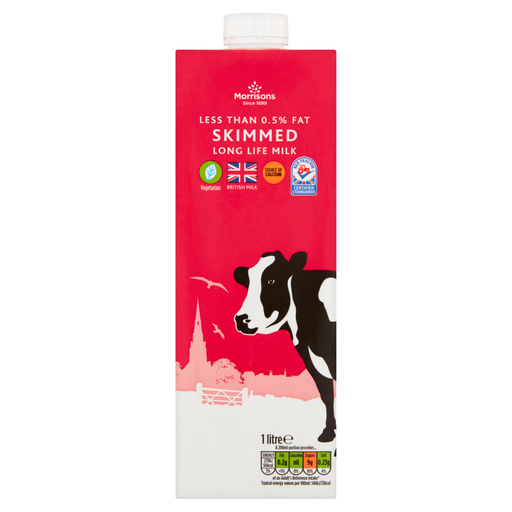
This UHT skimmed milk is an option to consider if you want to reduce milk fat rather than buy whole milk for lunch. Check the individual carton’s label and storage directions before deciding whether its pack size suits you.
 No image available
Morrisons British UHT Skimmed Milk 1 Litre
For a ploughman’s lunch where skimmed milk suits the adult milk choice. The product title identifies a 1-litre UHT carton; check its nutrition panel and its unopened and after-opening storage directions for your household.
View on Joybuy
Questions about choosing milk
Is whole milk a lower-fat choice for a ploughman’s lunch?
Not compared with semi-skimmed or skimmed milk. Milk.co.uk lists typical whole milk at 3.7g fat and 2.4g saturates per 100ml, versus 1.8g and 1.1g for semi-skimmed milk. Compare the figures on the cartons you are buying if reducing milk fat is the aim.
Should I choose semi-skimmed, 1% or skimmed milk?
Choose semi-skimmed if you want less milk fat than whole milk without choosing the lowest-fat type; compare 1% and skimmed milk if reducing it further is your priority. Check each carton’s nutrition panel, and consider separately which milk is appropriate as a young child’s main drink.
Can I buy milk ahead and keep it in the cupboard?
Choose a carton whose unopened storage instructions permit cupboard storage, such as an appropriate UHT milk, and follow its directions after opening. Waitrose & Partners says its cited Essential UHT semi-skimmed milk must be refrigerated below 5°C after opening and consumed within five days; another product may give different instructions.
Is lower-fat dairy milk suitable for someone avoiding milk?
No: reducing the fat does not remove the milk ingredient. GOV.UK identifies milk as an allergen that food businesses must disclose when it is an ingredient, so check the current label if someone needs to avoid it.


