What should you compare?
Start with the dietary requirement, then compare like-for-like nutrition figures and the amount you expect to serve.
| Priority | What to check | Your needs |
|---|
| Sugar |
Check any no-added-sugar claim against the ingredients. Compare total sugars per 100ml and per amount served; the NHS notes that naturally occurring milk sugar appears in total sugars but is not a free sugar. |
I want to compare added-sugar choices without assuming that a milk drink labelled no added sugar contains no sugar at all. |
| Milk and lactose |
Look for an explicit lactose-free claim where needed, then read the current ingredients and milk-allergen declaration. A lactose-free dairy drink can still contain milk. |
If I need to avoid lactose, I need the claim on this product. If milk allergy is the concern, I need to check the allergen information separately. |
| Portion and nutrition |
Compare energy, sugars and saturates on the same per-100ml basis, then check the amount to be consumed. For a powder, account for the milk or alternative used to prepare it. |
A bottle for one outing and a larger pack to share are different choices; I want to know what the planned serving contains. |
| Sweeteners and base |
Read the ingredients for sweeteners. With a mix, check its ingredients as well as the chosen liquid; with a ready-to-drink bottle, check the finished drink’s label. |
I may prefer to choose the milk or alternative myself, or I may want a drink that is ready to take out. |
Brand and format references
These Tesco Groceries listings illustrate pack formats and label questions; each variant needs checking on its own terms.
Yazoo
Tesco Groceries lists ready-to-drink Yazoo flavoured milk in litre bottles and no-added-sugar multipacks.
- Listed formats include larger bottles and 6 × 200ml packs, useful when choosing between sharing and individual portions.
- Check the exact flavour and pack for its ingredients, nutrition and allergens; the formats do not share one label.
Müller Frijj
Tesco Groceries lists Müller Frijj milkshakes in 330ml single bottles, including chocolate, strawberry cheesecake and fudge brownie flavours.
- A single bottle gives a defined pack size to compare with other ready-to-drink options.
- Check the chosen flavour’s label rather than assuming a lactose-free or no-added-sugar claim.
Mars
Tesco Groceries lists a 400ml Mars chocolate-flavoured milk drink labelled no added sugar.
- The listed drink is UHT and contains sweeteners; its description specifies that naturally occurring sugars remain.
- No added sugar does not mean sugar-free or dairy-free. Check the current pack for the full ingredients and nutrition.
Tesco
Tesco Groceries lists own-label no-added-sugar milkshake powders prepared with milk.
- A mix lets you choose the liquid base. Tesco’s strawberry powder listing gives nutrition for 13g of powder prepared with 200ml semi-skimmed milk.
- That powder lists sucralose and whey powder (milk). Its prepared-drink figures will not describe a serving made with a different liquid.
Joybuy milkshake-style drinks
These ready-to-drink LIGHT UP yoghurt drinks offer a 220ml bottle or a three-bottle pack for planning portions on outings. Check the current pack before relying on a no-added-sugar claim: the listed ingredients name sugar, and milk is declared as an allergen.
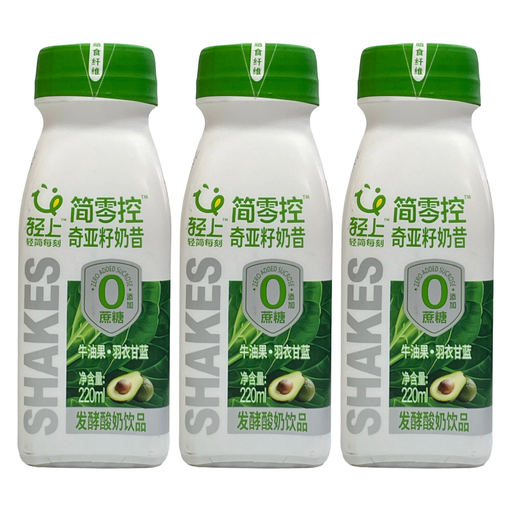 Image unavailable
LIGHT UP Zero Control Avocado Kale Chia Seed Milkshake Yoghurt Drink, 220ml × 3
Three 220ml bottles provide separate portions for outings. The no-added-sugar claim conflicts with sugar named in the listed ingredients, so check the current pack before choosing it for that reason. Milk is declared as an allergen.
View on Joybuy
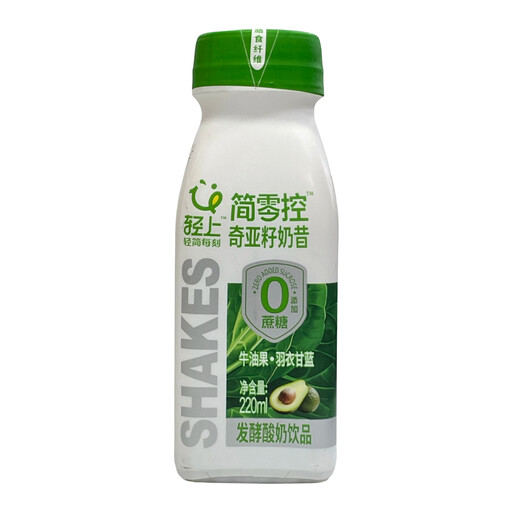 Image unavailable
LIGHT UP Zero Control Avocado Kale Chia Seed Milkshake Yoghurt Drink, 220ml
The 220ml bottle gives you one defined pack size to compare with other drinks. Sugar appears in the listed ingredients despite the no-added-sugar claim; check the current pack if that claim affects your choice. Milk is declared as an allergen.
View on Joybuy
Common questions
Does ‘no added sugar’ mean a milkshake contains no sugar?
No. Milk naturally contains lactose, which appears in total sugars even though, as the NHS explains, naturally occurring milk sugar is not a free sugar. Check the ingredients and compare total sugars per 100ml and per amount you plan to drink.
Does lactose-free mean suitable for a milk allergy?
No. A lactose-free dairy drink can still contain the milk allergen: the Tesco-listed Valio PROfeel lactose-free shake, for example, declares ‘Contains: Milk’. Check the current allergen information on the exact product when milk allergy matters.
How do I compare a bottled milkshake with a powder?
Compare the finished drinks per 100ml, then compare the amounts you would actually drink. Include the liquid used to make the powder: Tesco’s strawberry mix figures, for example, describe 13g of powder prepared with 200ml semi-skimmed milk, not the powder alone.
Which label details matter when choosing a holiday milkshake?
Check ingredients and allergens for the exact variant, then compare energy, sugars and saturates per 100ml and for your planned serving. The NHS explains that pre-packed nutrition labels show figures per 100g or 100ml, and sometimes per portion; the portion figure is most useful when it matches the amount you will have.


