Shoppers who want organic dairy
If organic production matters to you, check that the milk or finished shake is labelled organic. You still need to account for the carbohydrate in the milk and any additions.


Making a shake with certified organic plain milk lets you measure the milk and each addition; buying a ready-to-drink shake avoids preparation but calls for a check of the whole bottle’s carbohydrate and sugars. Organic status concerns production, not carbohydrate content, and a no-added-sugar claim does not mean the drink contains no sugars. If you count carbohydrates, include the amount in the portion you actually drink.
If organic production matters to you, check that the milk or finished shake is labelled organic. You still need to account for the carbohydrate in the milk and any additions.
If convenience matters, compare the carbohydrate, sugars and volume you will drink. A no-added-sugar claim answers a different question from an organic label.
If carbohydrate counting is part of your agreed approach, use the amount for your actual portion. Diabetes UK explains that carbohydrate counting can be used to match insulin to food and drink.
An organic milk base gives you control over the amount and additions; a prepared shake saves that step but needs its own label checks.
| Priority | What to check | Your needs |
|---|---|---|
| Carbohydrate | Compare carbohydrate and sugars per 100ml, then work out the amount for your portion. ASDA Groceries lists 4.8g carbohydrate and 4.8g sugars per 100ml for its organic semi-skimmed milk, before any flavourings. | “I need to account for the whole drink, including the milk used in a homemade shake.” |
| Organic status | Check whether the milk or finished drink is identified as certified organic. Read its nutrition information separately: organic production does not establish a carbohydrate amount. | “Organic dairy matters to me, but I don’t want to mistake that label for a nutrition claim.” |
| Sugar claims | Read the total carbohydrate and sugars rows even when the front says no added sugar. Tesco Groceries lists 7.1g carbohydrate and 6.5g sugars per 100ml for Mars Chocolate Flavoured Milk Drink No Added Sugar. | “I want a prepared drink, and I need to know what its claim means for the amount I’ll drink.” |
| Portion and ingredients | Check the bottle size against the stated serving size. For a homemade shake, include everything added to the milk; for a prepared drink, check the current ingredients and allergen declaration. | “The listed serving might not be the amount I pour or the bottle I finish.” |
Organic describes how a product is produced, not its carbohydrate content. ASDA Groceries lists 4.8g carbohydrate and 4.8g sugars per 100ml for its organic semi-skimmed milk, before additions.
Check organic status and the nutrition panel as separate parts of the decision.
Tesco Groceries lists 6.5g sugars and 7.1g carbohydrate per 100ml for Mars Chocolate Flavoured Milk Drink No Added Sugar.
Use the sugars and total carbohydrate figures for the volume you intend to drink, rather than relying on the front-of-pack wording.
A per-100ml figure and a figure for a whole bottle describe different amounts. That matters when you are comparing products or deciding how much of one to drink.
Compare labels per 100ml first, then calculate the carbohydrate for your actual portion, including any ingredients added at home.
These examples show why the finished drink’s label matters, whether you buy a flavoured bottle or use plain milk as a base.
Yazoo Chocolate is a ready-to-drink flavoured milkshake.
FRijj Favourites Chocolate Flavour is a prepared chocolate milkshake.
Mars Chocolate Flavoured Milk Drink No Added Sugar offers a prepared drink with a no-added-sugar claim.
Tesco Groceries lists organic semi-skimmed milk alongside milkshake products, allowing a plain-milk base to be considered separately from prepared drinks.
Sainsbury's Chocolate Milkshake is an example of a prepared own-label drink.
ASDA Organic Fresh Semi Skimmed British Milk is plain milk that can serve as a measured base for a homemade shake.
This prepared protein shake is an option for comparing a bottle’s stated portion with your needs. Check its current label for organic status if organic sourcing is essential to your choice.
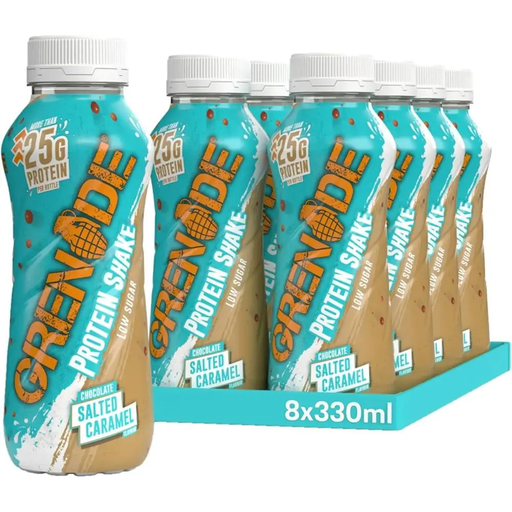 No image available
A ready-to-drink option supplied as eight 330ml bottles. Compare the carbohydrate for the amount you plan to drink, and check the current pack for organic status or a no-added-sugar claim if either is important to you.
No. Organic status concerns production, while carbohydrate and sugars depend on the finished drink. Check both the organic designation and the nutrition information for the portion you will drink.
Start with carbohydrate and sugars per 100ml so the volumes match, then calculate the figures for the amount you will actually drink. NHS guidance identifies carbohydrate and sugars among the information provided on food labels.
No. Tesco Groceries lists 6.5g sugars and 7.1g carbohydrate per 100ml for Mars Chocolate Flavoured Milk Drink No Added Sugar. Read the total carbohydrate and sugars figures alongside the claim.
Yes. Milk contains carbohydrate, so include the amount of milk and any additions when working out the drink’s total. Diabetes UK explains that people who use carbohydrate counting may match insulin to carbohydrate in food and drink; follow the approach agreed with your diabetes team.
Check the current product’s ingredient and allergen declaration rather than assuming all flavours have the same recipe. For example, the Mars no-added-sugar milk drink listed by Tesco Groceries declares milk and barley.