Choose a milkshake as a convenient pre- or post-training snack, not as your entire marathon fuelling plan. Compare carbohydrate and protein per bottle, choose a drink explicitly labelled UHT long life if unopened shelf storage matters, and check sugars, sweeteners and allergens. For longer runs, plan what you will consume during exercise separately and practise your approach in training.
Who might consider a milkshake?
Runners looking for a post-run snack
A ready-to-drink option can be convenient on the way home or before a meal. The UK Sports Institute discusses carbohydrate and protein after running; check what the whole bottle contributes alongside the rest of your food.
Early-morning runners planning a snack
If a full meal before running is impractical, consider the drink’s carbohydrate, protein, serving size and how it sits with you. The UK Sports Institute notes that pre-run timing varies between individuals, so try the exact drink during training.
Runners comparing storage and ingredients
If you are buying ahead, check the exact pack’s unopened storage directions. If added sugar, sweeteners or allergens affect your choice, read the ingredients and nutrition panel rather than relying on the flavour name.
What should you check before choosing?
A standard flavoured milkshake, a no-added-sugar drink and a higher-protein breakfast-style drink serve different snack preferences. Compare the complete pack as well as the per-100-ml panel before deciding where one fits in your training routine.
Higher-protein long-life drink
Consider it: Sainsbury’s lists FUEL10K Vanilla as a cupboard-storable UHT drink with 15 g protein per 330 ml bottle.
Bear in mind: That protein figure alone does not establish whether the drink supplies the carbohydrate you have planned for a particular session.
Standard UHT milkshake
Consider it: For a flavoured dairy snack after running, Sainsbury’s lists Müller Frijj Fudge Brownie with 11.4 g carbohydrate and 3.4 g protein per 100 ml.
Bear in mind: The same listing gives 10.9 g sugars per 100 ml and requires refrigeration after opening.
No-added-sugar UHT drink
Consider it: If avoiding added sugar matters to you, Tesco lists the 400 ml Mars Chocolate Flavoured Milk Drink as UHT and no added sugar.
Bear in mind: It still lists 6.5 g sugars per 100 ml and contains sweeteners, milk and barley.
| Priority | What to check | Your needs |
|---|
| Carbohydrate |
Compare grams per 100 ml and bottle size to work out the complete serving. The British Dietetic Association links carbohydrate needs to exercise demands, particularly when recovery time is short. |
After a demanding session, I want to know how much carbohydrate the drink adds to my planned snack or meal. |
| Protein |
Read the protein amount per complete bottle alongside its carbohydrate amount. A protein figure on its own does not describe the whole snack. |
I’m choosing something to have after a run and want to compare both nutrients, not just a front-of-pack protein claim. |
| Storage and processing |
Look for an explicit UHT or long-life declaration and follow the separate instructions for unopened and opened packs. If filtration matters, look for an explicit filtration claim on that product; UHT does not establish it. |
I may buy a drink ahead of training and carry it unopened, so I need to know whether that particular pack can be stored without chilling. |
| Sugars and ingredients |
Compare sugars per 100 ml and per bottle, then read the sweetener and allergen declarations. Tesco’s no-added-sugar Mars drink, for example, lists sugars as well as sweeteners. |
If I avoid an ingredient or prefer a particular formulation, I need the current pack label rather than an assumption based on “no added sugar”. |
| Timing |
Consider the serving size and your tolerance before running. The UK Sports Institute says pre-run meal timing varies; the British Dietetic Association discusses carbohydrate during exercise lasting longer than an hour. |
For a long run, I’ll plan during-run fuel separately instead of assuming a milkshake that works as a snack will suit me while running. |
Common buying mistakes
-
Reading “no added sugar” as “sugar-free”
Tesco’s Mars Chocolate Flavoured Milk Drink is labelled no added sugar but lists 6.5 g sugars per 100 ml and contains sweeteners.
Compare sugars and carbohydrate for the full serving, and check the ingredients if sweeteners affect your choice.
-
Assuming a milkshake will suit a long run
A drink chosen as a snack is not automatically suitable to consume while running. The British Dietetic Association discusses carbohydrate during exercise lasting longer than an hour, which calls for its own plan.
Try the exact drink, amount and timing in training if you intend to use it near a run; plan during-run carbohydrate separately.
-
Applying unopened storage directions after opening
Sainsbury’s describes Müller Frijj Fudge Brownie as UHT long life but instructs customers to refrigerate it after opening and consume it within three days.
Check both sets of storage instructions on the pack, especially if you intend to carry part of a bottle for later.
-
Relying on an older online ingredients list
Ingredients and allergen declarations can change. Milk and barley, for example, are listed for the cited Mars drink.
Read the current physical pack before consuming it, particularly if you need to avoid an allergen or another ingredient.
Brand and product-line references
Yazoo
Yazoo’s Chocolate product is a flavoured milk option to compare by its ingredients and per-100-ml nutrition panel.
- Yazoo lists semi-skimmed milk, sugar and cocoa, with 8.8 g carbohydrate and 3.3 g protein per 100 ml.
- It lists 8.6 g sugars per 100 ml. Check the particular pack’s storage directions if long-life storage is important.
Müller Frijj
Sainsbury’s lists the 330 ml Fudge Brownie milkshake as UHT long life, with 11.4 g carbohydrate and 3.4 g protein per 100 ml.
- Its stated UHT status makes unopened storage directions relevant when buying ahead.
- The listing gives 10.9 g sugars per 100 ml and says to refrigerate after opening and consume within three days.
Mars
Tesco lists the 400 ml Chocolate Flavoured Milk Drink as a no-added-sugar UHT product, with 7.1 g carbohydrate and 3.5 g protein per 100 ml.
- The product provides a specifically labelled no-added-sugar formulation to compare with standard flavoured milk drinks.
- It lists 6.5 g sugars per 100 ml and contains sweeteners, milk and barley.
Joybuy protein shake options
These ready-to-drink protein shakes are options to assess as training snacks. Compare their complete serving sizes and check each pack’s carbohydrate, ingredients and storage directions before relying on one for a particular run.
 No image available
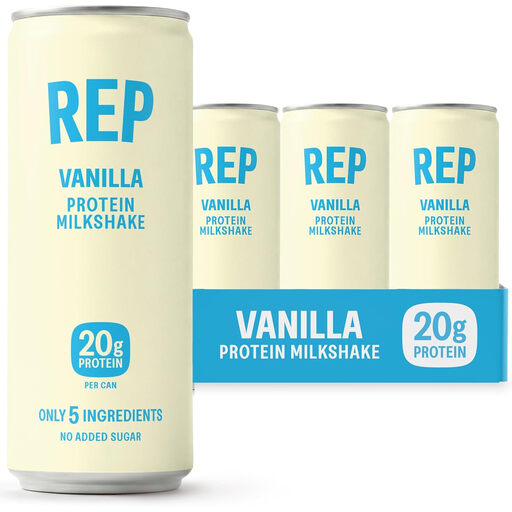
REP Vanilla Protein Shakes, 8 × 250 ml
For a post-run snack, compare the carbohydrate and protein on the 250 ml can with what you plan to eat afterwards. Check the pack’s unopened storage directions before keeping it in a cupboard or training bag.
View on Joybuy
 No image available
Applied Nutrition Strawberries & Cream Protein Nutrition Shake, 8 × 330 ml
The 330 ml bottle is a ready-to-drink snack option. Read its full-bottle carbohydrate and protein figures, check the ingredients against your requirements, and confirm storage directions on the pack before carrying it unopened.
View on Joybuy
 No image available
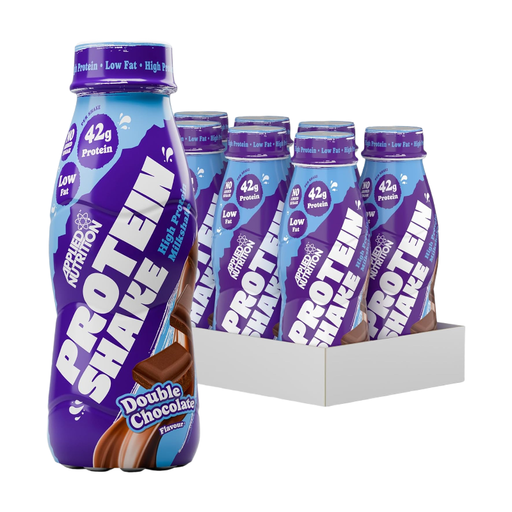
Applied Nutrition Double Chocolate Protein Nutrition Shake, 8 × 500 ml
This 500 ml bottle is a different serving size from the other listed shakes. Assess its whole-bottle carbohydrate and protein against your snack plan, and check its ingredients and unopened storage instructions before use.
View on Joybuy
Questions about milkshakes and training
Can a milkshake be my only fuel for a marathon?
Do not treat a milkshake chosen as a snack as a complete race-fuelling plan. The British Dietetic Association says carbohydrate intake during exercise lasting longer than an hour can enhance performance; plan what you will consume during the run and practise it in training.
When should I have one before a run?
Choose the timing by testing the exact drink and serving size during training. The UK Sports Institute notes that many athletes eat one to three hours before running, while individual timing and tolerance vary; avoid making race day your first trial.
Does UHT long life mean the drink never needs refrigerating?
No: follow the separate unopened and opened storage instructions for the exact product. Sainsbury’s says FUEL10K Vanilla can be stored in a cupboard before opening, whereas its Müller Frijj Fudge Brownie listing instructs refrigeration after opening and consumption within three days.
Which allergens should I check?
Read the current pack’s ingredients list for the allergens you need to avoid. GOV.UK says allergens present as ingredients in UK prepacked food and drink must be clearly labelled there; Tesco’s cited Mars milk drink lists milk and barley.


