Who is choosing the drink?
The reason for buying a milkshake matters more than whether its front label says “filtered” or “long life”.
Older adults with a small appetite or unplanned weight loss
A drink between meals may help increase intake when eating enough is difficult. BAPEN advises paying attention to energy and protein in this situation; compare the amount in the portion the person will actually drink.
Carers looking for convenient drinks
A ready-to-drink bottle avoids preparation, but cupboard storage depends on the exact product. Check its unopened storage instructions, serving size and directions for use after opening.
People managing diabetes, allergies or swallowing difficulties
Carbohydrate and portion size, the current allergen label and any prescribed fluid consistency can all change which drink is appropriate. A milkshake that looks thick is not necessarily at the required swallowing texture.
What should you check before buying?
Decide whether the drink is mainly for convenience or to help increase intake, then compare the whole serving and its storage instructions.
Standard UHT milkshake
Consider it: For a familiar, ready-to-drink option when unopened long-life storage matters; Müller describes its 330 ml FRijj Chocolate as UHT long life.
Trade-off: Storage convenience does not establish whether its nutrition meets the needs of someone with poor intake.
Higher-protein UHT shake
Consider it: When a ready-to-drink serving with a stated protein amount is a priority; Sainsbury's lists 34 g protein for the Müller Myprotein Complete Meal Shake.
Trade-off: Check whether the full serving is manageable and fits the person's wider nutrition plan; a product name is not an individual assessment.
Fortified homemade milkshake
Consider it: When preparation is practical and the aim is to add energy and protein between meals. NHS Lanarkshire gives a milkshake recipe containing 307 kcal and 11 g protein per prepared serving.
Trade-off: It needs preparation and appropriate chilled storage rather than the unopened convenience of a UHT bottle.
| Priority | What to check | Your needs |
|---|
| Energy and protein |
Read the energy and protein values for the whole bottle or prepared serving, not just per 100 ml. Check how much the person is likely to drink. |
If eating enough is difficult, I need to know what a manageable portion contributes between meals. BAPEN highlights energy and protein when appetite is poor or weight has been lost. |
| Processing and storage |
Look for explicit UHT or long-life wording and follow the unopened and post-opening storage directions. Tesco lists filtered fresh milk separately from UHT long-life milk. |
I want a drink I can store as intended, without assuming that “filtered” means it can stay in the cupboard. |
| Sugars and carbohydrate |
Check both figures on the nutrition panel and the size of the portion consumed. “No added sugar” does not mean that a drink contains no sugars. |
When carbohydrate matters to my choice, I need figures for the amount actually served. Diabetes UK notes the importance of portion size when counting carbohydrate. |
| Swallowing texture |
Match the drink and its preparation to the person's prescribed fluid consistency. The Hillingdon Hospitals NHS Foundation Trust advises consulting a speech and language therapist or dietitian before adding thickener to nutritional supplements. |
If I am preparing a drink for someone with swallowing difficulties, its appearance alone cannot tell me whether it matches their plan. |
| Ingredients and opening |
Read the current ingredient and allergen statement, then check refrigeration and use-by-opening directions on that particular pack. |
I need to avoid unsuitable ingredients and know how to handle any drink left after serving. |
Brand and product-line references
These named products illustrate different label and storage considerations; a brand reference is not a substitute for checking the exact pack.
Müller FRijj
Müller describes FRijj Favourites Chocolate 330 ml as a UHT long-life milkshake.
- Müller declares 75 kcal, 3.7 g protein and 11.4 g sugars per 100 ml for this flavour.
- Check the current pack's ingredients and the full-bottle figures before choosing it for someone with specific dietary needs.
Yazoo
Yazoo Chocolate is a flavoured milk-drink option for comparison with other shakes.
- Yazoo declares 62 kcal, 3.3 g protein and 8.6 g sugars per 100 ml.
- Check the exact pack for processing and storage instructions rather than assuming it is UHT.
Mars
ASDA describes the Mars Chocolate Milk Shake Drink 400 ml as UHT and labelled “no added sugar”.
- ASDA declares 3.5 g protein and 6.5 g sugars per 100 ml.
- The no-added-sugar label does not replace a check of the full nutrition panel and portion size.
Tesco
Tesco's milk listings help distinguish filtered fresh milk from separately labelled UHT long-life milk.
- Its listed semi-skimmed long-life milk is explicitly described as UHT.
- Tesco directs shoppers to refrigerate that milk after opening and consume it within three days; check the instructions on any different product.
Müller Myprotein
Sainsbury's lists the Chocolate High Protein Complete Meal Shake as a UHT milk drink.
- The listing states 34 g protein and 26 vitamins and minerals for the product.
- A complete-meal product description does not establish that it meets an older person's individual nutrition requirements.
Joybuy milkshake options
These are bottled or canned milkshake-style options for comparing flavour and portion format. Check each pack's nutrition, ingredients and unopened storage instructions before deciding whether it suits the person who will drink it.
 No image available
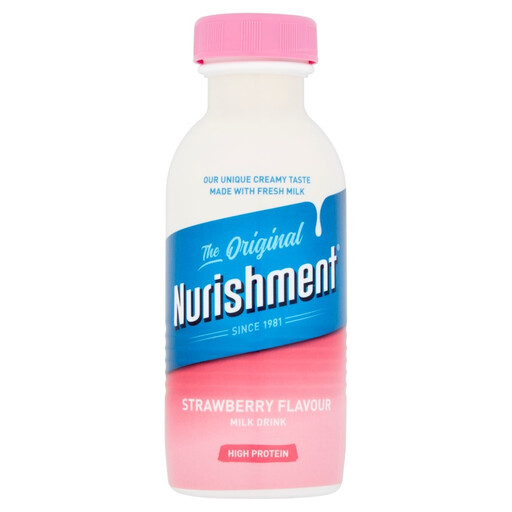
Nurishment Strawberry Bottle 330 ml
The 330 ml bottle offers a single-portion format when preparing a drink is inconvenient. Check its nutrition and ingredient label, along with the unopened storage directions, if cupboard storage is important.
View on Joybuy
 No image available
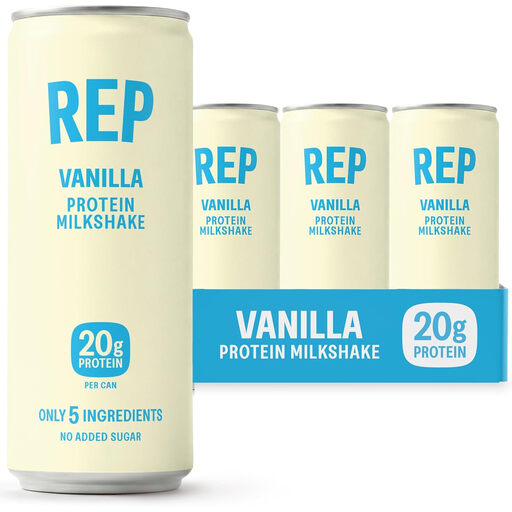
REP Vanilla Protein Shakes, 8 × 250 ml
The 250 ml can size is worth considering when a smaller serving is preferred. Compare energy as well as protein per can, and check the pack before relying on unopened cupboard storage.
View on Joybuy
 No image available
Applied Nutrition Strawberries & Cream Protein Nutrition Shake, 8 × 330 ml
This bottled protein shake comes in 330 ml portions. If the drink is intended to help increase intake, compare the energy and protein on the current label with the portion likely to be consumed; check storage and allergens separately.
View on Joybuy
 No image available
Applied Nutrition Vanilla Ice Cream Protein Nutrition Shake, 8 × 500 ml
The 500 ml bottle is a larger portion than the other formats shown here, which matters if the person has a small appetite. Check the full-bottle nutrition, ingredients and unopened storage directions rather than choosing by the protein-shake name alone.
View on Joybuy
Frequently asked questions
Does “filtered” mean a milkshake is long life?
No. Tesco lists filtered fresh milk separately from UHT long-life milk. Check the exact drink's UHT or long-life wording and its unopened storage instructions rather than treating “filtered” as a storage claim.
Can an ordinary milkshake replace meals for an older person?
Not as a general approach to poor intake. Milton Keynes University Hospital advises using nourishing drinks between meals rather than replacing meals with them. Seek clinical advice if appetite remains poor or weight loss is unplanned.
What should I check when choosing a drink for someone with diabetes?
Check carbohydrate, sugars and the amount the person will actually drink, including on products labelled “no added sugar”. Diabetes UK notes that portion size matters when counting carbohydrate; ask for individual advice if diabetes management must also be balanced with increasing intake.
Is a thick milkshake suitable for someone with swallowing difficulties?
Not necessarily: it must match the consistency in that person's swallowing plan. The Hillingdon Hospitals NHS Foundation Trust notes that some milkshakes may already be slightly thick and advises consulting a speech and language therapist or dietitian before adding thickener to nutritional supplements.
How should I store a long-life drink after opening?
Follow the instructions on that particular pack; “long life” describes the unopened product, not a universal period after opening. Tesco, for example, says to refrigerate its semi-skimmed UHT milk after opening and consume it within three days. A milkshake may have different directions.


