Who is the drink for?
The same carton can play a different role depending on whether the concern is a small appetite, sugar intake or a prescribed swallowing consistency.
Older adults with a small appetite or unintended weight loss
If eating is difficult or weight is falling without trying, consider what energy and protein the whole drink contributes alongside meals. Age UK cautions against applying routine lower-fat or lower-sugar eating advice to everyone in this situation.
Older adults managing diabetes without weight loss
Compare total carbohydrate and ‘of which sugars’ for the whole bottle or carton, not just a no-added-sugar claim. If weight loss begins, dietary priorities may change; Harrogate and District NHS Foundation Trust advises meeting the person’s energy and nutrient needs.
Family carers choosing a ready-to-drink option
Check portion size, the current allergen label and whether the drink fits the person’s meals and storage arrangements. For swallowing difficulty, follow the consistency specified after assessment rather than judging a milkshake by how thick it looks, as Cambridge University Hospitals NHS Foundation Trust advises.
What should you compare?
Start with the reason for offering the drink, then compare figures for the amount the person would actually consume. A protein shake, an ordinary milkshake and a nutritional supplement serve different purposes.
| Priority | What to check | Your needs |
|---|
| Energy and appetite |
Compare kcal per whole serving and its size. Consider whether the drink is additional to meals or is displacing food; Royal Devon University Healthcare NHS Foundation Trust describes nourishing drinks as drinks taken between meals. |
If my appetite is small or I am losing weight unintentionally, I need the drink to make a useful contribution without becoming an unplanned meal replacement. |
| Sugars and carbohydrate |
Read total carbohydrate and ‘of which sugars’ per bottle or carton. Tesco lists 9.2 g sugars in a 200 ml Yazoo No Added Sugar Strawberry carton: no added sugar does not mean sugar-free. |
When I am considering sugar intake, I want to know what the entire portion contains. If I also have diabetes and am losing weight, I need individual advice rather than automatically choosing the lowest-sugar option. |
| Protein and drink type |
Compare protein and energy together per serving, and distinguish a flavoured milk drink from a nutritional supplement. Sainsbury’s lists 25.5 g protein and 199 kcal for a 330 ml Pro Mlk Vanilla carton; Ocado lists 9.9 g protein and 171 kcal for a 220 ml Ensure NutriVigor Vanilla bottle. |
If protein is the reason for choosing a shake, I want to see its contribution alongside the drink’s energy and my other food, not assume the word ‘protein’ makes it a complete nutrition plan. |
| Swallowing consistency |
Follow the consistency recommended after a swallowing assessment. Cambridge University Hospitals NHS Foundation Trust says some milkshakes may be naturally slightly thick, but thickened fluids should only be recommended after assessment by a Speech and Language Therapist. |
When a swallowing plan applies, I need a drink prepared to the prescribed consistency; a thick-looking milkshake is not enough to establish that it matches. |
| Ingredients and storage |
Check the current pack for milk and other declared ingredients, serving size and storage directions. Do not treat ‘lactose-reduced’ as meaning milk-free. |
For a milk allergy, lactose intolerance or another dietary restriction, I need to check the exact product and flavour before serving it. |
Brand and product-line references
These labelled examples show why the type of drink and the whole-serving figures matter; a brand name alone does not establish suitability.
Yazoo
Tesco lists Yazoo No Added Sugar Strawberry as a flavoured milk drink in 200 ml cartons.
- The listed carton provides 92 kcal, 6 g protein and 9.2 g sugars, with no added sugar.
- It contains milk. Its 92 kcal per carton should be considered carefully if the purpose is to add substantial energy for someone with a small appetite.
Müller FRijj
Müller lists its FRijj Chocolate as a sweetened milkshake; the product is a 330 ml bottle.
- Müller’s per-100-ml panel lists 75 kcal and 3.7 g protein, equivalent to about 248 kcal and 12.2 g protein for 330 ml.
- The panel lists 11.4 g sugars per 100 ml, or about 37.6 g for 330 ml. Ingredients include milk and buttermilk.
Pro Mlk
Sainsbury’s lists Pro Mlk Vanilla as a no-added-sugar protein shake in a 330 ml carton.
- The listed carton provides 25.5 g protein and 199 kcal.
- It also lists 20.7 g sugars. Its ingredients include milk and the sweeteners acesulfame K and sucralose; check whether these fit the person’s requirements.
Ensure NutriVigor
Ensure NutriVigor is presented by Abbott as a ready-to-drink nutritional supplement rather than an ordinary flavoured milkshake.
- Abbott states that a serving provides 9.9 g protein and 27 vitamins and minerals; Ocado lists 171 kcal for the 220 ml vanilla bottle.
- Ocado lists 19 g sugars per 220 ml bottle. A supplement should be considered in the context of the person’s meals and any individual nutrition advice.
Protein shakes on Joybuy
These ready-to-drink protein shakes are options to examine when protein contribution is part of the decision. Compare each current pack’s whole-serving nutrition with the older person’s energy needs, ingredients and any swallowing plan; the list is not a selection of every milkshake or nutritional-supplement type discussed above.
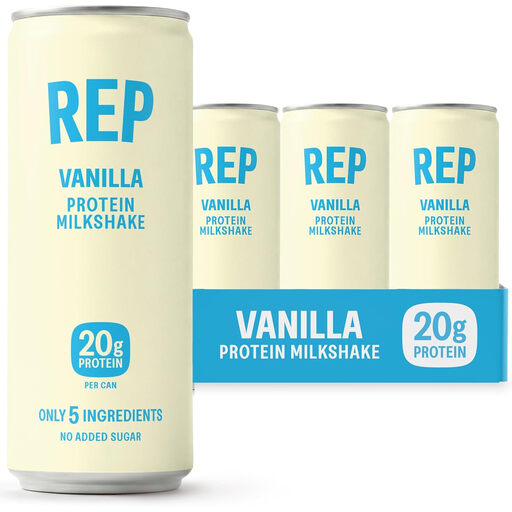 Image unavailable
REP Protein Shakes Vanilla Flavour, 8 x 250 ml
A smaller ready-to-drink portion to consider when choosing a protein shake alongside meals. It contains milk; check the current pack’s energy and sugars per can if either affects the choice. Follow the person’s swallowing plan where one applies.
View on Joybuy
 Image unavailable
Applied Nutrition Protein Nutrition Shake Strawberries & Cream Flavour, 8 x 330 ml
A ready-to-drink protein option in 330 ml bottles. It contains milk and sucralose, so check the current ingredients against allergy or dietary requirements. Consider the whole-bottle nutrition and any prescribed swallowing consistency before serving.
View on Joybuy
 Image unavailable
Applied Nutrition Protein Nutrition Shake Vanilla Ice Cream Flavour, 8 x 500 ml
The 500 ml bottle is a larger portion to consider when comparing what someone can comfortably drink. It contains milk and sucralose. Check its whole-bottle nutrition against the person’s needs, particularly if protein intake has been restricted, and follow any swallowing plan.
View on Joybuy
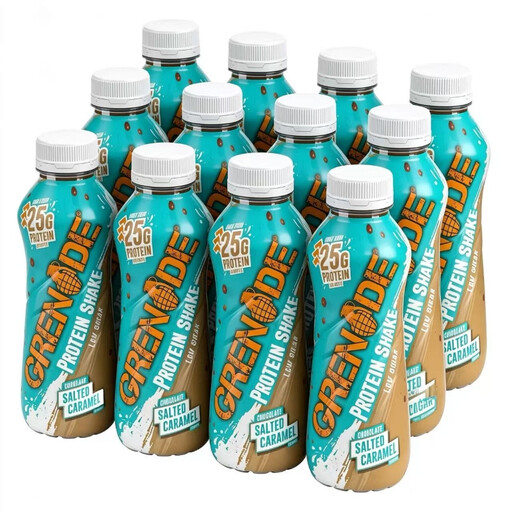 Image unavailable
Grenade Protein Nutrition Shake Salted Caramel Flavour, 330 ml, pack of 12
A ready-to-drink protein shake in 330 ml bottles. It contains milk; check the current pack for allergen information and whole-bottle energy, carbohydrate and sugars before choosing it for a particular dietary need. Follow any prescribed swallowing consistency.
View on Joybuy
Milkshake questions
Does ‘no added sugar’ mean a milkshake is sugar-free?
No. Check ‘of which sugars’ for the whole serving: Tesco lists 9.2 g sugars in a 200 ml Yazoo No Added Sugar Strawberry carton, and Sainsbury’s lists 20.7 g in a 330 ml Pro Mlk Vanilla carton.
Should an older adult with diabetes always choose the lowest-sugar milkshake?
No. Harrogate and District NHS Foundation Trust advises that reducing fat, sugar and salt may not be appropriate for every older person with diabetes, particularly when weight loss is occurring. Seek individual dietary advice when diabetes and unintended weight loss occur together.
Can a milkshake replace a meal when appetite is poor?
Do not assume that it can. Royal Devon University Healthcare NHS Foundation Trust describes nourishing drinks as additional drinks between meals; if meals are regularly being displaced or weight is falling, seek a GP or dietitian assessment.
Is a thick milkshake suitable for someone with dysphagia?
Only if it matches the consistency recommended after a swallowing assessment. Cambridge University Hospitals NHS Foundation Trust says thickened fluids should only be recommended after assessment by a Speech and Language Therapist; a milkshake’s apparent thickness does not establish its prescribed IDDSI level.
What should I check for milk allergy or lactose intolerance?
Read the current pack’s allergen statement and ingredients for the exact drink and flavour. A lactose-reduced dairy drink is not necessarily milk-free, so it should not be treated as suitable for someone with a milk allergy merely because its lactose content has been reduced.


