Sunday-roast diners comparing fat
If you want a flavoured drink with the meal, compare total fat and saturates per 100ml, then account for how much you will actually serve.


For a lower-fat milkshake alongside a Sunday roast, compare total fat per 100ml and the amount you expect to drink. Sainsbury’s lists Arla Protein Vanilla at 0.9g fat per 100ml, while ASDA lists FRijj Chocolate at 1.3g and YAZOO lists YAZOO Chocolate at 1.4g. Check sugars separately: Tesco lists Mars No Added Sugar at 6.5g sugars but 2.2g fat per 100ml.
If you want a flavoured drink with the meal, compare total fat and saturates per 100ml, then account for how much you will actually serve.
A no-added-sugar label answers a different question from the fat figure. Check both parts of the nutrition panel before choosing.
A lactose-free dairy drink may meet a lactose-related preference, but it can still contain milk. Anyone checking for a milk allergen needs the exact product’s allergen declaration.
The NHS explains that drink nutrition information is given per 100ml and sometimes per portion. Compare the same volume first, then consider the amount you would have with the roast.
| Priority | What to check | Your needs |
|---|---|---|
| Total fat | Read total fat and saturates per 100ml separately. Sainsbury’s lists Arla Protein Vanilla at 0.9g fat per 100ml; ASDA lists FRijj Chocolate at 1.3g; YAZOO lists YAZOO Chocolate at 1.4g. | I want to compare the drink’s fat contribution without treating its sugar figure as the same measure. |
| Sugars | Compare sugars per 100ml even when the front says “no added sugar”. Tesco lists Mars No Added Sugar at 6.5g sugars and 2.2g fat per 100ml. | A no-added-sugar option interests me, but I also want to know how its fat and total sugars compare. |
| Serving size | Check the bottle volume and the amount you plan to pour. Use the per-100ml figures to work out what that serving contains. | I may have only part of a bottle with the roast, so the amount served matters more than the bottle size alone. |
| Ingredients and storage | Read the exact pack’s allergen declaration, and check its instructions if you intend to keep an opened bottle. Lactose-free wording does not establish that a dairy drink is milk-free. | Milk allergens matter in my household, or I need to know whether an opened drink can be kept for later. |
Tesco lists Mars No Added Sugar at 6.5g sugars but 2.2g fat per 100ml. The wording about added sugar does not describe its fat content.
Decide which figure matters to you, then check both fat and sugars per 100ml on the nutrition panel.
The cited product sizes differ: ASDA lists FRijj Chocolate at 330ml, Tesco lists Mars No Added Sugar at 400ml, and Sainsbury’s lists Arla Protein Vanilla at 482ml.
Compare their per-100ml figures first, then calculate the figures for the amount you intend to drink.
A lactose-free dairy drink can still contain milk proteins. Sainsbury’s explicitly identifies Arla Protein Chocolate as unsuitable for people with a milk allergy.
For a milk allergy, follow the allergen declaration on the exact product rather than relying on lactose-free wording.
These figures describe the named drinks, not every flavour or product sold under each brand.
A dairy-shake option for shoppers who also want to compare protein and lactose-free labelling.
A conventional flavoured-milk option if that style of milkshake is what you want with the meal.
A chocolate milkshake option for shoppers comparing familiar flavoured-milk drinks.
The named No Added Sugar chocolate drink offers a different label characteristic to compare with fat.
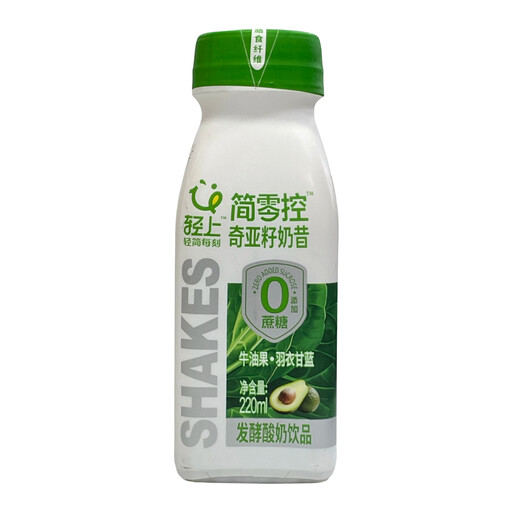
This option is a 220ml yoghurt drink described as milkshake-style. If you want a conventional flavoured-milk milkshake with your Sunday roast, check that the drink style suits you as well as comparing the nutrition label.
 No image available
This 220ml yoghurt drink is a milkshake-style alternative to consider alongside a Sunday roast, rather than a conventional flavoured-milk milkshake. The product listing says to consume it immediately after opening.
Compare total fat per 100ml, then account for how much you plan to drink. The NHS explains that nutrition panels give figures per 100ml and sometimes per portion; also read saturates as a separate figure.
No. Tesco lists Mars No Added Sugar at 2.2g fat and 6.5g sugars per 100ml, and its product wording notes naturally occurring sugars. Check both figures rather than treating the claim as an answer to either question.
Not on the basis of lactose-free wording: a dairy drink can still contain milk proteins. Sainsbury’s states that Arla Protein Chocolate is unsuitable for people with a milk allergy; check the exact product’s allergen declaration.
Use the nutrition figures for the amount poured, and follow that bottle’s instructions for any remainder. Check its after-opening storage and consumption directions before planning to keep it.