Small-portion garlic cooks
You usually chop a few cloves at a time and want an appliance that is straightforward to assemble, use and wash.


For regular small garlic jobs, choose a mini chopper or compact processor if chopping and easy storage are your priorities; consider a larger processor when housemates will also use its other preparation tools. Check how the exact model handles a few cloves, which parts can be removed for cleaning and where everything will be stored. In a food-business kitchen, the appliance must also fit the business’s allergen-management procedures.
You usually chop a few cloves at a time and want an appliance that is straightforward to assemble, use and wash.
You share equipment with people who cook differently, so cleaning food-contact parts and storing accessories between uses matter as much as chopping.
You want to mince garlic alongside regular slicing, grating or other preparation for shared meals, making bowl capacity and supplied tools more relevant.
Decide whether the appliance is mainly for a few cloves or for broader meal preparation, then check how its cleaning and storage arrangements will work for everyone sharing it.
| Concern | What to check | Who this matters to |
|---|---|---|
| Small portions and storage | Check for pulse control and compare working capacity with the total bowl size; measure the space available for the appliance and its parts. | If I am chopping just a few cloves, I want control without filling the shared cupboard. Around 50% of consumers would put small-portion control first. |
| Cleaning between users | Check the exact model’s instructions for removing and washing its bowl, blade, lid and other food-contact parts. | When someone else uses the appliance next, I need a clear way to hand over clean parts. Cleaning between users would be the main concern for around 30% of consumers. |
| Broader meal preparation | Compare usable capacity and the tools actually supplied for the other tasks your household plans to do. | If garlic is one part of making shared meals, I want tools I will use for other preparation too. Roughly 20% of consumers would prioritise that broader use. |
Total capacity does not tell you how the appliance will handle a few cloves. Kenwood GB specifies a 1.3 L bowl but a 0.75 L working capacity for the MultiPro Go FDP23.130GY; Magimix UK specifies 3 L total and 1.3 L working capacity for the 4200XL.
Compare the exact model’s working capacity, pulse control and chopping arrangement. Choose extra capacity for other recurring preparation, not on the assumption that a larger bowl improves a small garlic job.
Cleaning instructions can differ between components and models, which matters when several people need to wash and put away the appliance.
Check the manual for the bowl, blade, lid and each supplied accessory rather than applying a claim about one part to the whole machine.
Food Standards Agency guidance for retail and catering food businesses in England, Northern Ireland and Wales requires effective allergen management during food preparation. A processor’s cleaning features do not replace those procedures.
If food is prepared commercially, choose equipment that can be cleaned within the business’s procedures and follow its allergen and cross-contamination controls.
A full-size processor can serve several preparation tasks, but its additional vessels and tools also need space and cleaning after use.
If the recurring job is a small quantity of garlic, compare a mini chopper or compact processor first. Consider a full-size model when the household will regularly use its other supplied tools.
Kenwood’s range includes compact processors as well as larger models and choppers, making it relevant when storage and cleaning are priorities.
KitchenAid offers small choppers alongside food processors, allowing a choice between a focused chopping appliance and a machine for more tasks.
Bosch is relevant when garlic mincing is one of several regular preparation tasks.
The 4200XL is a larger-capacity option to consider when housemates regularly prepare meals together rather than only small garlic portions.
These choices include choppers for garlic-focused preparation and larger processors to consider when the shared kitchen also needs other food-preparation functions. Compare their bowls, supplied tools and cleaning instructions against the jobs your household will do most often.
 Image unavailable
Consider the smaller bowl for your usual garlic portion, while allowing storage space for both bowls.
The title specifies 0.6 L and 2 L glass bowls and a 300 W motor. Check how the bowl, blade and lid must be cleaned between users.
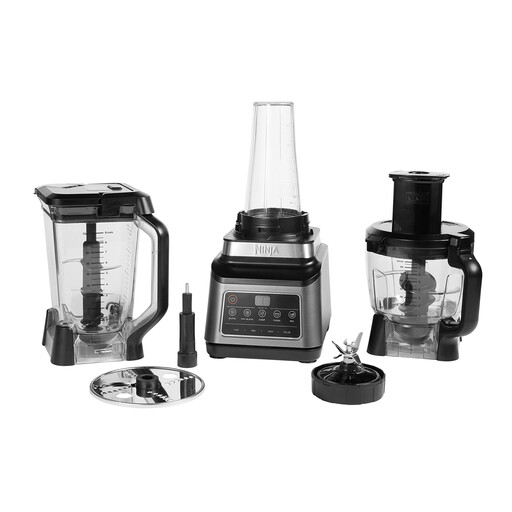 Image unavailable
Consider this format if housemates will use the processor and blender vessels for more than garlic; check how the processor bowl handles a few cloves.
The title specifies a 1.8 L processor bowl, 2.1 L jug, 700 ml cup and 1200 W motor. It lists dishwasher-safe parts, so check which components that covers.
 Image unavailable
Consider this processor when the household expects to use additional preparation tools regularly; check its suitability for a small garlic portion before choosing it for that task.
The title specifies a 3 L bowl, 1000 W motor, eight accessories and an integrated digital scale. Allow storage space for the accessories and check their individual cleaning instructions.
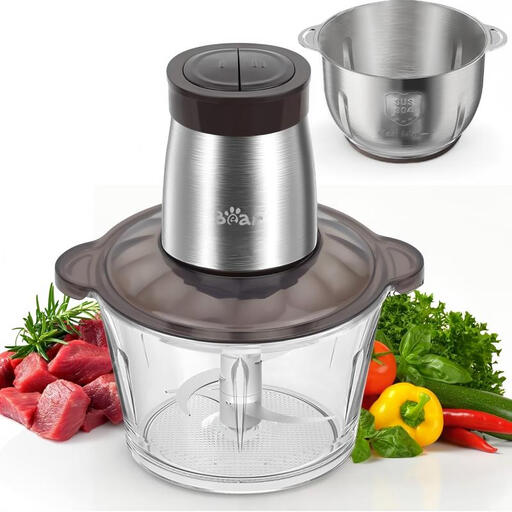 Image unavailable
The two containers may suit a kitchen that wants separate vessels for different preparation tasks, but check whether either handles your usual garlic quantity.
The title specifies a 2 L glass container, a 1.8 L 304 stainless steel container, two speed settings, four blades and a 300 W motor. Check the manual for operating intervals and cleaning instructions before use.
Not necessarily: a larger bowl and more functions do not establish how the exact model handles a few cloves. Compare its working capacity, chopping arrangement, pulse control and cleaning steps rather than choosing by total capacity or motor wattage alone.
Check how the bowl, lid, blade, seals and any discs are removed, washed, dried and stored. Follow the exact model’s instructions for each part, and agree on a safe place for sharp blades and clean accessories.
Arrange cleaning or separate equipment around the needs of the people sharing the kitchen; do not treat food-business guidance as a blanket household rule. Food Standards Agency allergen guidance applies to retail and catering food businesses in England, Northern Ireland and Wales. If food is prepared commercially, follow the business’s allergen-management procedures.
No: the label concerns the components identified as dishwasher-safe, not whether a particular allergen-control procedure has been met. Check the model’s cleaning instructions and, in a food-business kitchen, follow its allergen and cross-contamination controls.