Pupils permitted to carry gum
For a pupil whose school allows it, a 10-piece pack offers a small amount to carry rather than a bottle. Check that gum is appropriate for the pupil’s age and that its use follows the school’s rules.


If the school permits gum, a 10-piece single pack keeps the amount in a school bag small; a 5 × 10 multipack makes sense when a parent wants separate replacement packs at home. A 30- or 46-piece pack provides more gum at once, so check whether that quantity suits the routine, along with the exact product’s ingredients and warnings.
For a pupil whose school allows it, a 10-piece pack offers a small amount to carry rather than a bottle. Check that gum is appropriate for the pupil’s age and that its use follows the school’s rules.
A single 10-piece pack limits what goes into the bag at one time. A 5 × 10 multipack provides separate packs to keep at home and issue as needed; the school rule and exact pack label still need checking.
Students who prefer a sugar-free product can compare flavours and pack sizes, then read the ingredients and warnings for their chosen variant. NHS dental guidance says gum is not suitable for young or unsupervised children.
Confirm whether gum can be used at school before choosing a pack size; then check the label for the person who will chew it.
| Priority | What to check | Your needs |
|---|---|---|
| School rules | Check the individual school’s behaviour rules or ask the school. England’s Department for Education provides guidance on schools developing behaviour policies; it does not establish permission at a particular school. | I want to know whether gum may be carried or chewed there before putting it in a school bag. |
| Pack size | Compare the amount carried: Tesco lists 10-piece Extra singles and 5 × 10 multipacks, while other listed formats contain 30 or 46 pieces. A multipack can be kept at home while one small pack goes in the bag. | For occasional use, I would rather carry one small pack than a larger supply. If I need replacements, separate packs would be useful. |
| Ingredients | Read the exact variant’s sweeteners, allergy information and warnings. Sainsbury’s Extra Spearmint multipack label warns about excessive consumption and a source of phenylalanine; Asda’s Extra Spearmint bottle listing identifies soya. | The words ‘sugar-free’ are not enough for me to decide whether this particular gum is appropriate for its intended user. |
| Age and routine | Check that the intended user can chew gum appropriately and dispose of it. Torbay and South Devon NHS Foundation Trust says its after-meal sugar-free gum advice is not suitable for young or unsupervised children. | I need a choice that fits the pupil’s age and the times and places where gum is permitted. |
| Disposal | Keep a wrapper for used gum or find a bin. The Department of Agriculture, Environment and Rural Affairs advises putting used gum in a bin rather than littering. | I want a straightforward way to dispose of gum on the journey or after school. |
Pack size does not change a school’s rules on carrying or chewing gum.
Check the school’s behaviour policy or ask the school before packing gum for use during the day. If it is not permitted, keep any use to a place and time where it is allowed.
Ingredients and warnings differ by variant. Listed Extra products include sweeteners and soya, and some labels warn about excessive consumption and a source of phenylalanine.
Read the ingredients, allergy information and warnings on the exact pack, particularly when choosing for a child or someone with an ingredient-related dietary requirement.
A 30- or 46-piece container puts more gum in one place than a 10-piece single pack, which may not suit a plan to carry only a small amount.
Choose the quantity for the routine: one 10-piece pack for a small supply, or separate replacement packs if a multipack will be kept at home.
Used gum discarded on desks, furniture or pavements becomes litter.
Keep its wrapper if needed, then put the gum in a bin. The Department of Agriculture, Environment and Rural Affairs advises binning used gum.
These listed formats help distinguish a small school-bag pack from a larger supply; a brand reference does not establish that every variant has the same ingredients.
Tesco lists 10-piece singles and a 5 × 10 multipack; Asda lists a 46-piece Extra bottle. The pack count, rather than the brand name alone, determines how much gum is carried.
Joybuy’s range listing includes an Airwaves 46-piece bottle, a larger-quantity format than a 10-piece single.
Joybuy’s range listing includes Mentos Pure Fresh mint gum in a 35-piece, 70 g format.
These options cover separate 10-piece packs bought in bulk and a 30-piece bottle. If the aim is to put only a small amount in a school bag, compare what will actually be carried, not just the total quantity purchased.
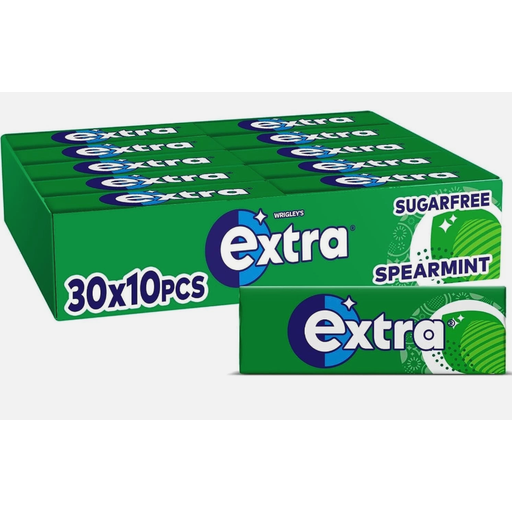 Image unavailable
This bulk supply consists of 30 separate 10-piece packs, so one pack can be carried while the others stay at home. It is not a single mini-pack purchase.
The product information identifies the gum as sugar-free and lists soya lecithin. It also warns that excessive consumption may produce laxative effects and that the gum contains a source of phenylalanine; check the exact pack label for the intended user.
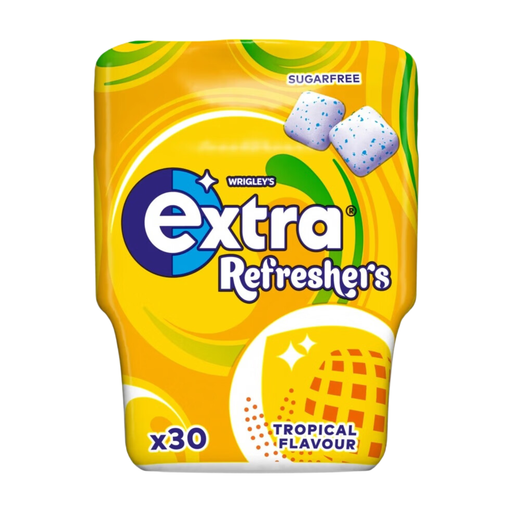 Image unavailable
This 30-piece bottle provides more gum to carry at once than a 10-piece single pack. If separate portions matter, check the packaging before choosing the bottle.
The product information identifies it as sugar-free and lists soya. It warns that excessive consumption may produce laxative effects and that the gum contains a source of phenylalanine; check the exact pack label for the intended user.
Check the individual school’s rules before packing gum for use during the school day. England’s Department for Education guidance concerns schools developing behaviour policies; it does not tell you whether a particular school permits gum.
No. Torbay and South Devon NHS Foundation Trust says its after-meal sugar-free gum advice is not suitable for young or unsupervised children. Listed Extra variants also carry ingredient and consumption warnings, so read the exact pack label for the intended user.
If the school permits gum and only a small amount is needed, a 10-piece single pack fits that aim. A 5 × 10 multipack provides separate replacements to keep at home, whereas a 30- or 46-piece format puts more pieces in one pack or container.
No. Torbay and South Devon NHS Foundation Trust gives after-meal sugar-free gum advice separately from its advice to brush teeth regularly; gum is not a substitute for brushing.
Wrap it if needed and put it in a bin. The Department of Agriculture, Environment and Rural Affairs advises binning gum rather than leaving it as litter.