Carers planning one after-school treat
A bar with a stated individual weight makes it easier to decide what to serve before opening a multipack. Check its per-bar nutrition as well as what else the child has eaten and drunk that day.


An individual bar with a stated weight gives you a clearer one-bar serving than an open sharing pouch, but a mini wrapper does not make chocolate low in sugar. Compare nutrition for the bar you plan to serve, check the current allergen label, and distinguish an at-home treat from food provided by a state school in England.
The useful distinction is whether you are planning one treat, checking ingredients for a child, or choosing food for a school setting.
A bar with a stated individual weight makes it easier to decide what to serve before opening a multipack. Check its per-bar nutrition as well as what else the child has eaten and drunk that day.
Wafer, peanut and mixed-format packs can have different ingredients and precautionary statements. Read the label on the exact pack each time, particularly when choosing between flavours or products in a mixed bag.
An at-home after-school treat is a different context from food provided by a state school in England. The Department for Education says school-provided food and drink there must meet national school-food standards; check the school’s policy for other school-related use.
Start with the individual piece, not the outer pack: its weight, nutrition and ingredients determine whether the format fits the treat you have in mind.
| Priority | What to check | Your needs |
|---|---|---|
| Serving format | Look for an individual bar weight and check whether pieces are separately wrapped if that matters. Cadbury lists Dairy Milk Little Bars at 18g each; KitKat UK lists its 2 Finger Milk bar at 20.7g. | I want to decide on one bar before opening the outer pack, rather than serve from a loose sharing pouch. |
| Sugars per bar | Compare the same per-bar measure. Tesco lists 11g total sugars in an 18g Mars Fun Size bar; KitKat UK lists 10.2g in a 20.7g 2 Finger Milk bar. Total sugars on a pack are not the same measure as free sugars in NHS guidance. | A smaller-looking bar should not lead me to assume it contains little sugar; I want to read the amount for the piece I will serve. |
| Ingredients and allergens | Read the exact pack’s ingredients and precautionary statements. KitKat UK lists wheat and milk ingredients for 2 Finger Milk; Tesco lists peanuts in its 34.5g Snickers bar and says it may contain other nuts. | If a child needs to avoid an ingredient, I need the declaration for this product and variant, not an assumption based on the brand. |
| Variety and piece size | Check every product in a mixed bag rather than treating its pieces as interchangeable. Tesco’s Mars Family Favourites listing names five products with individual formats ranging from 15.5g to 20g. | Several flavours may suit the household, but I would choose the particular piece before serving it and check its own ingredients. |
| Where it will be served | Separate an at-home treat from school-provided food. Department for Education guidance says food provided in state schools in England must meet school-food standards; the Requirements for School Food Regulations 2014 define confectionery to include chocolate. | For a school occasion, I need to check the applicable school policy rather than assume that an at-home choice is suitable for school provision. |
The wrapper defines a piece, not its sugar content. Tesco lists 11g total sugars per 18g Mars Fun Size bar, while KitKat UK lists 10.2g per 20.7g 2 Finger Milk bar.
Decide how many pieces to serve, then compare the nutrition per piece and consider other sugary food and drinks that day.
Different products in the same bag can have different ingredients. Tesco’s Mars Family Favourites listing declares milk, peanuts, wheat, soya and egg, with precautionary statements for nuts.
Check the current declaration for the specific piece before serving it to someone with an allergy or intolerance.
Tesco lists its Snickers multipack bars at 34.5g each and 17g sugars per bar; Cadbury Dairy Milk Little Bars and Mars Fun Size are listed at 18g per bar by Cadbury and Tesco respectively.
Compare individual weights and per-bar nutrition rather than relying on pack terms such as ‘fun size’ or ‘snack size’.
Department for Education school-food guidance concerns food provided in state schools in England. It does not, by itself, decide what a household serves after school or establish one rule for every nation of the UK.
For school-related use, check the individual school’s policy and the rules relevant to where the food will be provided.
These examples show why the brand name alone is not enough: individual weights, ingredients and serving formats differ between product lines.
Cadbury lists Dairy Milk Little Bars as 18g mini bars and its Freddo 10-pack as 180g of small milk-chocolate bars.
Tesco describes Galaxy Minstrels as milk chocolate in a sugar shell, sold in a pouch rather than the one-bar format considered here.
Tesco lists Mars Fun Size as 16 bars of 18g, with nougat and caramel in a chocolate bar.
Tesco lists its peanut, nougat and caramel multipack bars at 34.5g each, a larger piece than the 18g–20.7g examples above.
Tesco lists a Twix Fun Size Minis multipack as 16 × 20g caramel-and-biscuit bars.
KitKat UK lists its 2 Finger Milk chocolate-wafer bar at 20.7g per bar.
These options include small milk-chocolate bars, mini treats and chocolate-coated wafers for a planned after-school treat. Compare the individual piece and its current label; the outer pack weight alone does not always tell you the serving size.
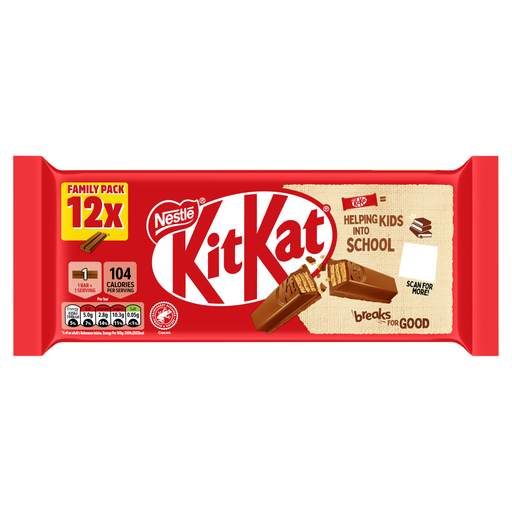 Image unavailable
A stated 20.7g bar makes this a wafer option when you want to plan one piece. The pack contains 12 bars; KitKat UK lists 104kcal and 10.2g total sugars per 20.7g 2 Finger Milk bar. It lists wheat and milk ingredients, so check the current pack if either matters.
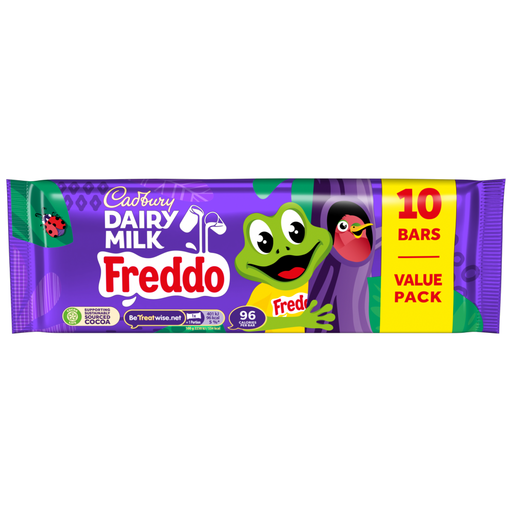 Image unavailable
This ten-bar milk-chocolate pack offers small pieces for a pre-decided treat. Check the current label for ingredients and precautionary nut statements. The product information warns that its shape and texture make it unsuitable for children under four.
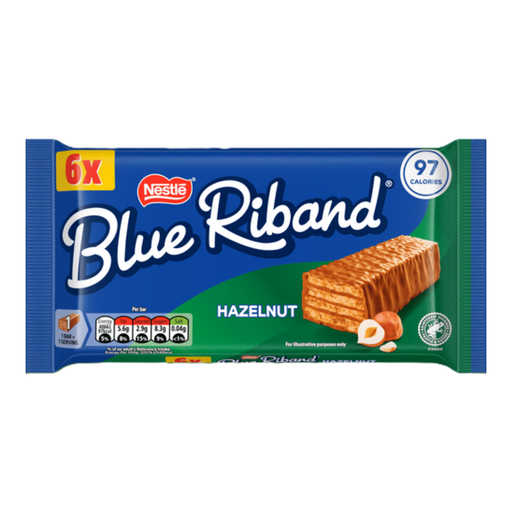 Image unavailable
The six stated 17.5g pieces offer a chocolate-coated wafer and hazelnut format rather than a plain chocolate bar. Check the pack for wheat, milk, soya and hazelnuts, as well as precautionary nut statements. The product information warns that it is unsuitable for children under four because of a choking hazard; compare nutrition per piece if the label gives figures per 100g.
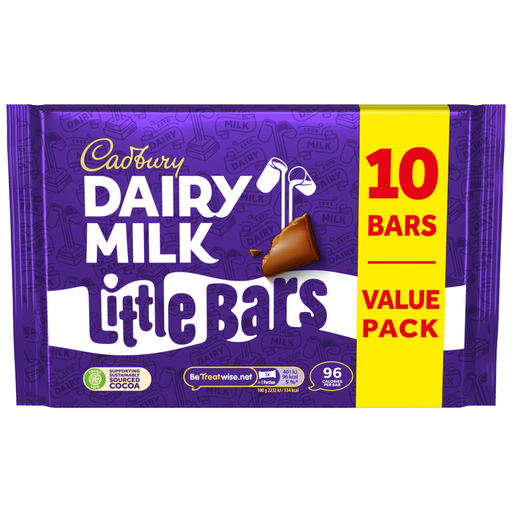 Image unavailable
This is a small milk-chocolate-bar option when the weight of one piece matters: Cadbury lists Little Bars at 18g each. If separate wrappers are important to your serving plan, confirm that detail on this pack before buying. Check its current milk and precautionary allergen statements too.
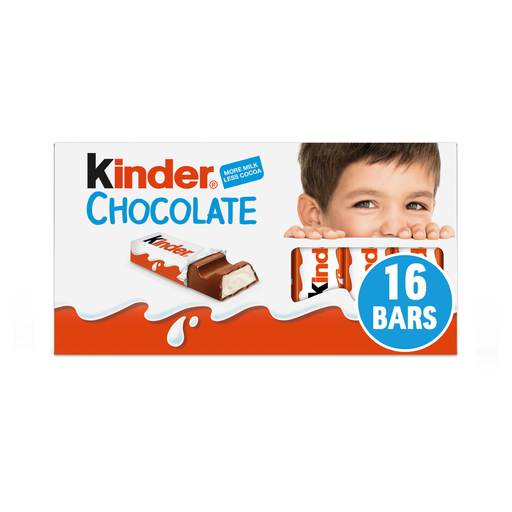 Image unavailable
This bag contains individual mini treats, so you can decide how many pieces to serve. The 200g figure is for the bag: check the individual piece weight if you need to compare it with a stated 18g or 20.7g bar. Read the current milk and soya declaration before serving.
Its smaller size does not tell you the sugar content on its own. Compare the total sugars for the individual bar you intend to serve; for example, Tesco lists 11g per 18g Mars Fun Size bar, while KitKat UK lists 10.2g per 20.7g 2 Finger Milk bar.
Use per-bar figures to compare the pieces you would actually serve, checking per 100g when you need a common weight basis. Pack labels give total sugars, whereas the NHS guidance for children refers to free sugars; the two figures should not be treated as interchangeable.
Check the exact product label rather than relying on a flavour or brand name. KitKat UK lists wheat and milk for 2 Finger Milk; Tesco lists peanuts in its 34.5g Snickers bar and other nuts as a precaution. Mixed bags require a check of each different product.
Do not assume an at-home treat is suitable for school provision. Department for Education guidance says food and drink provided in state schools in England must meet school-food standards, and the Requirements for School Food Regulations 2014 include chocolate in the definition of confectionery. For food brought from home or use elsewhere in the UK, check the school’s policy and the applicable local rules.