Parents choosing a regular snack
The first decision is whether a chocolate biscuit fits the occasion at all. For children aged four or younger, the NHS advises avoiding sugary foods; a mini format does not change that advice.


For a routine snack, choose a less sugary option: the NHS advises avoiding sugary foods for children aged four or younger, and a biscuit’s small size does not establish that it is suitable or safe for a toddler. If you decide to offer a mini chocolate biscuit as an occasional treat, compare the amount you would actually serve, check the current pack for allergens, and assess its shape and texture while supervising your child as they eat.
The first decision is whether a chocolate biscuit fits the occasion at all. For children aged four or younger, the NHS advises avoiding sugary foods; a mini format does not change that advice.
A labelled mini bag makes the amount in the bag identifiable, while a loose pack lets you decide how much to offer. In either case, check the nutrition basis and ingredients, and assess how your child manages the biscuit.
Check the child’s relevant allergens and ask the nursery or other setting what its food policy permits. As the NHS advises, a setting may have its own restrictions.
Decide whether this is a regular snack or an occasional treat before comparing biscuit formats; then check the amount offered, eating conditions and the destination.
| Priority | What to check | Your needs |
|---|---|---|
| Regular or occasional | Consider the snack type first. The NHS advises avoiding sugary foods for children aged four or younger; a mini biscuit is still a sweet biscuit. | For an everyday snack, I would rather choose a less sugary option than rely on a small packet to make a chocolate biscuit suitable. |
| Amount and sugar | Check whether figures are per bag, per biscuit or per 100 g, and compare the amount you plan to offer. Sainsbury’s lists 5.7 g sugar per 19 g bag for McVitie’s Chocolate Digestive Minis and 5.9 g per approximately 19.8 g bag for its reviewed Maryland Chocolate Chip Minis. | If I choose an occasional treat, I want to know what is in the amount I will offer. A loose biscuit’s per-item figure cannot be compared directly with a whole mini bag. |
| Eating safety | Assess each biscuit’s shape and firmness for your child; seat them upright and supervise eating. The NHS warns that choking can happen with any food. | “Mini” alone would not tell me whether my child can manage the biscuit safely. |
| Allergens and policies | Read the current pack’s ingredients and allergen information. Before packing food for nursery, check that setting’s policy; do not assume a retail product will be accepted. | I need to avoid ingredients relevant to my child and know whether the setting accepts the snack. |
A smaller biscuit is still a sugary food, and its shape and firmness matter when a child eats it.
For a regular snack, follow the NHS advice to avoid sugary foods for children aged four or younger. If offering a biscuit, assess it for your child and supervise seated eating.
Sainsbury’s lists its mini Spekulatius figure per biscuit, but the reviewed McVitie’s and Maryland multipacks give figures per bag. Those are different amounts of food.
Check the stated unit and weight, then compare the amount you would actually offer.
Ingredients and precautionary allergen statements can differ between products, while settings may restrict what can be brought in.
Read the current pack for your child’s relevant allergens and ask the setting before packing a biscuit.
Sainsbury’s lists McVitie’s Chocolate Digestive Minis as milk-chocolate-topped wheatmeal biscuits in five 19 g bags. Penguin Bites is a different McVitie’s product.
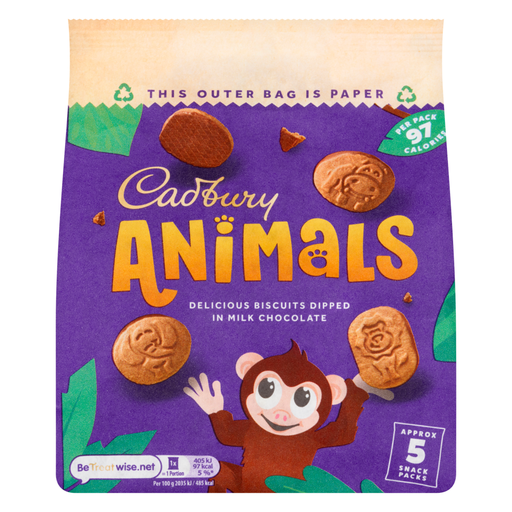
Tesco lists Cadbury Animals as animal-shaped mini biscuits half-coated in milk chocolate, in five 19.9 g bags.
Sainsbury’s lists the reviewed Maryland Chocolate Chip Minis in six bags of approximately 19.8 g each.
Sainsbury’s lists its own-label mini Spekulatius as a loose 150 g pack of spiced biscuits half-coated in milk chocolate.
Sainsbury’s lists Fox’s Chocolatey Rounds as chocolate-coated shortcake biscuits, not as a confirmed mini format.
These options include separately packed biscuits for considering an occasional treat and a loose mini-biscuit pack for deciding the amount yourself. None should be chosen as a routine toddler snack simply because it is small.
 No image available
For an occasional treat, check the nutrition for the amount you intend to offer and read the current ingredients. Assess the animal-shaped biscuits for your child rather than assuming a mini shape is safe.
 No image available
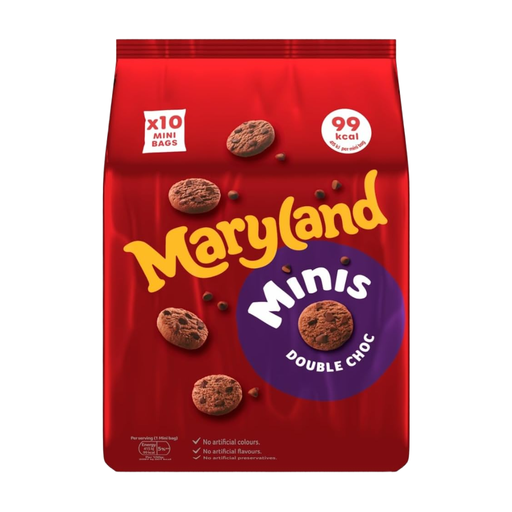
The 10-pack format gives you separately packed biscuits to consider for an occasional treat. Check the current pack’s sugar figure and ingredients for this Double Choc Chip variant rather than using figures from another Maryland recipe.
 No image available
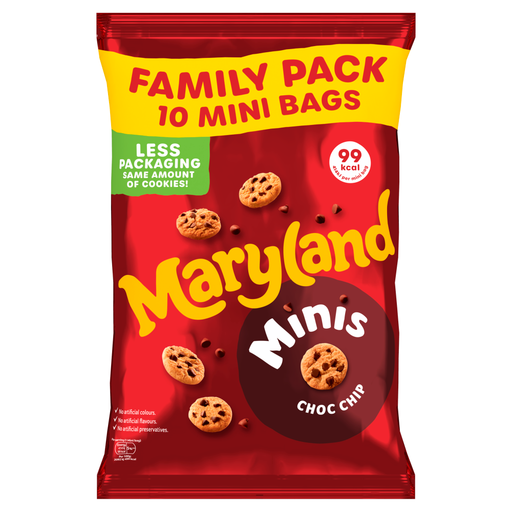
The 10-pack format offers a separately packed option for an occasional treat. Use the current nutrition and ingredients for this 198 g pack; do not transfer a per-bag sugar figure from the separately listed six-bag Maryland pack.
 No image available
This five-biscuit pack is a different format from loose chocolate minis. If considering one as an occasional treat, check the amount and sugar information on the current pack, particularly if milk or hazelnuts are relevant allergens for your child.
 No image available
With a loose pack of mini sandwich biscuits, decide how much to offer rather than treating the 55 g pack as a toddler portion. Check the current nutrition and ingredients, and supervise eating.
No. The word does not establish a toddler serving recommendation. Check whether the nutrition is given per biscuit or per bag, decide what amount you would offer, and bear in mind the NHS advice to avoid sugary foods for children aged four or younger.
No preparation step makes a biscuit automatically safe. Assess its shape and texture for your child, have them sit upright and supervise them while they eat; the NHS warns that choking can happen with any food.
Check the current physical pack for your child’s particular allergens, rather than relying on another product’s recipe or an online listing. GOV.UK guidance says that specified allergens used as ingredients in prepacked food must be clearly identified in the ingredients list.
Ask the nursery what its food and allergen policy allows before packing them. The NHS advises checking a nursery’s policies; rules about food an early-years provider supplies do not, by themselves, answer what that nursery accepts from home.