Small-batch chilli cooks
If you usually prepare one or a few chillies with garlic, herbs or onion for a meal, a compact bowl and the ability to stop and inspect the chop may matter more than a larger processor.


For fresh chilli in a shared kitchen, choose a compact chopper that lets you stop after short bursts and has food-contact parts you can clean promptly. A simple electric model or manual pull-chopper can suit occasional small portions; consider two-speed control if texture matters more to you, and check exactly which parts are dishwasher-safe.
If you usually prepare one or a few chillies with garlic, herbs or onion for a meal, a compact bowl and the ability to stop and inspect the chop may matter more than a larger processor.
If several people use the appliance, removable parts that you can wash thoroughly make it easier to leave the bowl, blade and lid ready for the next person.
If you chop chilli infrequently, consider whether a compact, straightforward electric chopper or an electricity-free manual option better fits your storage space and routine.
For small chilli portions in a shared kitchen, start with cleanability, then consider how you will control the chop and where the appliance will go between uses.
| Concern | What to check | Who this matters to |
|---|---|---|
| Cleaning between users | Check whether the bowl, blade and lid can be removed and which individual parts are dishwasher-safe. | If I share the chopper, I need to reach chilli residue before someone else prepares food. Around 42% of consumers put cleanable, shareable use first. |
| Small-batch texture | Look for brief-press or pulse-style control, and compare working bowl capacity rather than total volume alone. | When I want chopped chilli rather than a paste, I need to pause and inspect a small batch. For around 33% of consumers, that texture control is the primary concern. |
| Storage and simplicity | Check the space the chopper needs in storage and whether manual or mains-powered operation suits your setup. | If I only chop chilli occasionally, I want a tool that is easy to put away and straightforward to set up. Compact, simple ownership comes first for around 25% of consumers. |
A bowl’s stated total volume may exceed the amount intended for chopping. Russell Hobbs, for example, specifies a 1 L bowl but a 500 ml working capacity for its Desire 27131.
Compare working capacities where stated, particularly if you usually prepare just chilli and a few aromatics.
A motor figure does not tell you how easily you can stop at a coarse chop. Controls and the amount in the bowl also matter when processing a small portion.
Compare pulse, brief-press and speed controls, then consider the other ingredients you plan to chop.
Chilli and other food residue can remain on blades or around lids after use. The Food Standards Agency emphasises effective handwashing to help prevent contamination between food-preparation tasks.
Wash food-contact parts promptly, dry them before storage and wash your hands before handling other food or shared surfaces.
Electrical setup depends on the exact product and the socket where you intend to use it; a listing for another market may not describe the arrangement you need.
Confirm the supplied plug, electrical details and instructions for the exact model before ordering.
Kenwood’s Easy Chop CHP61.100WH illustrates a compact electric option for small quantities.
The Food Collection 22220 is a simple electric model that Russell Hobbs specifically describes for ingredients including chilli.
Tefal offers both electric mini choppers and manual choppers that operate without electricity.
Ninja lists mini-sized food processors alongside larger multi-function systems.
This compact electric chopper is an option for small batches of chilli and other aromatics when you want two speed settings rather than a manual pull-chopper.
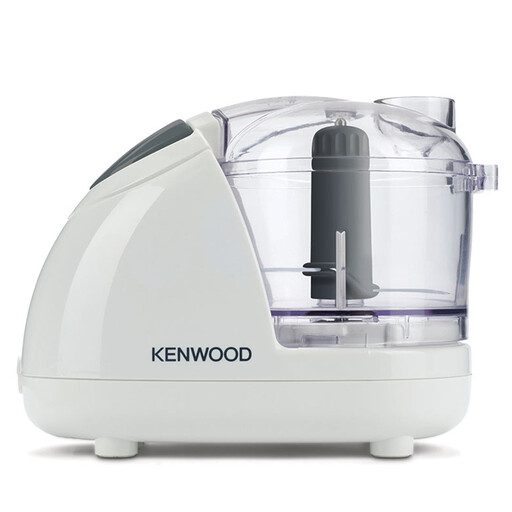 No image available
For a small chilli batch, use brief presses and inspect the texture as you go.
This model has two speeds. Joybuy describes its bowl and blade as dishwasher-safe; check the lid-cleaning instructions and supplied plug before ordering.
Compare compact working capacities rather than choosing by total bowl volume. Kenwood’s CH180B has a stated 350 ml bowl, while Russell Hobbs distinguishes the 1 L total bowl from the 500 ml working capacity of its Desire 27131.
Process it in short bursts and stop to inspect the texture. A pulse control or two speed settings give you ways to adjust processing, but neither replaces checking the bowl as you go.
Wash and dry the food-contact parts, including the bowl, blade and lid, following the instructions for the exact model. Wash your hands before moving on to other food; the Food Standards Agency emphasises that hand gel does not replace effective handwashing.
Confirm the exact model’s supplied plug and electrical instructions suit the socket where you will use it. GOV.UK’s electrical-equipment guidance cited here applies to Great Britain; if you are buying for Northern Ireland, check the guidance applicable there rather than assuming the same market rules apply.