Small-batch chilli cooks
If you usually prepare one or two chillies for a curry, stir-fry or salsa, a compact bowl may suit your usual quantity better than a larger processor.


For one or two fresh chillies, start with a bowl suited to small quantities and a way to stop chopping at the texture you want. A compact electric chopper suits repeated prep, while a manual chopper avoids a socket but requires hand effort; a larger bowl makes more sense if you regularly add other ingredients.
If you usually prepare one or two chillies for a curry, stir-fry or salsa, a compact bowl may suit your usual quantity better than a larger processor.
If you alternate between chopped chilli and finer mixtures, consider how easily you can stop and inspect the contents during processing.
If socket access and storage space are limited, a manually operated chopper offers another route, provided repeated hand movements are comfortable for you.
Work out how much chilli and how many accompanying ingredients you normally prepare, then decide whether texture control or plug-free operation matters most.
| Concern | Buying check | Who this matters to |
|---|---|---|
| Bowl size | Check working capacity rather than relying on the overall bowl volume, allowing room for any garlic, onion or herbs you usually add. | If I chop only a few chillies, I want a bowl that suits that small task without ruling out my usual accompanying ingredients. Around 40% of consumers put small-batch fit first. |
| Chop texture | Look for pulse control, a responsive press control or more than one speed on the exact model. | For toppings, I want to stop while the chilli is still in pieces, rather than continue towards a paste. Roughly 30% of consumers make texture control their primary concern. |
| Plug-free use | For a manual chopper, check its operating mechanism, stability and cleaning instructions; consider the hand effort involved. | With little room near a socket, I would rather store a manual tool away, even if prep takes repeated movements. Around 30% of consumers prioritise plug-free simplicity. |
BBC Good Food lists a 150ml working capacity for the Kenwood CH180A and a 500ml bowl for its reviewed Russell Hobbs chopper. Those sizes accommodate different amounts of chilli and accompanying ingredients.
Compare the stated working capacity with a recipe you actually make, including any garlic, onion or herbs.
BBC Good Food observed mushier contents at the bottom and chunkier pieces at the top when reviewing the Russell Hobbs model. Ingredient amount and processing time also affect when you should stop.
Use short bursts when coarse pieces matter, inspect the result and pause to scrape down if the recipe needs a more consistent texture.
Cleaning instructions differ between models and parts; a removable bowl being dishwasher-safe does not establish the same rule for the lid, blade or motor unit.
Check the exact model’s instructions before washing each component, and keep an electric motor unit out of water unless its manufacturer explicitly permits immersion.
A pull chopper avoids a plug, but operating it means repeated pulls. That trade-off matters if you prepare several batches or find repetitive hand movement uncomfortable.
Choose manual operation when compact, plug-free storage outweighs the effort; consider an electric model if reduced hand effort matters more.
Its compact Pixie Chopper CCH32U and larger 0.9L Mini Prep Pro ECH4U represent different bowl-size choices.
BBC Good Food reviewed a compact 500ml Russell Hobbs mini chopper for smaller quantities.
The CH180A is a very-small-portion option, with a 150ml working capacity reported by BBC Good Food.
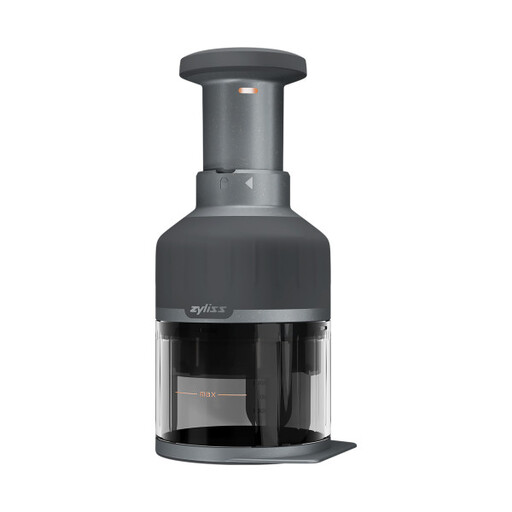
This manually operated chopper is a plug-free option for compact-kitchen prep. Check whether its capacity and push-down action suit the amount and texture of chilli you usually want.
 No image available
Its manual push-down action offers plug-free chopping for a compact kitchen. Check the working capacity against your usual chilli quantity and accompanying ingredients, and whether the action gives you the coarse texture you want.
A small working bowl is worth considering if you rarely add other ingredients: BBC Good Food reports a 150ml working capacity for the Kenwood CH180A. A 500ml bowl gives more room for garlic, herbs or onion, but remains a small-batch format.
Process in short bursts and stop to inspect the chop. Pulse or speed controls can make stopping earlier easier; check the exact model’s controls, as the final texture also depends on the amount in the bowl and processing time.
A manual pull chopper is a plug-free option for small portions. Lakeland says the texture of ingredients in its 400ml pull model changes with the number of pulls; consider whether that repeated movement is comfortable for you.
Follow the instructions for your exact bowl, blade, lid and motor unit rather than assuming all parts are dishwasher-safe. FoodSafety.gov advises washing food-contact utensils and surfaces after use.
Check the seller’s identity and the supplied product documentation for the exact model. The Office for Product Safety and Standards states that the Electrical Equipment (Safety) Regulations 2016 set requirements for electrical equipment before it is placed on the Great Britain market; a product listing alone does not establish whether an individual appliance meets them.