People preparing small beetroot portions
If you chop cooked beetroot for a salad, dip or topping, a mini chopper may fit the job better than setting up a full-size processor. Check how much the chosen bowl can actually hold for this task.


Choose a compact electric mini chopper if you want speed settings for repeated small batches of cooked beetroot; consider a clear-bowl manual pull chopper if working without a socket and judging texture by sight matter more. In a shared kitchen, check the exact model’s usable fill guidance and cleaning instructions for each component before choosing, rather than treating bowl capacity or a dishwasher-safe label as the whole answer.
If you chop cooked beetroot for a salad, dip or topping, a mini chopper may fit the job better than setting up a full-size processor. Check how much the chosen bowl can actually hold for this task.
When several people use the same kitchen, removable food-contact parts and clear cleaning instructions make it easier to agree on a routine after each use. Dishwasher guidance can differ between the bowl, blades, lid and motor unit.
A manual pull chopper is worth considering if a worktop socket is inconvenient. A clear bowl also lets you watch the beetroot as you pull, though the chopping takes hand effort.
For cooked beetroot in a shared kitchen, let the factor that would most affect your routine—portion size, clean-up or control and socket access—guide which features you check first.
| Concern | What to check | Who this matters to |
|---|---|---|
| Portion size and storage | Compare bowl capacity with the manual’s usable fill guidance, then check the space needed to store the appliance. | If I usually prepare one or two portions, I want a bowl that suits the job without taking over shared cupboard space. Around 40% of consumers would put portion size and storage first. |
| Cleaning between users | Identify which removable parts can go in the dishwasher and how the lid and motor unit must be cleaned. | When the next person needs the appliance, I want food-contact parts I can clean promptly and correctly. Cleaning is the primary concern for around 40% of consumers. |
| Texture and socket access | Check the electric model’s stated controls or the manual model’s pull operation, and decide whether a socket will be available. | If I want to stop at a coarser chop, or cannot count on a free socket, the way the chopper operates shapes my choice. Around 20% of consumers would prioritise control or socket-free use. |
Care instructions apply to particular components, not automatically to the complete appliance. Kenwood lists dishwasher-safe tools for the CHP61.100WH and a dishwasher-safe bowl for the CH180B; Tefal describes a dishwasher-safe bowl and blades but says to wash the K1330404 lid in the sink.
Check the exact manual for the bowl, blades, lid and motor unit before buying, and follow its instructions after each shared use.
Wattage does not tell you how much cooked beetroot the bowl can hold in use. A stated bowl volume is not the same as a permitted fill level or a beetroot-specific batch yield.
Compare capacity and the model’s maximum-load instructions, then decide whether processing several small batches would suit you.
An electric model needs a suitable socket and worktop position. Tefal’s manual K1330404 operates by pulling a handle and has a clear bowl, but requires hand effort instead of motor power.
Decide whether electrical setup or manual pulling would be less inconvenient in your kitchen before comparing individual models.
The Salter Mini Chopper Pro manual specifies domestic rather than commercial use. GOV.UK guidance also requires food businesses to clean utensils and cooking equipment regularly; those business requirements should not be treated as rules specific to a private shared household.
If the kitchen is used for a food business, confirm that the exact appliance is suitable for that setting and follow the applicable cleaning requirements.
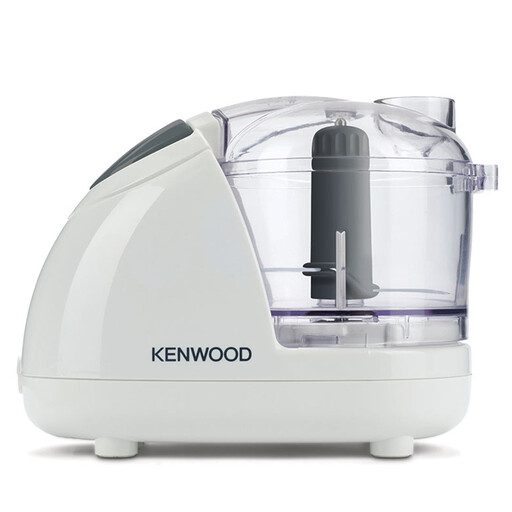
Kenwood’s CH180B and Easy Chop CHP61.100WH illustrate two compact electric choices for different small-batch priorities.
Tefal’s 5 Second Chopper K1330404 is a manual alternative for a kitchen where socket access is inconvenient.
Salter’s Mini Chopper Pro is another compact electric model to assess for household preparation.
This compact electric CH180B is relevant if you mainly prepare occasional small portions and want a bowl you can wash between uses. Check its fill and care instructions for your intended beetroot portions.
 No image available
Consider this model for occasional small portions when compact storage matters. Its listed specifications are a 350ml bowl, 300W motor, two speeds and a dishwasher-safe bowl. The stated bowl volume does not establish how much cooked beetroot you can process at once; check the exact manual for fill limits and for cleaning the other components.
Choose an electric model if its speed controls suit the way you prepare repeated small batches; consider a manual pull model if working without a socket and watching the chop through a clear bowl matter more. Kenwood lists two-speed controls on its named electric models, while Tefal says the number of pulls affects fineness on the K1330404. These features do not establish which gives your preferred beetroot texture, so check the result as you process a small batch.
Do not assume it can: dishwasher instructions differ by component and model. Kenwood lists dishwasher-safe tools for the CHP61.100WH and a dishwasher-safe bowl for the CH180B; Tefal lists a dishwasher-safe bowl and blades for the K1330404 but directs users to wash its lid in the sink. Follow the exact manual for the lid and motor unit as well.
Remove beetroot residue and clean the food-contact parts according to the exact model instructions before another person uses the chopper. Keep the motor unit out of water unless its manufacturer explicitly permits immersion. If the shared kitchen operates as a food business, GOV.UK guidance on regularly cleaning utensils and cooking equipment also applies to that business setting.