Salad makers who want distinct pieces
If cooked beetroot is going into a salad, relish or topping, you may want to stop while the pieces are still recognisable. A controllable short run matters more to this choice than simply leaving the machine on.


Choose a mini chopper whose bowl fits your usual portion and whose operation lets you stop and inspect the beetroot. Pulse control is useful when you want recognisable pieces rather than a smoother dip; a compact bowl suits small portions, while a larger one may save repeated batches but takes more space and washing up.
If cooked beetroot is going into a salad, relish or topping, you may want to stop while the pieces are still recognisable. A controllable short run matters more to this choice than simply leaving the machine on.
If you chop a little beetroot at a time and have limited cupboard space, compare compact bowls with the amount you normally prepare. Kenwood and Magimix describe compact choppers with different stated capacities.
If you regularly prepare more beetroot or also make sauces and dips, bowl capacity and the parts you will need to wash become more important. Check whether a published capacity is described as total or useful capacity.
Start with the texture you want, then match the bowl to your normal portion and consider the cleaning involved.
| Concern | What to check | Who this matters to |
|---|---|---|
| Piece size and texture | Look for pulse operation or another way to make brief, controllable runs; stop and inspect the beetroot between runs. | If I want beetroot pieces for a salad, I need to stop before the mixture becomes too smooth. Around 45% of consumers put texture control first. |
| Small-portion convenience | Compare stated bowl capacity with your usual portion, then check dimensions and which parts can be washed in a dishwasher. | When I prepare only a little beetroot, I would rather store and wash a compact chopper than use a larger appliance. Roughly 33% of consumers prioritise that small-portion convenience. |
| Capacity for repeated use | Check whether capacity is stated as total or useful, and whether the bowl and blades can be removed for cleaning. | For several portions or a beetroot dip, I want a bowl that reduces the need for separate batches. About 22% of consumers place batch capacity first. |
Motor wattage does not tell you whether a chopper will let you stop at coarse beetroot pieces. Kenwood lists pulse and two pressure-sensitive speeds for the CHP61.100WH, while Magimix lists separate pulse and continuous operation for Le Micro.
Check how the exact model operates, and use short runs when you want pieces rather than a smoother mixture.
A compact bowl may mean dividing a larger quantity into batches. Magimix describes Le Micro’s 0.8 L as total capacity, whereas Tefal describes the Choppeo MB603BG1’s 1 L as useful capacity.
Compare each model’s capacity wording and instructions against the amount of cooked beetroot you normally chop.
A bowl that is too small for your routine portion means spending time on separate batches.
Dishwasher suitability applies to specified parts, not automatically to the whole appliance. Tefal describes removable dishwasher-safe parts for the Choppeo MB603BG1 but excludes the base.
Follow the exact model’s instructions for removing and washing blades, and clean food-contact parts promptly after chopping beetroot.
For England, Northern Ireland and Wales, GOV.UK guidance advises chilling cooked food promptly and eating leftovers within 48 hours or freezing them.
Put chopped cooked beetroot in a suitable container and return it to the fridge promptly, also following any instructions on ready-cooked beetroot packaging.
Kenwood’s Easy Chop CHP61.100WH represents a compact, 500 ml option for small portions.
Ninja’s Master Prep Professional QB1001UKBK combines a 500 ml chopper bowl with a 1.5 litre blending pitcher.
Tefal’s Choppeo MB603BG1 offers a glass bowl with 1 L useful capacity for larger portions.
Magimix Le Micro pairs a stated 0.8 L total capacity with separate pulse and continuous operation.
These choppers include a compact 350 ml model, a two-bowl option and a glass-jar model. Compare their stated controls and bowl sizes with your usual beetroot portion rather than assuming any one will produce a particular texture.
 No image available
Consider this compact bowl if you normally prepare a small portion of cooked beetroot.
The product title states 350 ml bowl capacity, 300 W power, two speeds and a dishwasher-safe bowl. Check how much beetroot the bowl can hold in use and how to make brief, controllable runs.
 No image available
The two stated bowl sizes are worth considering if your beetroot portions vary.
The product title lists 0.6 L and 2 L glass bowls and 300 W power. Check the usable capacity of the bowl you would use and how the controls let you stop to inspect the texture.
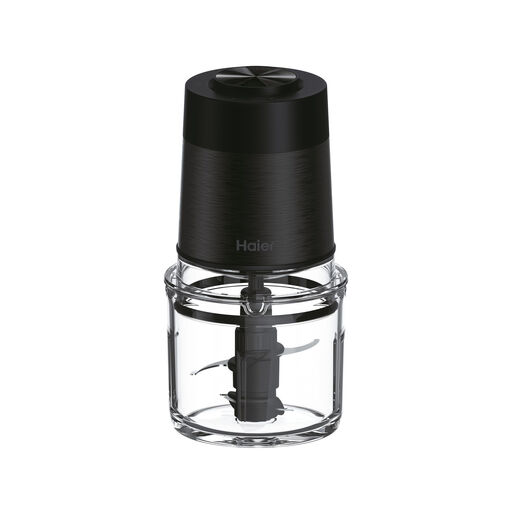 No image available
Consider this model if you want a glass-jar chopper with a choice of two stated speeds.
The product title lists double-stacked blades, 550 W power and a dishwasher-safe bowl. Confirm that the bowl fits your usual beetroot portion and that its operating controls suit the texture you want.
A controllable short run gives you an opportunity to stop and check the pieces before chopping further. Kenwood lists pulse operation on the CHP61.100WH, and Magimix lists pulse and continuous modes for Le Micro; use the exact model’s instructions and inspect the beetroot between runs.
Match the bowl to the portion you normally chop, allowing for the model’s operating instructions rather than treating its stated capacity as a fill line. Kenwood lists 500 ml for the CHP61.100WH, Magimix lists 0.8 L total capacity for Le Micro, and Tefal lists 1 L useful capacity for the Choppeo MB603BG1.
Unplug it and follow the exact model’s instructions for removing and washing food-contact parts. Kenwood describes dishwasher-safe tools for the CHP61.100WH; Tefal describes dishwasher-safe removable parts for the Choppeo MB603BG1 but excludes its base. Handle blades as the manual directs.
Refrigerate it promptly in a suitable container and follow any instructions on ready-cooked beetroot packaging. For England, Northern Ireland and Wales, GOV.UK guidance says a fridge should be between 0 and 5°C, warm cooked food should be refrigerated within one to two hours, and leftovers should be eaten within 48 hours or frozen.