Small-batch herb-oil makers
If you usually make a dressing or green sauce for one or two meals, a compact chopper may fit your routine. Look for a bowl that suits your portion and controls that let you check the herbs between bursts.


For small servings of herb oil or dressing, start with a compact chopper whose bowl suits the quantity you make and whose controls let you stop and check the texture. Choose a full food processor if you also regularly slice, grate or prepare larger batches, accepting more parts to store and wash. Check the exact model if adding oil gradually while processing matters to you.
The amount you normally make matters as much as the other jobs you expect the appliance to do.
If you usually make a dressing or green sauce for one or two meals, a compact chopper may fit your routine. Look for a bowl that suits your portion and controls that let you check the herbs between bursts.
If herb oil is one of several regular jobs, compare food processors by the chopping, slicing or grating tools supplied with the exact model, as well as by its suitability for your usual sauce quantity.
If you prepare larger quantities or cook for several people, bowl capacity and the accessory range become more relevant. Check whether the same appliance will also handle the smaller herb-oil portion you sometimes make.
Decide how much herb oil you usually make before choosing between a small chopper and a processor intended for wider food preparation.
Consider it when: Herb oil, dressings and chopped-herb mixtures are usually small, occasional jobs.
Trade-off: A chopper does not replace the slicing, grating or dough tools of a suitably equipped full processor.
Consider it when: You also regularly prepare vegetables, sauces or larger batches using the supplied tools.
Trade-off: A larger bowl and more attachments bring more to store, assemble and wash; check the model against your smallest portion.
| Concern | What to check | Who this matters to |
|---|---|---|
| Small-batch texture and oil addition | Check bowl capacity and pulse control; if you add oil during processing, check for a suitable lid opening or drizzle feature. | If I make one small serving, I want to check the herb texture as I go and add oil without pouring it all in at once. Around 50% of consumers put that small-batch control first. |
| Uses beyond herb oil | Check which blades and discs come with the exact model and whether its bowl suits your normal portions. | When I also prepare vegetables and other sauces, I want the same appliance to handle those jobs. Roughly 30% of consumers make wider food preparation their primary concern. |
| Storage and cleaning | Compare stored dimensions and check the care instructions for the bowl, lid, blade and accessories. | If I make herb oil frequently in a small kitchen, I need an appliance I can put away and clean without much fuss. Approximately 20% of consumers put storage and clean-up first. |
Extra capacity and attachments are useful for broader preparation, but they also mean more appliance and parts to handle for a small dressing.
Start with your normal herb quantity. Consider a larger processor when you will regularly use its other functions, and check its suitability for smaller portions too.
A motor rating does not tell you how the exact bowl, blade and controls will work with your portion of herbs and oil.
Check the model’s intended uses, bowl capacity and texture controls before comparing motor ratings.
The Food Standards Agency warns that bottling herbs or garlic in oil can be risky because controlling Clostridium botulinum spores at home is difficult. The appliance used to make the mixture does not resolve that preservation risk.
Do not assume a homemade bottle can be stored at room temperature; follow reputable preservation recipes or guidance.
A dishwasher-safe claim for some accessories does not establish the care requirements for every component of a particular model.
Check the exact model’s instructions for its bowl, lid, blade and other supplied parts.
These ranges illustrate different appliance formats; compare the specifications and included parts of individual models rather than treating a brand name as a guarantee of suitability.
Its compact choppers are relevant to small portions of herbs, dressings and sauces. KitchenAid lists an 830 ml 5KFC3516 and a 1.19 L 5KFC0516.
Its MultiTalent food-processor lines are relevant when herb chopping is one of several preparation tasks.
Its food-processor range is relevant when herb oil sits alongside regular household food preparation.
Its processor-and-blender options are relevant to cooks who want herb oil to be one part of wider meal preparation.
These choices include a compact processor, choppers and larger multifunction processors for cooks considering herb oil alongside other preparation jobs. Compare each bowl and its stated controls with the portion you normally make.
 No image available
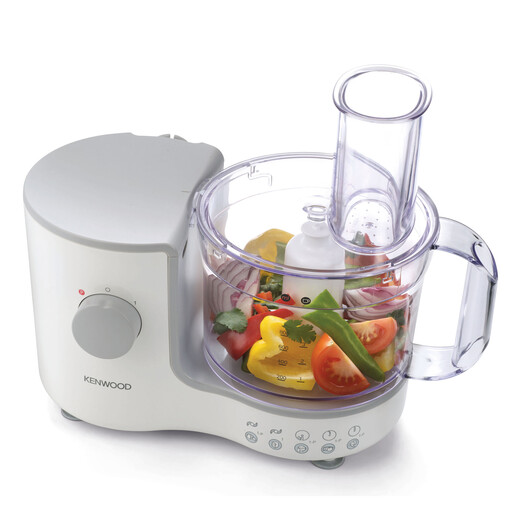
Consider this compact processor if you want a smaller bowl for herb mixtures as well as other chopping jobs.
The product name specifies 400 W, a blender, emulsifying function and shredder disc. Check whether the bowl suits your smallest herb portion and how you would add oil.
 No image available
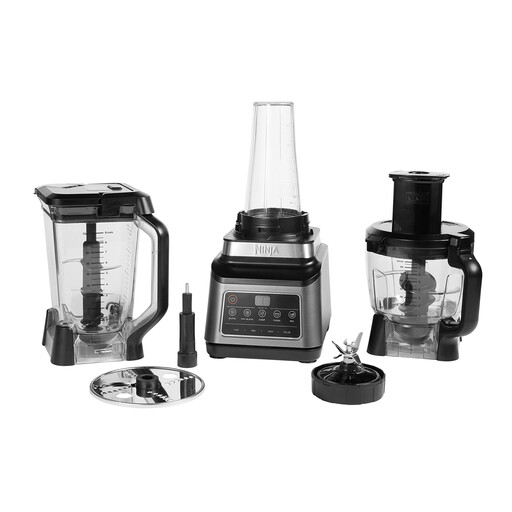
Consider this set if herb mixtures are one of several chopping and blending tasks you plan to do.
The product name lists a 1.8 L bowl, 2.1 L jug, 700 ml cup and five automatic programmes. Check which vessel suits your herb quantity and whether its oil-addition method meets your needs.
 No image available
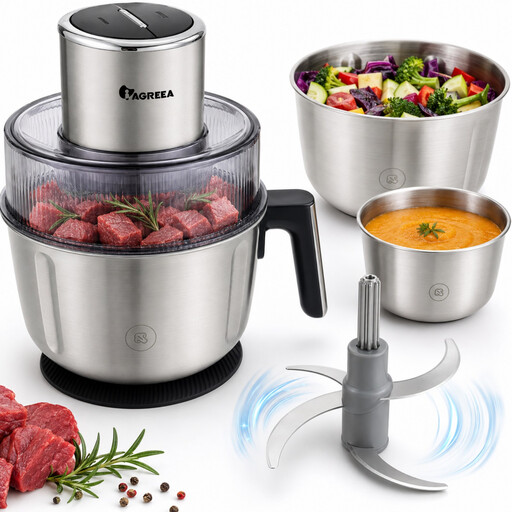
Consider this chopper if you also prepare larger quantities of chopped ingredients and want a choice of bowls.
The product name specifies 2.5 L, 2.2 L and 1.8 L stainless-steel bowls, two speeds and a triple-curved blade. Its smallest listed bowl is 1.8 L, so check whether it suits a very small herb portion and how oil can be added.
 No image available
Consider this processor-and-blender set when herb oil is one part of regular, varied meal preparation.
The product name specifies a 3 L processor, 1000 W, 13 accessories and variable speed with pulse. Check whether the processor bowl suits your smallest herb portion and how oil can be added during processing.
 No image available
Consider this larger processor if you want herb mixtures alongside other food-preparation tasks.
The product name specifies a 3 L bowl, 1000 W, six accessories and a pulse function. For a small serving of herb oil, check the bowl’s suitable working quantity and how oil can be added.
A mini chopper can be enough for a small serving if its bowl and blade suit your quantity and you can stop to check the texture. KitchenAid describes its 830 ml 5KFC3516 for small volumes, herbs, sauces and dressings; choose a suitably equipped full processor instead if slicing, grating or larger batches are regular needs.
Look for pulse control so you can stop and assess the texture between bursts. Bosch and KitchenAid describe pulse settings for controlled processing; if gradual oil addition matters, also check whether the exact model has a suitable lid feature.
Start with a chopper or food processor if your priority is chopping herbs to a texture you can check as you go; consider a blender if you chiefly want a smoother liquid-style mixture and the model is intended for that quantity. Which? distinguishes processors by their food-preparation blades and discs and evaluates blenders for smooth liquids, but those category differences do not establish how every model handles a tiny batch.
Do not assume it is shelf-stable. The Food Standards Agency warns that bottling herbs or garlic in oil can be risky and advises following reputable home-preservation guidance; its cited guidance applies to England, Northern Ireland and Wales. Choosing a different chopper or processor does not make the oil safe for room-temperature storage.