Who is a mini chopper for?

Occasional cheesecake-base bakers

If you usually make one small batch of crumbs, a compact chopper may be easier to store than a food processor. Good Food's reviews of small choppers illustrate why the bowl size still needs checking against your recipe.

Regular bakers making larger bases

If splitting biscuits into several loads would interrupt your baking, give usable bowl capacity more weight than minimum appliance size. The larger-bowl options described by Good Food and Bosch also bring more space or parts to account for.

Buyers preparing more than crumbs

If you also want to grind ingredients, make sauces or do broader food preparation, compare a multi-function chopper with a compact food processor. Check that the supplied blades and bowl suit each task rather than assuming every function applies to every model.

What matters when choosing?

Start with the amount of biscuits you normally crush. Then decide how much control you need over crumb texture and how much cleaning you are willing to do afterwards.

ConcernWhat to checkWho this matters to
Small-batch fit and storage Compare the exact model's working capacity with a small batch and check where the appliance will fit when stored. If I only make crumbs occasionally, I want a bowl that suits the job without taking up much cupboard space. Around 29% of consumers put that small-batch fit first.
Capacity for larger batches Compare usable capacity with your usual biscuit quantity; a bowl's headline volume may not be its working capacity. When I make a larger base, I would rather avoid stopping to empty and refill a tiny bowl. Larger-batch capacity comes first for around 29% of consumers.
Texture and dry ingredients Look for pulse or speed control, and check the supplied blade's stated suitability if you also plan to process tougher dry ingredients. I want to stop at the crumb texture my recipe needs, and I may use the chopper for other dry ingredients too. That control is the main concern for roughly 21% of consumers.
Cleaning and safe handling Check the exact model's cleaning and blade-handling instructions, alongside the supplied product information. If cleanup is awkward or the blades are difficult to handle safely, I am less likely to use the appliance often. Around 21% of consumers prioritise straightforward cleaning and handling.

Buying pitfalls

  • Choosing the smallest bowl without checking working capacity

    A small bowl can turn one cheesecake-base job into several loads. Good Food reported a 150 ml working capacity for the reviewed Kenwood CH180A, making it a small-quantity option rather than a guide to every Kenwood variant.

    Compare your usual biscuit quantity with the working capacity of the exact model you plan to buy. If you regularly make larger bases, consider a larger chopper or compact food processor.

  • Using wattage as a shortcut for crumb quality

    A motor rating does not establish how a particular bowl, blade and control arrangement will handle your biscuit batch. Good Food's chopper reviews describe model-specific breadcrumb results and handling differences.

    Check the controls and bowl size, then look for relevant results for the exact model. If you want to process tougher ingredients as well, check what the manufacturer says the supplied blade can handle.

  • Assuming detachable parts are dishwasher-safe

    Good Food found no dishwasher-safe components on its reviewed VonShef chopper, while the bowl, blades and lid of its reviewed Russell Hobbs model could go in a dishwasher.

    Read the cleaning instructions for your chosen model and plan how you will wash, dry and store its sharp blades safely.

  • Treating a listing or marking as the whole electrical-safety check

    GOV.UK states that electrical equipment must meet applicable safety requirements before it is placed on the Great Britain market. A listing alone does not tell you whether the pictured model, supplied plug and accompanying information match the appliance you will receive.

    Check the full model number, seller and supplied documentation. Northern Ireland has separate guidance, so do not apply Great Britain guidance unchanged to a purchase for Northern Ireland.

Brands to consider

Kenwood

The CH180B is a compact chopper that Kenwood positions for small quantities.

  • Kenwood describes the CH180B as having a compact bowl, two-speed operation and a 300 W motor.
  • Good Food's favourable breadcrumb result and 150 ml working capacity concern the CH180A. Check the CH180B's own working capacity and included parts rather than treating the variants as identical.

VonShef

The mini chopper reviewed by Good Food suits buyers comparing a larger bowl with very compact models.

  • Good Food reports a 1.2 litre glass bowl, two speeds and mostly fine, even breadcrumbs after brief processing in its test.
  • The reviewed model had numerous components, none of which Good Food found to be dishwasher-safe.

Tefal

The MQ723140 is worth comparing when biscuit crumbs are only one of several chopping or grinding tasks.

  • Tefal lists a 500 W motor, a 300 g/500 ml bowl and separate sharp and serrated blade sets for the MQ723140.
  • Check which blade your intended ingredients require; its additional functions need not be useful if you only make occasional biscuit crumbs.

Russell Hobbs

Good Food's reviewed 500 ml mini chopper is a compact, small-quantity option.

  • Good Food says the reviewed model's bowl, blades and lid are dishwasher-safe.
  • The review says its bowl is too small for some recipes; those findings should not be extended to every Russell Hobbs chopper.

Bosch

The MCM3501MGB compact food processor is an alternative when crumbs are part of broader food preparation.

  • Bosch lists a 2.3 litre usable bowl, an 800 W motor, two speeds and a moment function for this model.
  • Its larger bowl and wider accessory set call for more storage consideration than a small mini chopper.

Joybuy product choices

This compact mini chopper is a choice for occasional, smaller biscuit-crumb batches; compare its working capacity with your usual recipe before deciding.
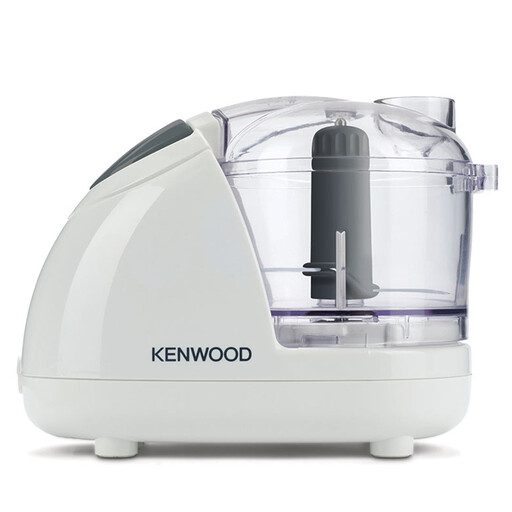
White Kenwood CH180B mini chopper

Kenwood CH180B Mini Chopper, 350 ml, White

Consider this compact model if you usually make a small batch of crumbs and want an appliance that is easy to store.

Its listed bowl capacity is 350 ml; compare the working capacity with your usual batch. The product name specifies a 300 W motor, two speeds and a dishwasher-safe bowl. Check the instructions before washing other parts.

Joybuy

Questions about biscuit crumbs

Can a mini chopper make biscuit crumbs?

A suitable mini chopper can be used to make crumbs, but check the exact model and the quantity your recipe requires. Good Food reported good breadcrumb results with the Kenwood CH180A and mostly fine, even breadcrumbs with its reviewed VonShef chopper; bread-test results do not guarantee the same texture with every biscuit.

How do I stop biscuit crumbs becoming too fine?

Use short pulses where your appliance provides them, then stop and inspect the texture before processing further. Good Food found pulsing helpful for control with the CH180A; follow the operating instructions for your own model.

What bowl size do I need for a biscuit base?

Choose a working capacity that fits the amount of biscuits in your usual recipe. Good Food reported a 150 ml working capacity for the CH180A and a 1.2 litre bowl for its reviewed VonShef chopper, while Bosch lists 2.3 litres of usable volume for the MCM3501MGB food processor. A larger option may mean fewer loads, but also more appliance or components to store.

Can the bowl and blades go in the dishwasher?

Only put parts in the dishwasher if the instructions for that exact model permit it. Good Food found dishwasher-safe bowl, blades and lid on its reviewed Russell Hobbs chopper, but no dishwasher-safe components on its reviewed VonShef model. Handle sharp blades as directed in the manual.

What should I check when buying an electric mini chopper for Great Britain?

Check the full model number, seller, supplied plug and product instructions rather than relying on a listing's title or images alone. GOV.UK states that electrical equipment must meet applicable safety requirements before being placed on the Great Britain market; consult separate guidance for Northern Ireland.