Frequent small-batch cooks
If you regularly prepare onions, garlic or herbs for weekday meals, a compact chopper offers an alternative to getting out a full-size food processor for a small task.


An electric mini chopper suits frequent small-batch onion prep if you prefer button operation; look for pulse or speed controls if you want to stop before the onion becomes too fine. A manual pull-cord chopper needs no socket, but you supply the effort and must judge when to stop pulling.
If you regularly prepare onions, garlic or herbs for weekday meals, a compact chopper offers an alternative to getting out a full-size food processor for a small task.
If you want onion pieces for salsa, toppings or frying rather than a fine paste, look for a pulse control, speed settings or a manual mechanism you can stop after a few pulls.
If plug access is inconvenient or you do not want a motor unit, a manual pull-cord chopper lets you prepare onions without electricity, provided you are comfortable doing the pulling.
Start with the quantity of onion you normally chop, then decide whether button operation, control over texture or socket-free use matters most to you.
| Concern | What to check | Who this matters to |
|---|---|---|
| Quick small-batch prep | Check the bowl capacity and whether the operation suits your usual onion quantity. | When I chop onions for weekday meals, I want to finish a small batch without bringing out a full-size processor; around 36% of consumers put that convenience first. |
| Chop texture | Look for a stated pulse function, speed settings or manual pull control that lets you stop and inspect the onion. | For salsa or toppings, I want pieces that remain distinct rather than turning too fine. Around 29% of consumers make texture control their primary concern. |
| Socket-free use | Compare a pull-cord design with a mains-powered model, including the hand effort required. | If a socket is inconvenient, I would rather pull a cord than rely on an electric chopper; for around 21% of consumers, socket-free use comes first. |
| Cleaning and blade handling | Confirm which removable parts are dishwasher-safe and how the blade and lid should be handled and stored. | After preparing onions, I want food-contact parts I can clean and a blade I can handle carefully. Safe handling and clean-up are the leading concern for around 14% of consumers. |
Russell Hobbs specifies 70 W and one speed for its 22220, while Kenwood specifies 500 W, two speeds and pulse for the CHP61.100WH. Those figures and controls are not a like-for-like test of how either model chops onions.
Compare the exact model’s bowl size and controls alongside its cleaning and safety instructions, rather than choosing by the wattage figure alone.
Good Housekeeping UK’s mini-chopper list spans capacities from 0.3 to 1.18 litres. A compact bowl may mean processing a larger recipe in separate batches.
Consider the onions and other ingredients you normally prepare together, then check the stated capacity against that quantity.
Tefal says more pulls produce a finer chop with its K1330404 manual model. An electric model also needs you to stop processing when the pieces reach the size you want.
Follow the model’s preparation instructions, process in short intervals and inspect the onion before continuing.
Dishwasher suitability differs by model and component. A removable blade also needs careful handling during cleaning.
Check the exact model’s instructions for the bowl, lid and blade, and clean food-contact parts after use.
Kenwood’s electric CHP61.100WH is a 500 ml option for cooks who want speed and pulse controls.
The electric 22220 is described by Russell Hobbs UK for small ingredients including onions, garlic and chilli.
Tefal’s manual K1330404 is a 500 ml pull-cord option that does not need electricity.
Lakeland’s electric mini chopper is an option to consider if you want a 500 ml glass bowl.
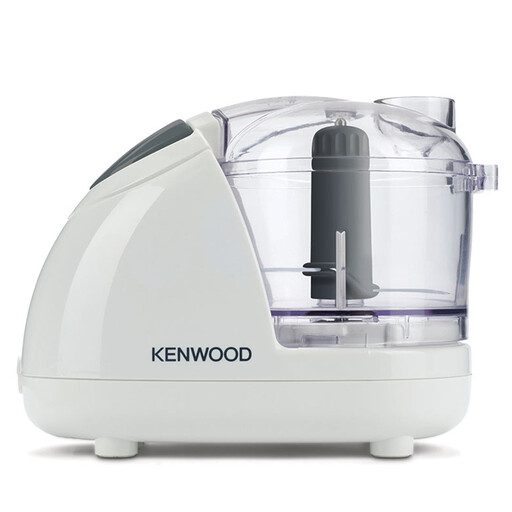
The Joybuy model below is a 350 ml electric mini chopper to consider for small onion-prep batches. Check that its bowl fits the quantity you usually prepare.
 No image available
Consider it for small onion-prep batches if a 350 ml bowl suits your usual quantity.
The Joybuy product title specifies two speeds and a dishwasher-safe bowl; check the instructions before washing other parts.
Choose electric operation if you regularly prepare small batches and prefer pressing a control; choose a pull-cord model if avoiding a socket matters more and you are comfortable supplying the effort. For a coarse result, check how you can stop and inspect the onion with the particular model.
Choose capacity for the onions and other ingredients you normally process together, rather than assuming all mini choppers hold the same amount. Kenwood specifies 500 ml for the CHP61.100WH, while the Joybuy-listed Kenwood CH180B is a distinct 350 ml model; a smaller bowl may mean splitting a larger recipe into batches.
Process briefly, stop and inspect the pieces before continuing, while following the model’s instructions. Kenwood specifies pulse operation for its CHP61.100WH, and Tefal says additional pulls make the chop finer with its manual K1330404.
Wash a part in the dishwasher only if the exact model’s instructions permit it. The components identified as dishwasher-safe vary between the Kenwood, Russell Hobbs, Tefal and Lakeland examples, so check the bowl, lid and blade separately and handle the blade carefully.