Pesto makers who care about texture
If you want to stop at a coarse chop or work towards a smoother sauce, look for pulse control. A lid opening for adding oil gradually or an emulsifying tool may also matter to you.


Choose a compact mini chopper if you usually make a small amount of pesto; prioritise pulse control and a way to add oil gradually if texture matters most. If pesto is one of several regular food-prep jobs, a processor with a larger bowl and additional tools may be more useful, though it brings more parts to store and clean. Bowl capacity and motor wattage alone will not tell you how much control you have over the finished sauce.
If you want to stop at a coarse chop or work towards a smoother sauce, look for pulse control. A lid opening for adding oil gradually or an emulsifying tool may also matter to you.
If you usually make pesto or dips for one meal, a compact bowl and removable parts that are straightforward to wash may matter more than extra processing tools.
If you also want to slice, grate or process larger quantities, consider a food processor with the appropriate bowls and discs rather than choosing solely for pesto.
Start with the amount of pesto you normally make, then decide whether texture control or broader food-prep tasks justify additional controls and parts.
| Concern | What to check | Who this matters to |
|---|---|---|
| Texture and oil addition | Check for pulse control and, if needed, a lid opening or emulsifying tool for adding oil gradually. | If I want a coarse pesto rather than an over-processed sauce, I need to control when chopping stops and how oil is added. Around 42% of consumers put that control first. |
| Small batches and cleanup | Compare working capacity with your usual batch; check which removable parts can go in the dishwasher. | When I make pesto for one meal, I want a bowl that suits the quantity without creating a lot of washing-up. For around 33% of consumers, compact everyday use is the primary need. |
| Wider food preparation | Check bowl and liquid capacities separately, along with the included slicing or grating tools. | If pesto is only one part of preparing a meal, I also want the appliance to handle other chopping, slicing or grating jobs. Broader preparation comes first for around 25% of consumers. |
Motor wattage does not tell you whether a chopper offers pulse control, a suitable bowl size or a way to add oil during processing. Kenwood GB specifies pulse and two-speed control for its 500W Easy Chop CHP61.100WH, while Russell Hobbs specifies one-touch operation for its 200W Desire 27131.
Compare working capacity and controls before treating rated power as a deciding factor.
A bowl’s headline capacity need not be its liquid capacity. Cuisinart UK lists a 1.9L large bowl but a 900ml liquid capacity for the Easy Prep Pro FP8U.
Check both figures against the amount of pesto you intend to process at once.
Processing time and the way ingredients and oil are added affect whether pesto remains coarse or becomes smoother; sauce-oriented features do not guarantee a particular result.
Choose controls that let you process in short stages, and follow the appliance instructions for adding ingredients and scraping down the bowl.
The British Dietetic Association describes pesto commonly made with pine nuts and hard cheese. Blades, lids and seals therefore deserve attention when cleaning, particularly if food is also prepared for someone with an allergy.
Check how the food-contact parts come apart and can be cleaned, and take care to prevent cross-contact.
Cuisinart UK offers both the sauce-focused Mini Prep Pro ECH4U and the larger Easy Prep Pro FP8U.
Kenwood GB positions the Easy Chop CHP61.100WH as a compact chopper for modest quantities of sauces and everyday ingredients.
Magimix positions Le Micro around small-batch chopping, puréeing and sauce preparation.
The Desire Matte Charcoal Mini Chopper 27131 is a straightforward option for small food-prep jobs.
These choices cover a small Kenwood chopper for modest pesto batches and a Kenwood food processor for cooks who also want broader food-prep functions. Check each model’s controls and usable capacity against your usual recipe.
 No image available
Consider this compact model if you usually make a small amount of pesto and want two speed settings. Its listed features include a 300W motor and a dishwasher-safe bowl; check the usable quantity for your recipe and whether the lid lets you add oil during processing.
Follow the stated limit of no more than 30 seconds of continuous motor operation.
 No image available
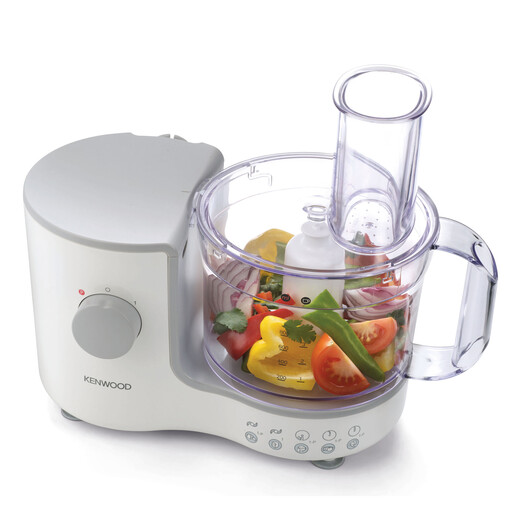
Consider this food processor if pesto is one of several preparation jobs. Its listed features include a 400W motor, a blender, chopping and emulsifying functions, and a shredder disc; check its usable liquid capacity and whether oil can be added while it runs.
Its additional parts may be unnecessary if a small batch of pesto is your only intended task.
A 500ml working capacity can suit a small, meal-sized batch, but the right size depends on how much you make at once. If you prepare larger quantities or want other food-prep functions, compare larger processors and check their liquid capacity separately from headline bowl size.
Pulse control helps you process in short stages, while lid openings or an emulsifying tool can make gradual oil addition more manageable. Neither feature guarantees a smooth result: ingredient quantity and processing time still matter.
You can choose a recipe that does not use pine nuts; the British Dietetic Association gives a chickpea-based variation. Check every ingredient and take care to prevent cross-contact when cleaning and using the chopper, especially if it has previously processed nuts.
Follow storage guidance for the particular recipe rather than applying one time limit to every pesto. The British Dietetic Association advises keeping its chickpea pesto recipe covered in the fridge for up to 24 hours; the Food Standards Agency also emphasises proper chilling to limit bacterial growth.
Use an appropriate electrical recycling or collection route rather than putting the appliance in a household bin. Coventry City Council advises against putting electrical appliances in household bins; check your local council’s arrangements or an available retailer take-back service.