Small-kitchen pesto makers
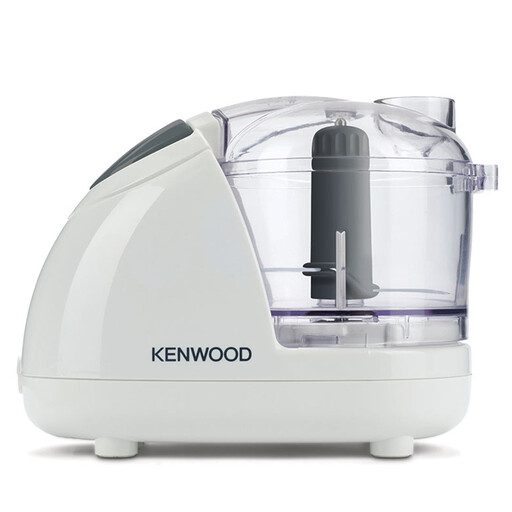
If you make pesto for one meal or a few portions, a compact chopper may be easier to accommodate. Kenwood positions its CH180 series for small quantities; check the bowl’s usable fill limit against your recipe.


Choose a mini chopper by its usable food capacity, bowl arrangement and controls, rather than wattage alone. A compact single bowl suits modest portions if you are happy to process successive batches; multiple bowls can make portioning easier but add parts to wash and store. Check the manual’s fill guidance and plan how you will clean food-contact parts, particularly when pesto contains allergens.
If you make pesto for one meal or a few portions, a compact chopper may be easier to accommodate. Kenwood positions its CH180 series for small quantities; check the bowl’s usable fill limit against your recipe.
If you prepare pesto for several meals, consider stated food capacity, the number of processing bowls and whether lids are included. Those details help you decide how often you will need to stop and portion the mixture.
If pesto made with nuts or cheese shares equipment with food for someone who has an allergy, choose parts you can remove, inspect and clean thoroughly. The Food Standards Agency identifies contamination control as an important part of food handling.
For pesto made across several meals, decide how much you need to process at a time, then consider texture control and the cleaning and storage routine.
Choose it when: You usually make a modest portion and can process a larger recipe in successive batches.
Trade-off: Repeated loading, scraping and decanting may interrupt a longer prep session.
Choose it when: Separating portions as you work matters more to you than having fewer components.
Trade-off: Extra bowls and lids need washing and storage; their presence does not increase the fill limit of each bowl.
| Concern | What to check | Who this matters to |
|---|---|---|
| Batch size and portioning | Compare stated food capacity and the manual’s fill limit; check bowl count and supplied lids. | If I make pesto for several meals, I want to know how often I will have to stop and divide it into portions. Roughly 42% of consumers put batch size and portioning first. |
| Texture control | Look for pulse operation or stated speed settings that let you stop and inspect between bursts. | When I want some texture left in my pesto, I need opportunities to check it as I chop. Around 33% of consumers make texture control their primary concern. |
| Cleaning and storage | Check which food-contact parts are removable and dishwasher safe, and plan how leftovers will be chilled or frozen. | In a shared kitchen, I need to remove pesto residue before making food for someone with an allergy and put extra portions away promptly. About 25% of consumers prioritise this cleaning and storage routine. |
Russell Hobbs lists a 1-litre glass bowl but a 500 ml food capacity for its Desire 24660-56. Using the bowl’s headline volume as a recipe limit can leave you with more pesto to process than the stated capacity allows.
Compare the exact model’s food capacity and manual fill limit with your usual recipe before deciding how many batches you will need.
A wattage rating does not establish the pesto texture a chopper will produce. The Kenwood CH180 series and Ninja NJ1002UKBK also differ in their stated controls and bowl arrangements.
Check how you can stop and inspect the mixture between bursts, alongside the capacity that fits your recipe.
Pesto containing nuts or cheese can leave residue on blades, bowls, lids and seals. A dishwasher-safe claim may apply to only some of those parts.
Check which pieces can be removed, then inspect and clean all food-contact surfaces thoroughly before preparing food for someone with an allergy.
Finished pesto needs a prompt storage plan if it will not be eaten straight away. GOV.UK advises keeping fridges at 0–5°C and eating leftovers within two days or freezing them if that will not be possible.
Have suitable portions ready before you start, so you can cool and store the finished pesto promptly.
The NJ1002UKBK is a multi-bowl option for cooks who want to process and separate portions.
Kenwood positions its CH180 series for small quantities, making it a route to consider for modest pesto portions.
Russell Hobbs UK identifies pesto as a use for its mini-chopper range in compact kitchens.
This compact single-bowl choice suits modest pesto portions or a larger recipe processed in successive batches. Check the manual’s usable fill limit before planning how much to make per run.
 No image available
For modest pesto portions or successive batches when you want a compact chopper.
300 W motor, 350 ml bowl, two speeds and a dishwasher-safe bowl. The 350 ml figure describes bowl volume, not the usable food capacity; check the manual’s fill and cleaning instructions for your recipe.
Yes, provided you keep each run within the exact model’s food capacity and manual fill limit; a larger recipe may need several runs. For perspective, Russell Hobbs lists a 500 ml food capacity for the Desire 24660-56 despite its 1-litre bowl, while SharkNinja UK specifies two 500 ml processing bowls for the Ninja NJ1002UKBK.
Divide it into suitable portions and chill or freeze it promptly. GOV.UK advises keeping fridges at 0–5°C and eating leftovers within two days, or freezing them if that will not be possible.
A separate chopper is not automatically necessary, but preventing allergen cross-contamination is essential when equipment is shared. Check whether you can remove, inspect and thoroughly clean every food-contact part before using it to prepare food for the allergic person.