Small-batch seed-topper makers
You want visibly chopped pumpkin seeds for salads, soups, baking or breakfast bowls, and want to stop before the pieces become too fine.


For a small batch of pumpkin seeds, start with a compact chopper whose maker states that it handles nuts, spices or hard ingredients, then consider the controls you would use to stop at a coarse texture. Those claims do not establish that a model can process pumpkin seeds: check its manual for permitted ingredients, fill levels and run-time limits before buying it for that task.
You want visibly chopped pumpkin seeds for salads, soups, baking or breakfast bowls, and want to stop before the pieces become too fine.
You need an appliance for small portions during a short stay, without finding room for a full-size food processor.
You also want to prepare ingredients such as nuts, spices, dips or vegetables. Check which of those tasks the maker permits for the exact model you choose.
Check whether the model is intended for the ingredients you plan to process before comparing bowl size and controls. A nut- or spice-grinding claim is a useful starting point, but the exact manual still decides whether pumpkin seeds are permitted.
| Concern | What to check | Who this matters to |
|---|---|---|
| Dry ingredients | Look for stated nut, spice or hard-ingredient use, then check the manual for pumpkin seeds and fill limits. | If seeds are the main task, I want a stronger indication of dry-ingredient use than a claim about chopping vegetables. Around 36% of consumers would put that capability first. |
| Texture control | Check for pulse or more than one speed, and follow the model’s operating instructions. | For a topping, I want to stop while the seed pieces are still coarse. Roughly 29% of consumers would make texture control their primary concern. |
| Size and capacity | Compare usable capacity with total bowl volume, and check the appliance’s storage dimensions. | With little cottage worktop space and only a small batch to prepare, I would avoid choosing a bowl solely for its maximum volume. Around 21% of consumers would prioritise size and batch fit. |
| Cleaning and storage | Check which parts can be washed in a dishwasher, whether one is available, and whether a storage lid is included. | On a short stay, I want washing and packing away to be straightforward. For approximately 14% of consumers, that convenience would be the deciding need. |
A claim about herbs, vegetables or dips does not establish that a chopper is intended for dry pumpkin seeds.
Use stated nut, spice, grinding or hard-ingredient functions as leads, then check the exact manual before using the appliance for seeds.
The Russell Hobbs Desire 27131 has a 1L glass bowl but a stated 500ml working capacity, according to Russell Hobbs UK.
Compare usable capacity and maximum-fill instructions rather than assuming the full bowl volume is available for food.
Russell Hobbs UK lists the Desire 27131 at 200W and describes its 350W figure as peak power recorded for 100 milliseconds. That peak figure does not establish continuous chopping performance.
Compare stated functions and controls alongside like-for-like power figures, rather than choosing on the largest wattage printed in a description.
Dishwasher-safe parts offer no dishwasher convenience if the cottage does not have one; not every removable part necessarily has the same cleaning instructions.
Check the facilities and the manual’s directions for the bowl, lid, blade and accessories. Clean food-contact parts before and after use.
Kenwood’s compact options include the 500W Easy Chop CHP61.100WH, with two pressure-sensitive speeds and pulse control, and the smaller 300W, two-speed CH180B.
The Pixie CCH32U has a 0.7L bowl and stated grinding function; the Mini Prep Pro ECH4U has a 900ml bowl and pulse control.
The Food Collection 22220 is a 500ml, 70W single-speed mini chopper; the Desire 27131 has a 500ml working capacity, 200W motor and glass bowl.
The Alchemy Mini Electric Food Chopper has a stated 500ml bowl, 260W motor, pulse and turbo controls, and a storage lid.
These compact choppers offer different bowl arrangements and controls for cottage food prep. Their related nut-use descriptions are starting points, not confirmation that pumpkin seeds are permitted; check the exact manual before choosing one specifically for seeds.
 Image unavailable
Consider this model for small batches if its manual permits your intended ingredients. The Joybuy listing describes nut and spice grinding; its named specifications are a 300W motor, 350ml bowl and two speeds.
The listing warns against running the motor continuously for more than 30 seconds. Check the manual for pumpkin-seed permission and batch limits.
 Image unavailable
The 0.6 L bowl offers a smaller option for cottage prep, while the second, 2 L bowl needs additional storage space. The product name specifies a 300 W motor and both bowl sizes.
Its listing describes nut use, but check the exact manual for pumpkin-seed permission, batch limits and operating time before relying on it for seeds.
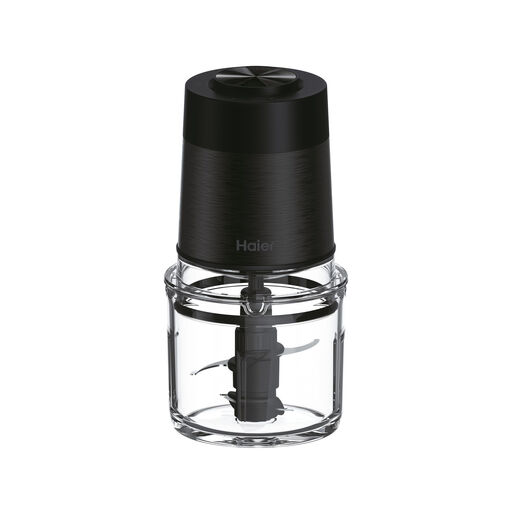 Image unavailable
Consider this two-speed model if you also plan other small chopping jobs; its product name specifies 550W power, double-stacked blades and a dishwasher-safe bowl.
Confirm the bowl capacity if batch size or cupboard space will decide your choice, and check the manual before attempting pumpkin seeds.
Do not assume that nut, spice or hard-ingredient use also permits pumpkin seeds. Cuisinart UK describes grinding functions for some models, Kenwood GB describes hard-ingredient chopping for the Easy Chop, and Russell Hobbs UK names nuts for the Food Collection 22220; check the exact model’s manual for pumpkin seeds, fill limits and operating time.
Choose by the batch you expect to prepare and the space available for the appliance, rather than bowl volume alone. The compact models discussed here range from a 350ml Kenwood bowl to larger Cuisinart bowls, while the Russell Hobbs Desire illustrates why working capacity can differ from total bowl volume.
Wattage alone cannot establish the texture you will get from pumpkin seeds. Compare the exact model’s stated ingredient uses and controls, and distinguish rated power from a peak-power figure before deciding.