Hosts who want chunky salsa
If you want to see the tomato, onion and herbs as you chop, a clear bowl and a way to stop at your chosen texture matter more than motor power alone. Tefal describes both features for its manual K1320404.


Choose a manual pull chopper if you want to watch the ingredients and stop at a chunky texture, and you do not mind the effort. Choose an electric model with pulse control if short powered bursts suit you better; for a larger salsa batch, compare each working bowl rather than adding the capacities of separate bowls together.
If you want to see the tomato, onion and herbs as you chop, a clear bowl and a way to stop at your chosen texture matter more than motor power alone. Tefal describes both features for its manual K1320404.
If you would rather avoid repeated small processing runs, compare individual bowl capacities. Tefal and Cuisinart list 900ml bowls for the K1320404 and ECH4U respectively; SharkNinja lists two separate 500ml bowls for the NJ1002UKBK.
If the chopper will spend most of its time in a cupboard, weigh storage space against batch size. Kenwood positions the CH180B for small quantities, while Cuisinart lists dip- and sauce-making functions for its 0.7L CCH32U Pixie.
Decide how much salsa you want to process at once and how closely you want to control its texture. Then check the storage and cleaning arrangements you will live with after the party.
| Concern | What to check | Who this matters to |
|---|---|---|
| Texture control | Look for a visible bowl, documented pull-to-adjust chopping or pulse control; wattage alone does not establish the finished texture. | If I want distinct pieces of tomato and onion, I need to see when to stop chopping. Around 36% of consumers would put texture control first. |
| Working capacity | Compare each bowl separately and leave working headroom; a stated capacity is not a guaranteed finished-salsa yield. | When I am preparing salsa for several guests, repeated tiny batches would slow me down. For around 29% of consumers, enough capacity for a larger batch is the primary concern. |
| Storage and power | Decide whether you want a manual tool or need a mains socket; check the assembled storage dimensions of an electric model. | I have limited cupboard or socket space, so the chopper needs to fit the way I use my kitchen. Compact storage or avoiding electricity would come first for around 21% of consumers. |
| Cleaning and other uses | Check which individual components are dishwasher-safe and whether the model covers the dips or sauces you also make. | After serving, I want to clean the food-contact parts without assuming the whole appliance can go in the dishwasher. Around 14% of consumers would make clean-up and use beyond salsa their main priority. |
Motor power does not tell you when chopped salsa ingredients will become finer than you want. Tefal describes adjusting the K1320404 through repeated pulls, while Cuisinart specifies pulse control for the ECH4U.
Compare the model’s chopping controls and ingredient guidance, then stop to inspect the texture during preparation.
The Ninja NJ1002UKBK has two separate 500ml processing bowls, according to SharkNinja. They can keep batches apart, but cannot process one combined batch as a single bowl.
If one larger processing run matters most, compare a single-bowl option; choose separate bowls when keeping salsa styles or prepared components apart is more useful.
Cleaning instructions differ by component. Tefal specifies a dishwasher-safe bowl and blades for the K1320404 but describes its lid separately as washable; Cuisinart lists the removable bowl, lid, blade and spatula as dishwasher-safe for the ECH4U.
Check the instructions for every part, particularly the motor unit, before washing it.
The Food Standards Agency’s MyHACCP guidance for food establishments identifies cross-contamination between raw and ready-to-eat food as a hazard. That guidance is not a household appliance-specific rule.
If the chopper has contacted raw food, wash and dry its food-contact parts before preparing ready-to-eat salsa, following the appliance’s cleaning instructions.
The manual K1320404 is a 900ml option that Tefal explicitly describes for chopping salsa ingredients.
Its electric options include the 900ml ECH4U Mini Prep Pro and the smaller 0.7L CCH32U Pixie.
SharkNinja describes the electric NJ1002UKBK as a 200W chopper with two 500ml processing bowls and lids.
Kenwood positions the electric CH180B for small quantities, including dips and sauces.
These choppers offer different bowl sizes for salsa preparation: the Kenwood suits smaller quantities or repeated batches, while the larger BEAR bowl is worth considering when you want to prepare more ingredients at once. Check the controls and working limits before relying on either for a particular texture.
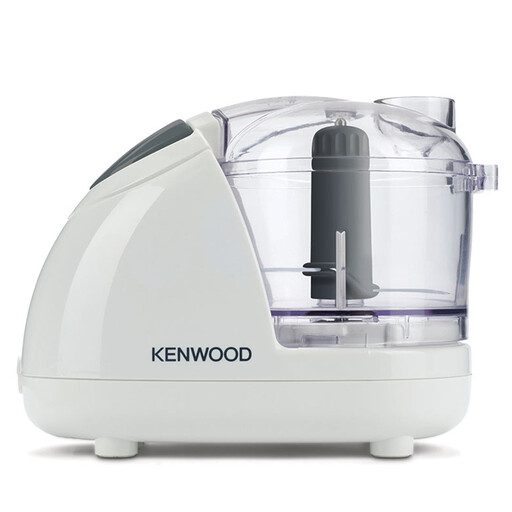 No image available
Consider this for a small salsa accompaniment or for preparing several batches rather than one large bowlful.
The listed model has a 350ml bowl, a 300W motor and two speeds. Its bowl is described as dishwasher-safe; check the instructions for the other parts.
Follow the listing’s limit of no more than 30 seconds of continuous motor operation.
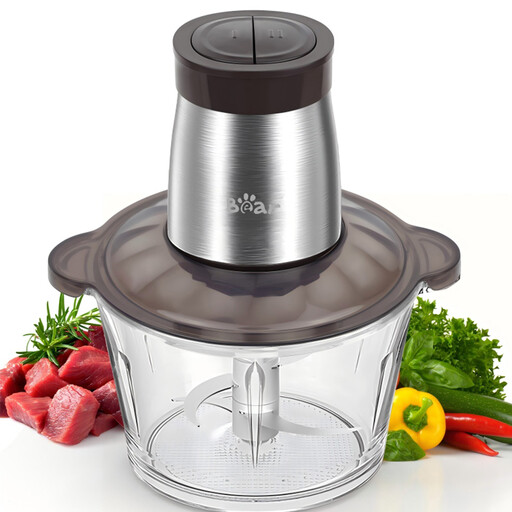 No image available
Consider its larger stated bowl capacity if preparing more salsa ingredients at once matters more to you than choosing a small-batch appliance.
The listed model is 300W with two speeds and 304 stainless steel blades. Check its storage footprint and processing guidance if cupboard space or a chunky finish is decisive.
The listing limits continuous operation to 40 seconds, followed by at least 2 minutes of rest; after three consecutive cycles, allow 15 minutes for cooling. Consult the manual for cleaning the bowl and blades, and do not immerse the main unit.
Choose by the amount you want to process in each run, not by the stated capacity alone. Tefal lists a 900ml bowl for the K1320404 and Cuisinart lists one for the ECH4U; SharkNinja’s NJ1002UKBK instead has two separate 500ml bowls. Leave working headroom and check the manual before filling.
A manual pull model suits you if watching the ingredients and gradually adjusting the chop matter most. Tefal describes those controls for its clear-bowled K1320404; an electric model with pulse control, such as Cuisinart’s ECH4U, offers short powered bursts, but you still need to inspect the texture between them.
Check the exact model and component. Tefal specifies the K1320404 bowl and blades as dishwasher-safe but describes its lid as washable separately; Cuisinart lists the ECH4U’s removable bowl, lid, blade and spatula as dishwasher-safe. Follow the manual for the motor unit and handle blades carefully.
Wash and dry the food-contact parts before using them for ready-to-eat salsa, following the model’s cleaning instructions. The Food Standards Agency’s MyHACCP guidance identifies raw-to-ready-to-eat cross-contamination as a hazard in food establishments; it does not set a special household mini-chopper licensing requirement.