For olive tapenade, choose a mini chopper with a bowl that fits your usual batch and controls that let you stop and inspect the texture. Kenwood GB lists a 500 ml pulse-controlled model for small quantities, while KitchenAid UK lists an 830 ml model with pulse control and a lid feature for adding liquid gradually; the larger bowl is worth considering if you regularly make more than a small serving.
Who is a mini chopper for?
Small-batch tapenade makers
If you make tapenade for a few people, a compact bowl may be enough for olives, capers, garlic and herbs without giving you a large container to wash. Kenwood GB positions its 500 ml Easy Chop CHP61 for small quantities, dips and sauces.
Cooks who want to control texture
If you prefer to inspect the mixture before it becomes a finer paste, look for a control that lets you process in short bursts. Kenwood GB and KitchenAid UK both list pulse control on their cited mini choppers.
Cooks with other preparation jobs
If tapenade is one of several things you make, consider whether a separate blending vessel would earn its storage space. Ninja UK lists a 500 ml chopper bowl and a 1.5 litre blending pitcher with its QB1001UKBK system.
What matters when choosing?
Start with the amount of tapenade you normally make, then check how the exact chopper lets you control texture and how much cleaning and storage it entails.
| Concern | What to check | Who this matters to |
|---|
| Texture control |
Look for pulse or another control that permits short runs; check the instructions before adding oil during operation. |
If I want recognisable pieces of olive rather than a uniformly fine paste, I need to stop and inspect the mixture as I go. Around 36% of consumers put texture control first. |
| Batch size |
Compare bowl capacities with your usual quantity; consider a larger vessel only if you will use it. |
When I make tapenade for guests or several meals, preparing repeated small batches is inconvenient. Roughly 21% of consumers prioritise making more at once. |
| Cleaning and storage |
Check which removable parts are dishwasher safe and whether the appliance and cord fit your storage space. |
After making an oily spread, I want the parts to be manageable to wash and put away. About 29% of consumers make easy cleaning and storage their main concern. |
| Other preparation tasks |
Check which bowls or pitchers are included and which tasks the maker specifies for the exact model. |
If I also make sauces or use a blender regularly, I may prefer equipment that serves those jobs as well. Approximately 14% of consumers put broader use first. |
Mistakes to avoid
-
Choosing by motor wattage alone
Wattage does not tell you whether a chopper has pulse control, holds your usual batch or permits controlled liquid addition.
Compare the bowl and controls before using wattage to distinguish models.
-
Buying extra vessels for an occasional small batch
A larger preparation system brings additional components to store and wash, even if you usually make only a little tapenade.
Consider a multi-vessel system when you expect to use its other preparation functions regularly.
-
Assuming oil can be poured in while any chopper runs
KitchenAid UK lists an in-lid drizzle basin for the 5KFC3516, but that feature should not be assumed for another model.
Check the exact lid design and instructions before adding oil during operation.
-
Leaving prepared tapenade out after making it
Making the spread in a chopper does not replace prompt chilling. GOV.UK guidance for England, Northern Ireland and Wales and Food Standards Scotland advise keeping fridges at 0–5°C and eating leftovers within two days.
Refrigerate portions promptly, follow ingredient use-by dates and freeze leftovers you will not eat within that period.
Brands to consider for this task
Kenwood
Kenwood GB positions the 500 ml Easy Chop CHP61 as a compact chopper for small quantities, dips and sauces.
- The cited model has two speeds, pulse control and dishwasher-safe tools, according to Kenwood GB.
- Its 500 ml bowl may mean processing separate batches when making more tapenade.
KitchenAid
KitchenAid UK lists an 830 ml bowl on the 5KFC3516 for buyers who want more room in a mini chopper.
- The cited model has two speeds, pulse action and an in-lid drizzle basin, according to KitchenAid UK.
- It remains a small-volume appliance rather than a substitute for a full-sized food processor.
Ninja
Ninja UK lists the QB1001UKBK as a preparation system with a 500 ml chopper bowl and a separate 1.5 litre blending pitcher.
- The separate vessels give buyers a choice of preparation formats for different cooking tasks.
- More components require storage and cleaning that a tapenade-only buyer may not need.
Joybuy mini choppers for small batches
This compact chopper is a choice to consider when you usually make a small batch of tapenade. Check its 350 ml bowl against the quantity you normally prepare.
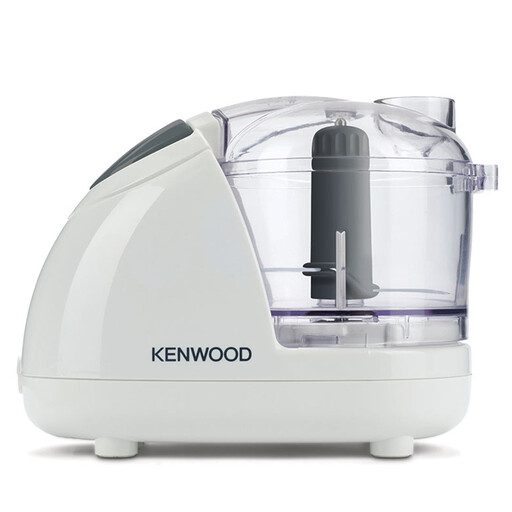 Image unavailable
Kenwood CH180B Mini Chopper, 350 ml, White
Consider the 350 ml bowl for small portions of tapenade, provided it holds your usual ingredients comfortably.
The listed model has a 300 W motor, two speeds and a dishwasher-safe bowl. Check its instructions before adding oil while it runs.
View on Joybuy
Common questions
How can I keep tapenade coarse rather than making it completely smooth?
Use short pulses and inspect the mixture between runs if your chopper has pulse control. Good Food describes blitzing olives, olive oil, parsley, capers and garlic into a paste; stopping between bursts lets you judge when its texture suits you, but pulse control does not guarantee a particular result.
Can I add olive oil while the chopper is running?
Only add oil during operation if the exact model’s design and instructions permit it. KitchenAid UK lists an in-lid drizzle basin for the 5KFC3516; do not assume another mini chopper has that feature.
How should I store homemade tapenade in the UK?
Chill it promptly and keep the fridge at 0–5°C. GOV.UK guidance for England, Northern Ireland and Wales and Food Standards Scotland advise eating leftovers within two days or freezing them if needed; also follow any use-by dates on the ingredients.


