Small-batch olive and dip makers
If olives, dips or dressings are the main jobs, a compact bowl and a way to stop processing between bursts matter more than a wide range of attachments. Consider how much cupboard space the appliance will take.


For a modest batch of chopped olives, choose a compact chopper with a bowl that suits the quantity and a way to stop and check the texture. A full food processor makes more sense when the same dinner-party preparation also involves jobs such as slicing, grating or making dough; check its chopping blade, smaller-batch options and storage demands before choosing it for olives alone.
If olives, dips or dressings are the main jobs, a compact bowl and a way to stop processing between bursts matter more than a wide range of attachments. Consider how much cupboard space the appliance will take.
If the menu also involves vegetables, sauces, grating or dough, a full processor with the relevant bowl and accessories may cover more of the preparation. Check what comes with the exact model.
If distinct chopped pieces matter more than a smooth mixture, look for pulse or momentary operation and inspect the olives between short bursts. Follow the model’s instructions for fitting the bowl and blade.
Choose the appliance format around the rest of the menu, then check whether its bowl, chopping accessory and controls suit the olive batch.
Choose it when: olives and other small batches are the main jobs, and compact storage matters.
Trade-off: the bowl and accessory set may be less useful for extensive vegetable or dough preparation.
Choose it when: chopping olives is one of several jobs, including slicing or grating.
Trade-off: extra attachments take space and add parts to assemble and clean; a larger bowl does not automatically suit a tiny olive batch.
Choose it when: larger quantities and several preparation jobs regularly form part of the menu.
Trade-off: storage and weight become more significant, so check whether a small bowl is supplied for modest batches.
| Concern | What to check | Who this matters to |
|---|---|---|
| Chopped-olive texture | Look for pulse or momentary operation and confirm that the chopping blade is supplied. | If I want distinct pieces rather than a smoother mixture, I need to stop and inspect the olives between bursts. Around 42% of consumers would put texture control first. |
| Whole-menu preparation | Compare usable or working bowl capacity and check the accessories supplied for the other dishes. | When olives are only one part of my preparation, I need an appliance that can handle the other planned jobs too. For around 33% of consumers, broader menu preparation would be the primary concern. |
| Storage and cleaning | Check dimensions and which parts of the exact model can go in the dishwasher. | If I host occasionally and mainly prepare small batches, I would rather not store and wash a larger machine for one task. Compactness and manageable cleaning would come first for around 25% of consumers. |
Wattage does not tell you when a particular batch of olives will reach the texture you want.
Check the chopping blade and control options, then use short bursts and inspect the result rather than relying on continuous processing.
A full processor may be useful for the rest of a dinner-party menu, but its size can be disproportionate if chopped olives are the only regular job.
Consider the olive quantity and your other preparation tasks. If you choose a large processor, check whether its smaller bowl is included and suited to the batch.
A larger appliance can also take more storage space and leave more parts to assemble and clean.
Cleaning instructions can differ between models and between bowls, blades, discs and motor units.
Read the instructions for the exact appliance and supplied accessories before putting any part in the dishwasher.
Electrical-safety checks apply to the particular product and delivery location. A product-safety report from the Office for Product Safety & Standards concerning a different food processor does not establish a fault with the models on this page.
Buy from a traceable seller, keep proof of purchase and check the supplied plug and documentation. If a safety concern arises, consult current recall information for the exact model.
Magimix UK lists both the small-batch Le Micro chopper and the larger 5200XL food processor.
Kenwood GB lists compact choppers as well as broader food-processor ranges.
KitchenAid UK lists the 5KFP0719 as a 1.7 L food processor for chopping alongside other preparation tasks.
Bosch GB lists MultiTalent 3 processors for chopping and other meal-preparation jobs.
These choices span a manual small-batch chopper, electric choppers with different bowl arrangements and food processors for broader menu preparation. Match the bowl and chopping setup to your olive quantity before weighing up the additional functions.
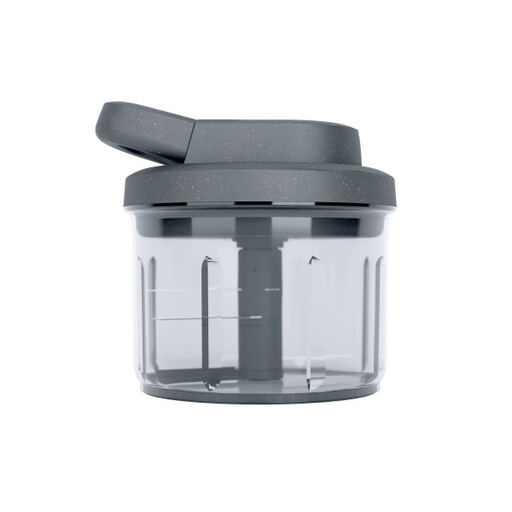 Image unavailable
Consider this manual pull-cord chopper if olives and other small batches are your main preparation jobs. Check the texture as you pull; it is not an electric processor.
 Image unavailable
Consider this full processor when olives are one part of a wider dinner-party menu, rather than the only regular task.
The product title states 3 L capacity, 1000 W, an integrated digital scale and eight accessories. Check that the supplied set includes the chopping blade you need, and confirm the plug and product markings for your delivery location.
 Image unavailable
The smaller bowl may suit a modest olive batch, while the second bowl gives you an option for another preparation job.
The title specifies two glass bowls of 0.6 L and 2 L and a 300 W motor. Before buying, check how its controls allow you to stop and inspect the chop, as well as the plug and product markings for your delivery location.
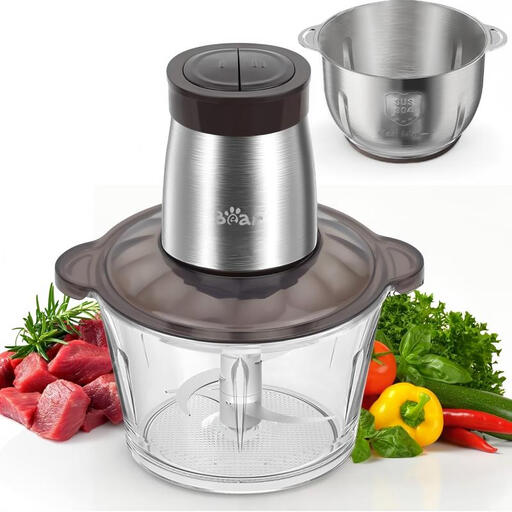 Image unavailable
Consider the separate bowls if olives are one of several ingredients you plan to prepare.
The title specifies a 2 L glass bowl, a 1.8 L 304 stainless-steel bowl, 300 W and two speed settings. Check the supplied manual for the correct continuous-operation limit, how to make short processing bursts, and the plug and product markings for your delivery location.
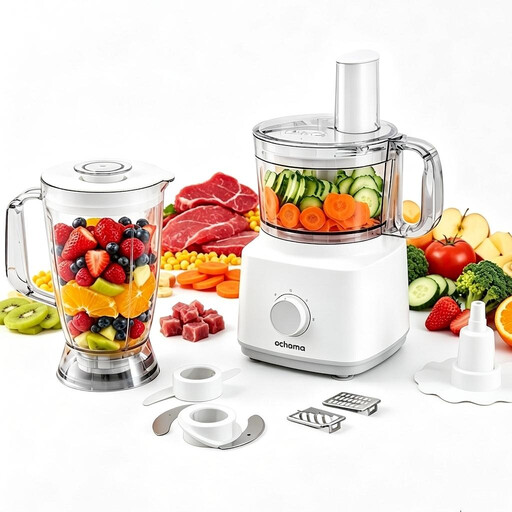 Image unavailable
Consider this format if you want to chop olives and also use slicing or grating functions for the meal.
The title states a 1.8 L capacity, 750 W and slicing, shredding and grating discs. Check the supplied chopping blade, control options, cleaning instructions, and plug and product markings for your delivery location.
Yes, if you want to stop and assess the texture between short bursts. Pulse or momentary operation gives you that control, but the result will still depend on the olives, quantity and how you use the machine.
It can if the olive quantity fits its bowl and chopping is the main task. Magimix UK lists a 0.8 L capacity for Le Micro, while Kenwood GB lists 500 ml for Easy Chop; check the exact model’s capacity against your batch rather than judging by the occasion alone.
Stop and consult the instructions for your exact model before trying again. Magimix support guidance, for example, says its food processors require the bowl, lid and large pusher to be correctly locked and aligned; other models may have different interlocks.
Do not assume that every product-marking provision is identical across the UK. The Office for Product Safety & Standards states that its electrical-equipment guidance covers Great Britain and that some provisions apply differently in Northern Ireland under the Windsor Framework. Check the documentation and markings for your delivery location.
Check the manufacturer’s manual, spare-parts route and warranty terms for the exact model. These details can differ between appliances from the same brand, so confirm what applies to the product you intend to buy.