Batch-cooking olive prep cooks
If you prepare olives alongside ingredients for tapenade, sauces, salads or traybakes, the stated working capacity helps you judge how often you will need to reload the bowl.


Choose a mini chopper for pitted olives by its usable bowl capacity and controls rather than motor wattage alone. A larger working bowl can mean fewer reloads during batch cooking, while a smaller bowl suits repeated modest loads; pulse or adjustable-speed controls let you stop and inspect the chop. Check the exact model’s maximum fill, ingredient restrictions and cleaning instructions before buying.
A mini chopper makes most sense when chopped, pitted olives are one part of a prep session and you want to match the bowl and controls to the quantities you make.
If you prepare olives alongside ingredients for tapenade, sauces, salads or traybakes, the stated working capacity helps you judge how often you will need to reload the bowl.
If you need recognisable olive pieces rather than a paste, look for controls that let you stop, inspect and adjust the chop between short bursts.
If you make modest batches regularly, a compact bowl and removable parts with clearly stated care instructions may matter more to you than reducing every reload.
For pitted-olive batch prep, start with usable capacity, then decide how much control you want over the chop and how you will clean and store the appliance. These priorities address different primary needs among consumers considering a mini chopper for this task.
| Concern | What to check | Who this matters to |
|---|---|---|
| Usable bowl capacity | Compare stated working or food capacity, not just total bowl volume, and check the maximum-fill instructions. | If I prepare olives alongside other ingredients for several portions, I want fewer stops to empty and refill the bowl. Around 44% of consumers put reload reduction first. |
| Control over the chop | Look for a pulse function or adjustable-speed control that lets you stop and inspect the texture. | When I need distinct olive pieces, I want to check their size before they become too finely chopped. Controlling texture comes first for around 33% of consumers. |
| Cleaning and storage | Check the care instructions for the bowl, lid and blade separately, and consider the space needed to store them. | For smaller batches made regularly, I would rather make washing and putting the chopper away straightforward, even if I have to reload it. Roughly 23% of consumers prioritise that routine. |
Wattage does not tell you how much food fits in a load or which controls let you stop at a coarse chop.
Compare working capacity and controls first, then read the exact model’s instructions for permitted ingredients, fill limits and operating time.
Russell Hobbs describes its 27131 as having a 1 L glass bowl but a 500 ml food capacity. Planning loads around the larger figure would misrepresent its usable space.
Use the stated food or working capacity when comparing models, and follow the manufacturer’s maximum-fill marking.
Hard ingredients may fall outside a chopper’s instructions. For example, the Russell Hobbs 24662 manual says not to process foods that cannot easily be cut with a kitchen knife; that instruction is specific to that model.
Pit olives before chopping them, and check the instructions for your exact appliance rather than assuming it can process stones.
Care instructions are model- and part-specific: Kenwood describes dishwasher-safe tools for the CHP61.100WH, while Russell Hobbs describes dishwasher-safe removable parts for the 27131.
Check the bowl, lid and blade instructions separately if quick clean-up is important to you.
These brand examples illustrate different chopper configurations; the specifications and limitations below apply to the named models, not every appliance from each brand.
The 5KFC0516 is worth considering if reducing reloads and having pulse control are priorities.
The CHP61.100WH offers a smaller-bowl option for cooks preparing repeated modest quantities.
The 27131 suits a preference for straightforward one-touch operation and a bowl with a storage lid.
The QB1001UKBK is a different format for cooks who also want a blending pitcher.
These choppers offer different stated bowl sizes and controls for preparing modest or repeated batches of pitted olives. Compare the exact working capacity and instructions for the quantities you plan to make.
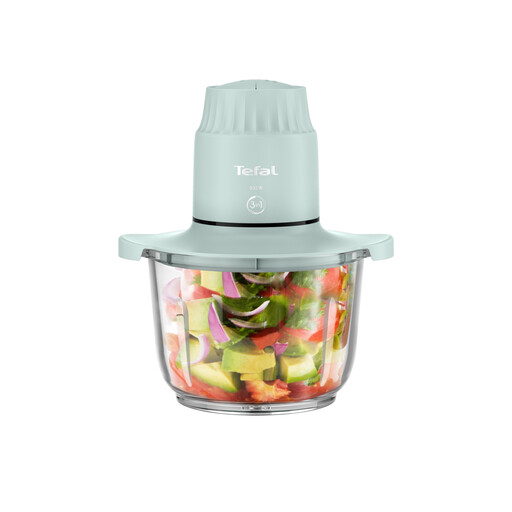 Image unavailable
Consider this model if you want to prepare pitted olives in a larger stated bowl; confirm its usable capacity and maximum fill for your recipe.
The product name specifies a 1 L capacity and a borosilicate glass bowl. Check the model instructions for ingredient limits and cleaning.
 Image unavailable
Consider this smaller bowl for repeated modest loads when you want to check the chop between bursts; a larger batch may mean more reloads.
The product name specifies a 350 ml bowl, 300 W motor, two speeds and a dishwasher-safe bowl. Joybuy UK also describes a pulse function for the CH180B. Check the maximum fill and ingredient instructions for this model.
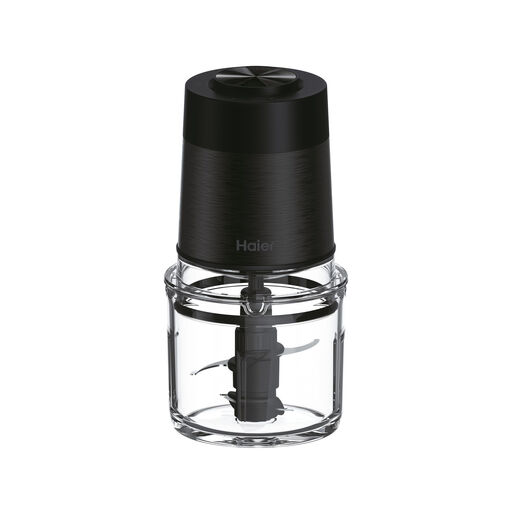 Image unavailable
Consider this model if two-speed control and a glass jar appeal to you. Confirm its usable capacity and maximum fill before planning a large olive batch.
The product name specifies double-stacked blades, 550 W power, two-speed control and a dishwasher-safe bowl. If stopping at a coarse chop is important, check the exact controls and instructions.
Use pitted olives unless the instructions for your exact model expressly permit processing stones. Hard-food restrictions vary by appliance; the Russell Hobbs 24662 manual, for instance, says not to process foods that cannot easily be cut with a kitchen knife.
Use short bursts and inspect the olives between them, stopping when the pieces suit your recipe. KitchenAid UK specifies pulse action for the 5KFC0516, while Kenwood GB specifies pressure-sensitive two-speed control for the CHP61.100WH; check how your chosen model’s controls work before use.
Follow the temperature limit for your exact model rather than assuming every mini chopper accepts hot ingredients. The Russell Hobbs 24662 instructions, for example, say not to add liquid above 40°C because sudden steaming may eject it.