Shared-kitchen cooks managing residue
If different people use the same equipment, you need to clean food-contact parts between uses, particularly when ingredients or dietary requirements differ.


For small batches of sun-dried tomatoes in a shared kitchen, start with a chopper whose bowl, lid and blade you can clean thoroughly between users, then choose a bowl size that suits your usual quantity. A compact bowl keeps the appliance focused on small prep jobs; a larger mini processor offers room for mixed sauces, but check its instructions if you regularly chop very small portions. Pulse controls can help you stop and inspect the texture.
If different people use the same equipment, you need to clean food-contact parts between uses, particularly when ingredients or dietary requirements differ.
If you chop a little sun-dried tomato for pasta, dressings or toppings, a compact chopper may suit the task better than storing a full-size processor.
If you also make dips or purées, weigh the extra bowl room and functions against the space needed to store and clean the appliance.
For shared use, check how the food-contact parts come apart for cleaning before deciding on bowl size and the amount of control you need over the chop.
| Concern | What to check | Who this matters to |
|---|---|---|
| Cleaning shared parts | Check which parts detach, which are dishwasher-safe and whether the blade, lid and seals can be cleaned thoroughly. | I share equipment with people preparing different ingredients, so I need to remove residue between uses; around 42% of consumers put shared-equipment cleaning first. |
| Batch size and storage | Compare usable food capacity with your usual quantity, and check the appliance dimensions and any minimum-quantity guidance. | When I only need tomatoes for one dish and cupboard space is limited, a manageable bowl matters; around 33% of consumers make small-batch size their first concern. |
| Texture and other tasks | Look for controls that let you pause and inspect the chop, and decide whether you need room to combine sauce or dip ingredients. | If I make dips as well as chopping tomatoes, I want to control the texture without over-processing; roughly 25% of consumers prioritise texture and wider preparation tasks. |
A wattage figure does not tell you what texture a small portion of sun-dried tomatoes will reach. Bowl size and the ability to stop processing also affect how you use the chopper.
Choose a bowl for your usual quantity and consider pulse controls if you want to inspect the texture as you go.
Residue can remain on shared blades, lids or seals if they are not cleaned thoroughly. GOV.UK and Food Standards Agency guidance addresses allergen management in food businesses; in a household, cleaning and separation still deserve particular care when someone has a serious food allergy.
Check every food-contact part after washing and agree how the appliance will be cleaned and stored between users. Consider assigning separate equipment where cross-contact is a concern.
A system with a chopper bowl and blending pitcher offers more ways to prepare food, but those components may be unnecessary if you mainly chop small tomato portions.
Choose the additional functions only if you expect to use them regularly.
Extra parts also take up storage space and add to washing-up and accessory tracking in a shared kitchen.
The Desire Matte Charcoal Mini Chopper 27131 is an example of a straightforward small-batch chopper.
The Mini Prep Pro ECH4U is aimed at buyers who also combine ingredients for dips, sauces or purées.
The Master Prep Professional QB1001UKBK is a broader preparation system rather than just a small chopper.
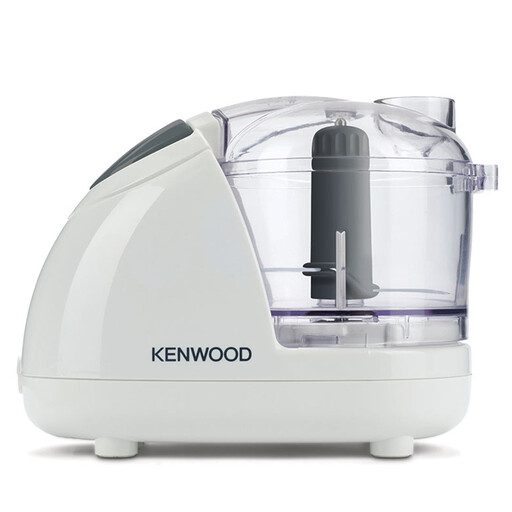
This compact chopper is a choice to consider when you usually prepare small quantities and want to limit the space the appliance takes up. Check that its bowl works for your usual tomato portion and that you can clean every shared food-contact part.
 No image available
Consider this compact chopper for small preparation jobs, subject to checking that it handles your usual quantity of sun-dried tomatoes.
It has a 350ml bowl, a stated 300W rating and two speeds. The bowl is described as dishwasher-safe; check the instructions for cleaning the lid and other food-contact parts before sharing it.
No. Dishwasher-safe parts can make cleaning easier, but that description alone does not establish that allergen residue has been removed. Check blades, lids and seals after washing, and consider separate equipment when someone using the kitchen has a serious food allergy. GOV.UK and Food Standards Agency guidance on allergen management applies to food businesses, not as a household-appliance certification rule.
Check the instructions for the exact model rather than assuming every component is dishwasher-safe. Russell Hobbs identifies the removable parts of its Desire Matte Charcoal Mini Chopper 27131 as suitable for dishwasher cleaning; follow its instructions for the remaining components.
A 500ml bowl is a starting point if you mainly prepare small recipe quantities; consider a 0.9L bowl if you regularly add other ingredients for pesto, dips or sauces. Neither capacity guarantees that a very small tomato portion will process as you want, so check the model instructions if that is your usual batch.