Small-batch onion cooks
If you often prepare one onion, garlic or herbs for a small meal, a compact bowl may be more useful than the capacity of a full food processor.


If you usually chop one onion or a few aromatics, start by considering a compact 0.35–0.5L bowl; a 0.7–0.83L model makes more sense if you regularly prepare dips or combine several ingredients. In a small kitchen, weigh that extra capacity against storage space, then check the exact model’s controls and which parts you can put in the dishwasher.
If you often prepare one onion, garlic or herbs for a small meal, a compact bowl may be more useful than the capacity of a full food processor.
If an appliance must earn its cupboard space, consider whether you would also use it for dips, dressings or purées. Check the named model’s functions rather than assuming every mini chopper handles the same jobs.
If you chop onions frequently, the bowl, lid and blade need to be practical to clean after use. Dishwasher-safe parts vary by model.
For onion prep in a small kitchen, decide which requirement you would put first: a bowl sized for your portions, control over texture, straightforward cleaning or other uses.
| Concern | What to check | Who this matters to |
|---|---|---|
| Portion size and storage | Compare bowl capacity with your usual onion portion, then check the appliance’s dimensions against your available space. | I usually chop one onion and have little cupboard space for the appliance; around 36% of consumers put small-batch size and storage first. |
| Onion texture | Look for pulse or multiple speed settings, and check the manual’s loading and operating instructions. | If I want distinct onion pieces, I need to stop and inspect the texture as I chop; roughly 29% of consumers prioritise texture control. |
| Cleaning | Confirm exactly which of the bowl, lid and blade are dishwasher safe and how the blade is removed. | After frequent onion prep, I need to clean the food-contact parts promptly; about 21% of consumers put easy cleaning first. |
| Other uses | Match stated functions and included accessories to the dips, dressings or purées you actually make. | I make other small preparations as well as chopping onions, so added functions would get regular use; approximately 14% of consumers put versatility first. |
Extra capacity helps when you regularly combine ingredients, but it may claim storage space you would rather keep free in a small kitchen.
Choose around your normal portion. Consider a larger bowl if sauces, dips or multi-ingredient batches are regular tasks.
A motor rating does not tell you how much control you have over the finished texture. The Telegraph’s mini-chopper guidance also identifies differences in blade design and stability.
Compare the exact model’s controls, blade arrangement and loading instructions alongside its motor rating.
Kenwood specifies a dishwasher-safe bowl for the CH180B, while Russell Hobbs specifies a dishwasher-safe bowl, lid and blade for the 22220. Do not transfer one model’s cleaning instructions to another.
Check the product instructions for each part before putting it in the dishwasher.
A part that needs hand-washing adds a step to the clean-up routine.
Chopper blades are sharp, and food-contact parts need cleaning between appropriate uses, particularly when moving from raw or allergen-containing ingredients to ready-to-eat food.
Follow your model’s assembly and cleaning instructions, and wait until the blade has stopped before opening the lid, as Cuisinart instructs for its CCH32U.
These named models offer different capacities and controls; features described for one model should not be assumed to apply across its brand.
The CH180B is a compact, small-quantity option for onions and other aromatics.
The Food Collection 22220 has a 0.5L bowl for modest chopping portions.
The 5KFC3516 provides a larger mini-chopper bowl for cooks preparing more than onions alone.
The CCH32U Pixie combines a 0.7L bowl with functions beyond basic chopping.
Le Micro is a 0.8L option for small batches that may also involve puréeing or emulsifying.
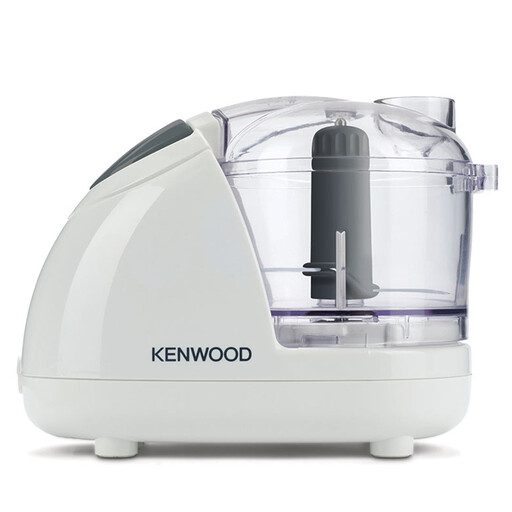
This compact option is aimed at chopping an onion or a few aromatics when kitchen space is limited; compare its bowl size and cleaning instructions with your usual routine.
 No image available
The 350ml bowl is a compact choice to consider for one-onion portions and small amounts of aromatics.
The product name specifies a 300W motor, two speeds and a dishwasher-safe bowl. Check the instructions for operating intervals and whether the lid can also go in the dishwasher.
Start by considering a compact 0.35–0.5L bowl for one onion or a few aromatics; consider 0.7–0.83L if you regularly add several ingredients or make small dips and purées. Compare capacity with your normal portion and available storage space, not as a rating of chopping performance.
A pulse setting or more than one speed gives you options for stopping and checking the texture. Follow the model’s loading and operating instructions; wattage alone cannot tell you what the finished pieces will be like.
Clean the bowl, lid and blade according to your model’s instructions after use, and check which individual parts are dishwasher safe. Cleaning matters particularly when switching from raw or allergen-containing ingredients to ready-to-eat food.