Runners wanting a small chocolate treat
If a preset portion matters more than run fuelling, a 4.2 g Divine mini bar is smaller than its 12.5 g bite-size bar. Keep the food or drink you use to fuel a run as a separate decision.


Choose a small, individually portioned dark-chocolate bar if you want a treat around training; Divine’s 4.2 g mini bar offers a smaller preset portion than its 12.5 g bar. Do not rely on either as your main fuel for a long run: the British Dietetic Association advises carbohydrate intake for hard exercise lasting more than an hour, while these small chocolate portions contribute little carbohydrate.
If a preset portion matters more than run fuelling, a 4.2 g Divine mini bar is smaller than its 12.5 g bite-size bar. Keep the food or drink you use to fuel a run as a separate decision.
For hard exercise lasting more than an hour, the British Dietetic Association says carbohydrate intake during exercise can enhance performance. A few pieces of dark chocolate should not stand in for a carbohydrate-focused plan you have tried in training.
Check the exact product, not just its cocoa percentage. Divine’s 4.2 g mini bars carry a may-contain statement for milk, nuts and cereals containing gluten; Montezuma’s 100% cocoa buttons carry one for milk, nuts and peanuts.
Decide whether the chocolate is a small treat or something you intend to take for exercise, then compare the portion, nutrition panel and ingredients of the exact product.
| Priority | What to check | Your needs |
|---|---|---|
| Run fuelling | Check carbohydrate per planned portion, not just per 100 g. The British Dietetic Association advises a low-fat, high-carbohydrate snack or light meal two to three hours before exercise and discusses carbohydrate intake during hard exercise lasting more than an hour. | For a long or hard run, I need a carbohydrate-focused plan rather than assuming a few chocolate pieces will fuel it. |
| Portion format | Compare Divine’s 4.2 g and 12.5 g individual bars with loose buttons, which require you to set your own serving. | A preset small portion is useful if I want one piece in my bag; I can choose loose buttons if I am happy to portion them myself. |
| Ingredients | Read the current pack’s ingredients and allergen statements. Dark products differ: Lindt LINDOR Dark 70% truffles contain milk-derived ingredients and soya, while other products carry may-contain statements. | When an ingredient or allergen matters to me, I need to check the exact chocolate I am buying rather than assume every dark variety is alike. |
A small piece is easy to carry, but its carbohydrate contribution is small. Divine lists 29.7 g carbohydrate per 100 g for its 4.2 g bars, equivalent to about 1.25 g per bar.
Keep chocolate separate from your main fuelling plan. For hard exercise lasting more than an hour, follow the British Dietetic Association’s carbohydrate-focused guidance and try your plan in training.
Cocoa percentage does not tell you how much carbohydrate a portion provides. Montezuma’s lists 18 g carbohydrate and 53 g fat per 100 g for its 100% cocoa buttons; Divine lists 29.7 g carbohydrate and 46.3 g fat per 100 g for its 70% mini bars.
If you are choosing food for a run, compare nutrition per portion and consider when you intend to eat it. Choose cocoa percentage for the chocolate you want, not as a fuelling measure.
Ingredients and precautionary statements vary. Lindt LINDOR Dark 70% truffles contain milk-derived ingredients and soya; Divine’s 4.2 g minis may contain milk, nuts and cereals containing gluten.
Read the current pack for the exact variant before eating it, particularly when an ingredient or allergen affects your choice.
A bag of buttons does not set the serving in the way that an individual 4.2 g or 12.5 g bar does.
Choose individual bars for a predetermined piece, or portion buttons into a container before taking them out.
Divine lists 70% dark-chocolate bars in 4.2 g mini and 12.5 g bite-size formats.
Montezuma’s lists loose dark-chocolate buttons in 60%, 74% and 100% cocoa formats.
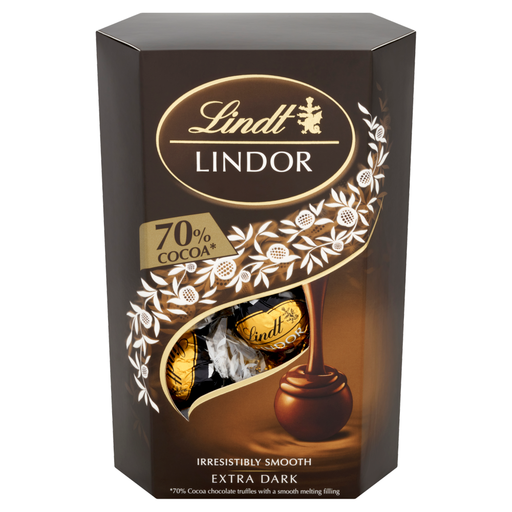
Lindt’s LINDOR Dark 70% product is a filled truffle rather than a plain mini bar.
Hotel Chocolat’s Dark Selectors include small-format truffles and other flavoured or filled chocolates.
M&S lists an 85% dark-chocolate 100 g bar for shoppers who prefer to break off a portion.
This filled dark-chocolate truffle is an option to consider as a treat alongside training, rather than as your main run fuel.
 No image available
Consider these filled truffles if you want chocolate as a treat alongside training, not as your main run fuel. The listing gives 29 g carbohydrate and 53 g fat per 100 g. It declares milk, barley and soya and says the product may contain nuts; check the current pack. If a preset portion matters, confirm the weight of an individual truffle before buying.
Do not use a mini bar as your main fuel for a long run. Divine’s 4.2 g bar supplies about 1.25 g carbohydrate, calculated from its nutrition panel; the British Dietetic Association says carbohydrate intake during hard exercise lasting more than an hour can enhance performance. Try a carbohydrate-focused fuelling plan in training.
A small portion can be a treat if you know it suits you, but it does not match the British Dietetic Association’s advice for a low-fat, high-carbohydrate snack or light meal two to three hours before exercise. Check the timing and nutrition of what you plan to eat.
An individual bar has a stated unit weight: Divine lists 4.2 g mini bars and 12.5 g bite-size bars. With loose buttons, you decide the serving yourself.
No. Divine labels its 4.2 g minis vegan but says they may contain milk, nuts and cereals containing gluten. Lindt LINDOR Dark 70% truffles contain milk-derived ingredients and soya and may contain nuts. Read the current pack of the exact product.
Yes. M&S advises customers to read the product label because ingredient, nutrition and allergen information can change. Check the pack you intend to eat rather than relying only on an earlier listing.