Shopping for someone with a food allergy
Start with the ingredients and precautionary wording for the particular biscuit. A small pack or a free-from description does not answer every allergy question.


Choose by the eater’s specific allergens before choosing a biscuit size or pack format. McVitie’s bite-sized chocolate minis list wheat, milk and soya, while the named free-from digestives have different ingredients and precautionary warnings. Use online listings to narrow the options, then check the label on the pack received before it is eaten.
Start with the ingredients and precautionary wording for the particular biscuit. A small pack or a free-from description does not answer every allergy question.
Decide whether you want bite-sized biscuits or ordinary biscuits divided into individual packs. Products described as ‘mini’ can use the word in different ways.
Specifically labelled alternatives may meet those requirements, but their other ingredients and warnings still matter. The named options include oat ingredients, soya ingredients and nut or lupin precautions.
Check allergen suitability first, then compare biscuit size and packaging among the remaining options.
| Priority | What to check | Your needs |
|---|---|---|
| Ingredients | Read the named allergens, not just the product title. Tesco lists wheat, milk and soya ingredients for McVitie’s 5 × 19 g chocolate minis; the listed plain Tesco, Sainsbury’s and Asda free-from digestives use oats. | I need a biscuit whose ingredients do not conflict with the eater’s particular allergy. |
| Precautions | Read ‘may contain’ and other manufacturing warnings separately from free-from claims. Tesco’s 188 g free-from digestives warn about peanuts and nuts; Sainsbury’s says its 188 g product is unsuitable for customers with a nut allergy because of manufacturing methods. | A gluten- or milk-free description does not settle a separate nut-allergy question for me. |
| Format | Check whether ‘mini’ describes the biscuit or its wrapper. McVitie’s describes bite-sized chocolate digestives in five 19 g packs; Crawford’s assortment includes digestives in mini packs, without establishing that the biscuits are bite-sized. | Am I choosing small biscuits, individually wrapped servings, or both? |
| Received pack | Match the size and variety to the listing, then read the ingredients and precautionary wording on the pack delivered. Retailers note that product allergy information can change. | Before anyone eats them, I want to check the label on the actual pack rather than rely on an earlier online description. |
The McVitie’s bite-sized chocolate minis listed by Tesco contain wheat, milk and soya ingredients. Crawford’s portion-pack digestive declaration includes wheat and dried whey (milk).
Establish which allergens the eater must avoid before deciding whether smaller biscuits or smaller packs are useful.
The named free-from recipes differ: some use oats, Schär’s listed digestives contain soya, and several products carry nut or lupin precautions. Asda’s ordinary vegan digestives carry a milk precaution.
Check what each claim covers, then read the remaining ingredients and warnings. Food Standards Agency and Ipsos UK research cautions against using vegan labelling alone as a substitute for allergen information.
Pack sizes and ingredient information can differ between listings; Tesco’s older 160 g free-from product and its listed 188 g product should not be treated as the same pack.
Confirm the exact variety and size, and read the label on the pack received before serving it.
Its Mini Chocolate Digestives are bite-sized; Tesco lists a multipack of five 19 g snack packs.
Pioneer Foodservice lists an assorted mini-pack selection that includes digestives.
Its listed 188 g plain free-from digestives use gluten-free oats and are described as milk and gluten free.
Its listed 188 g plain free-from digestives are oat-based and described as milk and gluten free.
Its listed 188 g free-from digestives and ordinary 400 g vegan digestives have different allergy information.
Its listed 400 g digestive biscuits provide a full-size, ordinary-biscuit option.
Asda lists gluten-free digestives as three individual 50 g packs.
These options cover a 150 g gluten-free digestive and a 400 g original digestive. Neither is presented as a verified bite-sized chocolate mini; check the exact pack’s allergy information before choosing.
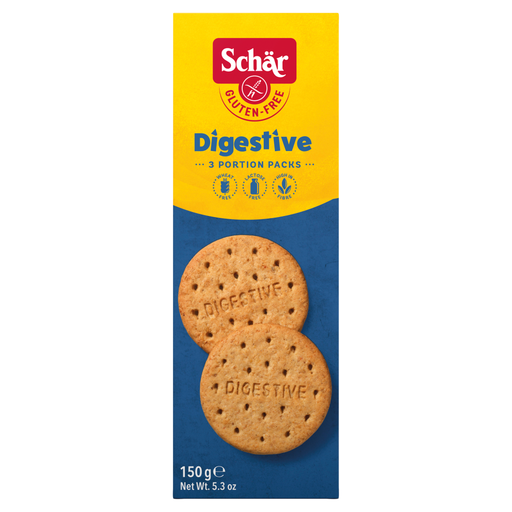 Image unavailable
A 150 g gluten-free digestive option rather than a verified bite-sized biscuit. For the three-pack version listed by Asda, the ingredient information includes soya and a ‘may contain lupin’ warning; check the pack received for the allergy information relevant to the eater.
 Image unavailable
A 400 g pack of original digestives, not a mini or individually portioned format. Check the received pack’s ingredients and precautionary wording against the eater’s specific allergens.
It can mean either. McVitie’s describes its chocolate minis as bite-sized, while Crawford’s supplier describes an assortment of mini packs containing digestives. Check the biscuit description as well as the number and size of servings.
Check the label on the pack received before it is eaten. Tesco, Sainsbury’s and Asda warn that ingredients or allergy advice can change. If that label does not resolve the relevant allergy question, contact the retailer or manufacturer rather than assuming the online description applies.
No. Asda’s listed ordinary vegan digestives say ‘may also contain milk’. Food Standards Agency and Ipsos UK research also cautions against treating vegan labelling alone as allergen information; read the particular product’s ingredients and precautions.
A gluten-free description does not remove the oats. The listed Tesco, Sainsbury’s and Asda plain free-from digestives contain oat ingredients, so check the exact product against an oat-allergy requirement.
Look for allergens used as ingredients in the ingredients list, then read any separate precautionary wording. Food Standards Scotland’s guidance says that the UK’s 14 regulated allergens, when present as ingredients in prepacked food, must be emphasised in that list; it describes ‘may contain’ wording about possible unintentional presence as voluntary. Neither type of wording makes the product suitable for every allergy.