
24/7 Customer Support

Free returns

Same-day & Next-day Delivery

Quality Guaranteed

Unlock Your Welcome Offers: FREE Delivery | Up to 80% OFF | Free 30-day JoyPlus trial
Download the APP
A mini fitness trampoline can turn a spare corner of a flat, conservatory or garden into a practical exercise area. However, product listings often focus on spring counts, maximum load figures and “low-impact” wording without explaining what those details mean in everyday use.
Before buying an indoor rebounder trampoline, look beyond the headline price. The wrong size, suspension system or handlebar can make the equipment uncomfortable, unstable or difficult to store. These are the main pitfalls UK shoppers should avoid.
A 36-inch trampoline may look compact, but the usable jumping surface is smaller than the overall frame. You also need clearance around the equipment and enough overhead space for safe movement. Measure the intended floor area, including room for stepping on and off, rather than relying only on the advertised diameter.
The maximum user weight is a limit, not a recommended workout weight. It must include the person using the trampoline and any additional movement forces created during exercise. Check the exact capacity for the size and model you are buying. A children’s mini trampoline with a 25kg limit is not suitable for adult exercise, even if its frame appears sturdy.
A trampoline with handle can help with balance, but it is not a substitute for careful positioning or supervision. Check whether the handlebar is adjustable, how it attaches to the frame and whether it remains secure on a level floor. A tall user may find a fixed low bar uncomfortable, while a loose bar can create a false sense of security.
For many UK homes, a folding fitness trampoline is useful because it can be stored in a cupboard or under suitable furniture between sessions. Common compact sizes include 36, 40, 42, 48, 102 and 122cm. Remember that folding does not remove the need for safe clearance during use.
The frame should sit on a flat, stable, non-slip surface away from walls, radiators, tables and other obstacles. Silent or non-slip feet may help reduce movement and protect hard flooring, but they do not make an unsuitable surface safe.
A spring rebounder trampoline uses metal springs to connect the mat to the frame. This can provide a responsive bounce, but the springs require regular inspection and should be covered by a properly fitted safety pad.
A bungee cord rebounder or elastic-band model replaces metal springs with flexible cords or bands. These systems are often selected for a quieter feel and gentle bouncing, although the exact resistance depends on the design. Inspect cords and bands for fraying, stretching or other damage before every session.
Look for a stated maximum capacity, steel frame construction and clear maintenance guidance. Some adult models support 70–120kg, while larger rebounders in this selection list capacities of 204kg or 250kg, depending on the size chosen. Never assume that the highest figure applies to every variant.
Where listed, standards such as EN ISO 20957-1, GB 17498.1-2008 and ASTM F2276-10(2015) provide useful specification information. They should be considered alongside the product’s instructions, condition and intended use.
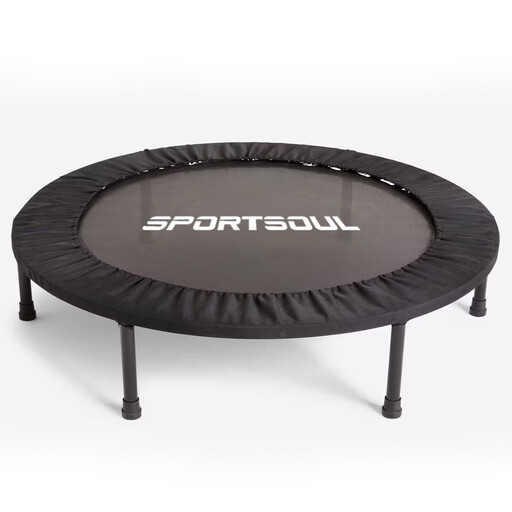
Why This Fits Their Persona: Its compact 40-inch format suits adults starting a home workout where storage space and straightforward setup matter.
The listing states a 100kg maximum user weight and includes silent, non-slip foot covers, rather than leaving capacity and floor protection unclear.
36 steel springs, a 6.6kg net weight and a fold-and-store design support regular indoor use.
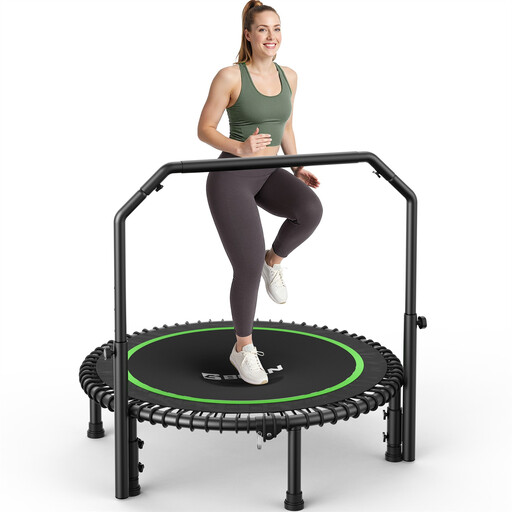
Why This Fits Their Persona: The 102cm or 122cm choice and adjustable handle suit adults wanting more room for varied indoor or outdoor workouts.
The product information separates the two sizes and their stated 204kg or 250kg capacities, helping buyers avoid applying one figure to both versions.
Steel construction, adjustable handlebar and bungee cord suspension are specified for indoor and outdoor use.
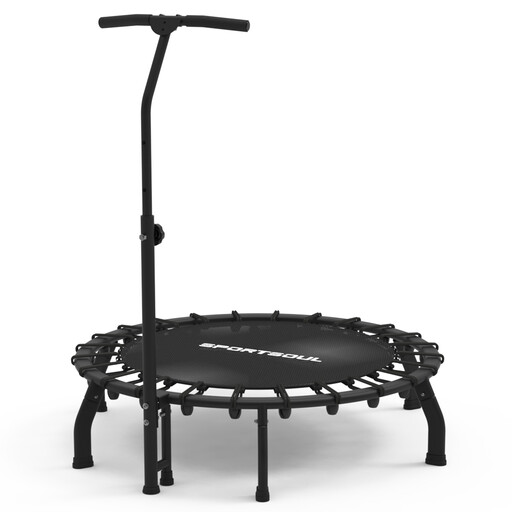
Why This Fits Their Persona: The 120kg stated limit and 42-inch footprint make it a practical option for adults wanting a larger home workout trampoline.
The capacity is clearly stated, while the frame, mat and suspension remain items to inspect before every session.
The product lists a steel frame, pre-assembled elastic ropes and a 120kg maximum user weight.
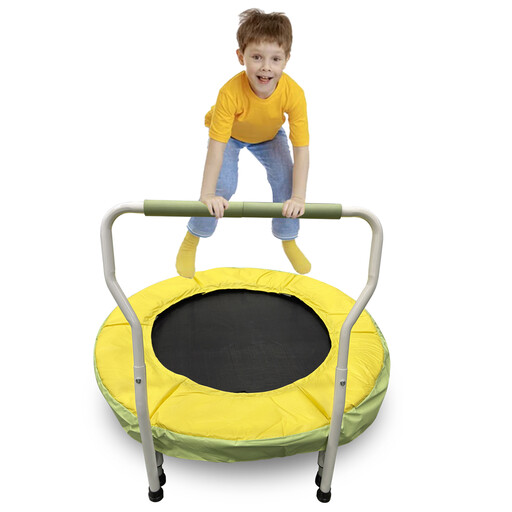
Why This Fits Their Persona: This 36-inch kids mini trampoline is specified for lighter users up to 25kg and includes a foam-covered handlebar for supervised play.
Its full-coverage safety pad is designed to cover all 24 springs, while the stated child capacity prevents unsuitable adult use.
Adjustable handle height and a foam safety pad are listed, with indoor and outdoor use noted.
Before using any exercise trampoline for adults:
A trampoline does not normally require electricity, so its running cost is limited mainly to cleaning, storage and replacement parts where needed. Its practical lifespan depends on usage, storage conditions and timely inspection rather than the advertised spring or cord count alone.
We have compiled a complete, real-time list of products that fully satisfy these strict selection criteria and UK safety regulations.
It can be, provided there is adequate overhead clearance, sufficient surrounding space and a stable, level floor. Check the manufacturer’s dimensions and consider noise, vibration and the flooring beneath the feet before exercising indoors.
Bungee cords and elastic bands are designed to provide a quieter rebound than exposed metal springs, but the result also depends on flooring, frame movement and exercise intensity. Inspect cords regularly for stretching or fraying.
There is no fixed lifespan that applies to every model. Frequent use, user weight, storage and maintenance all affect wear. Regularly inspect the mat, frame, suspension system and protective padding, and replace or stop using the trampoline if damage appears.