
24/7 Customer Support

Free returns

Same-day & Next-day Delivery

Quality Guaranteed

Unlock Your Welcome Offers: FREE Delivery | Up to 80% OFF | Free 30-day JoyPlus trial
Download the APP
A mini fitness trampoline can make indoor cardio more convenient, particularly for UK households with limited floor space. However, compact designs vary considerably in capacity, rebound system, stability and storage convenience. Choosing by price or appearance alone can result in a trampoline that is unsuitable for the intended user.
This guide explains the main buying pitfalls, the specifications worth checking and our top recommendations for 2026, including options for adults, children and heavier users.
A trampoline may look sturdy while having a relatively low maximum user weight. A 36-inch model designed for children is not interchangeable with a 40- or 48-inch adult rebounder trampoline.
Always compare the maximum user weight with the user’s body weight, clothing and any movement intensity. Do not treat the stated capacity as a target. A suitable margin is sensible, especially where the trampoline will be used regularly.
Mini trampolines generally use steel springs or elastic resistance bands. These systems differ in noise, rebound response and maintenance requirements.
A springless trampoline with elastic bands may be more suitable where noise is a concern, such as in a flat or upstairs room. Steel springs can provide a more traditional, responsive bounce, but the springs and surrounding pad need regular inspection.
Marketing descriptions such as “silent”, “professional” or “low impact” should not replace practical specifications. Check the actual rebound mechanism, frame construction and safety padding.
A fitness trampoline with handle can provide useful support for beginners, but an adjustable bar is only helpful if it is secured correctly and does not interfere with the user’s movement. Check the handle height range, fixing points and overall footprint.
A folding mini trampoline may save space, but buyers should confirm whether it folds fully, how much it weighs and whether there is enough room to store it safely. Even a foldable design requires a clear exercise area with suitable overhead clearance.
Common indoor models range from approximately 36 to 48 inches. A larger diameter can offer more room for controlled movement, while a smaller frame is easier to position in a bedroom, spare room or home office.
Measure:
For a UK home workout area, place the trampoline on a level, stable floor. Non-slip or floor-protective feet can be useful on laminate, vinyl or wooden flooring.
Capacity is one of the most important specifications for a trampoline for home workouts. The listed products below range from 25kg to 120kg, so suitability differs significantly.
A 25kg model is intended for children or lighter users, whereas adult users should look for a model with an appropriate capacity margin. Never allow multiple users on a mini trampoline at the same time.
Check whether the trampoline uses:
Some listed adult models state compliance with EN ISO 20957-1, alongside GB and ASTM references. These details are useful points of comparison, but buyers should still follow the supplied instructions, inspect the product before use and observe the stated weight limit.
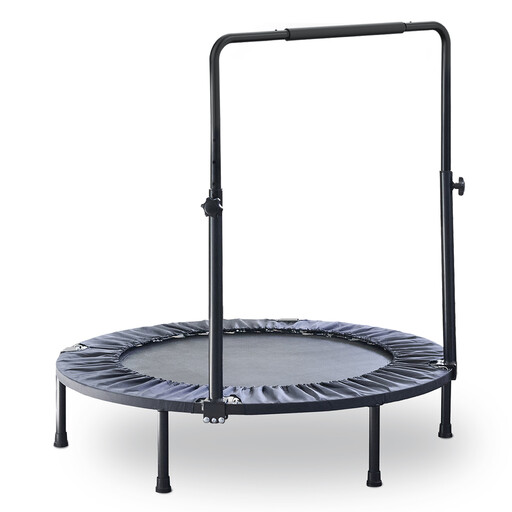
Why This Fits Their Persona: A practical size for beginners who want an indoor exercise trampoline with an adjustable handle and folding storage for a room with limited space in a UK home.
Its 70kg maximum user weight is clearly stated, while the foam-covered 36-spring system and adjustable handle address common stability and padding concerns.
40-inch footprint, foldable construction, pre-assembled rebound components and adjustable handlebar.
Why This Fits Their Persona: The larger jumping surface suits adults who prioritise room for controlled movement and want a folding model for occasional storage.
The listing identifies 40 steel springs, an integrated foam pad and an 80kg maximum user weight instead of relying only on broad performance wording.
48-inch diameter, adjustable handle, integrated spring cover and stated EN ISO 20957-1 compliance.
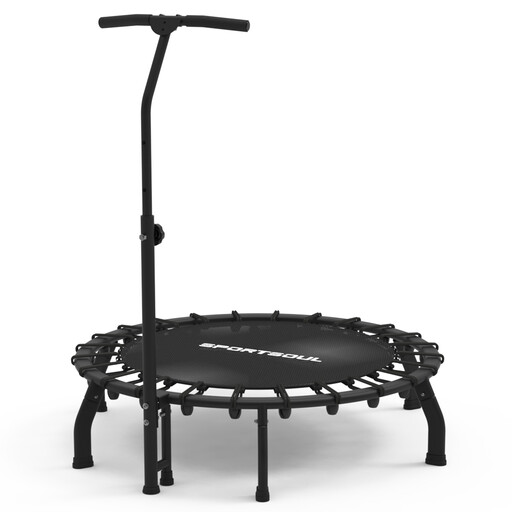
Why This Fits Their Persona: A suitable comparison point for adults seeking higher stated capacity for home cardio, family fitness or carefully controlled exercise routines.
The 120kg maximum user weight is specified, and the product information identifies pre-assembled elastic ropes and a steel rebound system for easier comparison.
42-inch footprint, 120kg stated capacity, pre-assembled components and a space-conscious round frame.
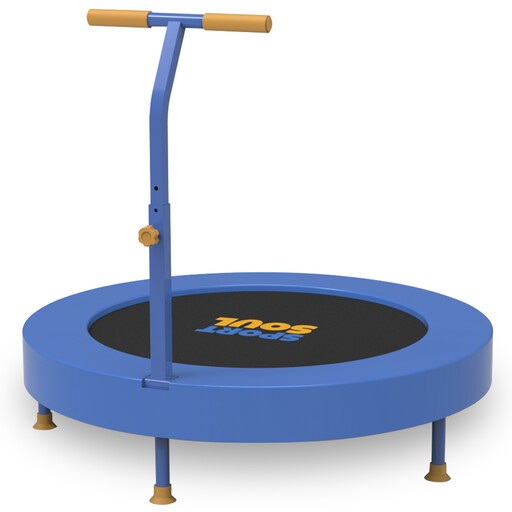
Why This Fits Their Persona: Designed for children or lighter users, with a T-shaped adjustable bar and a compact footprint for supervised indoor activity.
Its 25kg maximum capacity makes the intended user group clear, while 24 elastic bands and integrated foam padding avoid an unsuitable adult purchase.
Springless resistance-band design, foldable frame, adjustable T-bar and 4.77kg net weight.
Before using any indoor exercise trampoline, check that the mat, frame, springs or bands, foam pad and handlebar are undamaged. Place it on a level surface with clear space around it and adequate ceiling height.
Use one person at a time, avoid somersaults and high-impact manoeuvres, and supervise children continuously. Wear suitable athletic footwear and follow the manufacturer’s assembly and inspection instructions. Clean the frame and mat with a soft, damp cloth and mild soap, then dry fully.
A mini trampoline is exercise equipment, not a medical device. Anyone with an injury, health condition or rehabilitation plan should seek appropriate medical advice before starting a new exercise routine.
We have compiled a complete, real-time list of products that fully satisfy these strict selection criteria and UK safety regulations.
It can be, provided the floor is stable, the surrounding area is clear and the rebound system suits the household’s noise requirements. Elastic resistance bands may be preferable where reducing mechanical noise is important, but no trampoline should be assumed to be completely silent.
Lifespan depends on frequency of use, user weight, storage and maintenance. Inspect springs or elastic bands regularly and replace or stop using the trampoline if components show stretching, fraying, rust or other damage. Indoor storage can help protect materials from damp and temperature changes.
A mini trampoline does not require electricity, so its direct running cost is generally limited to maintenance and eventual replacement parts. The main ongoing consideration is having enough clear space to use and store it safely.