
24/7 Customer Support

Free returns

Same-day & Next-day Delivery

Quality Guaranteed

Unlock Your Welcome Offers: FREE Delivery | Up to 80% OFF | Free 30-day JoyPlus trial
Download the APP
A mini fridge seems like a simple purchase, but the wrong choice can lead to frustration and wasted money. Whether you're a student kitting out a dorm room, a beauty enthusiast preserving expensive serums or an office worker wanting chilled drinks at your desk, the market is filled with options that look great but fail to deliver. As a Joybuy Product Recommendation Officer, my role is to help you see past the marketing and focus on what truly matters for your needs.
Before you add any small fridge to your basket, be aware of these three common pitfalls that catch out UK buyers.
To avoid these traps, you need to look at a few key technical details. Understanding these will ensure you get a mini fridge that perfectly suits your purpose.
This is the single most important factor. It determines how cold your fridge can get and what you can realistically store in it.
How and where you plan to use your fridge dictates the power options you need.
Don't be swayed by the litre capacity alone. Always check the internal dimensions and layout. Ask yourself practical questions:
A well-designed 40-litre small fridge can be far more useful than a poorly laid-out 50-litre one.
Based on these practical criteria, here are a few models suited to different UK lifestyles.
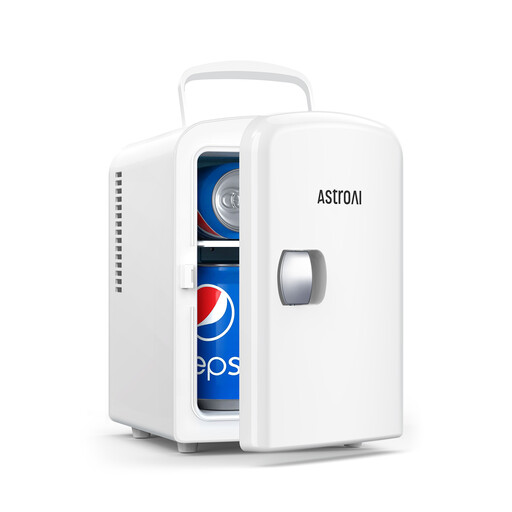
Why This Fits Their Persona: Its compact 4-litre size is perfect for a dressing table or bathroom shelf, providing the ideal cool environment for serums, face masks and creams without taking up space. The quiet thermoelectric operation won't disturb a peaceful bedroom environment.
This model is explicitly a thermoelectric cooler, which manages expectations. It's designed to keep items cool (up to 20°C below ambient), not act as a powerful food fridge, perfectly avoiding the cooling power mismatch trap.
Includes both AC mains and 12V DC car power cables for ultimate versatility. Its freon-free design is also an environmentally conscious choice for daily use.

Why This Fits Their Persona: This is a serious piece of kit for life on the road. As a proper **camping fridge freezer**, its robust, shockproof design can handle bumpy tracks, and its 22L capacity is ample for multi-day trips. It's built for reliable performance in a car, truck or camper van.
It directly solves the portable power drain trap with its 3-level car battery protection system. The powerful compressor also ensures true freezing down to -20°C, avoiding any disappointment with cooling performance.
Genuine fridge and freezer functionality in one portable unit. The durable, shockproof construction is designed to operate reliably even when tilted up to 45 degrees.

Why This Fits Their Persona: This offers substantial overflow storage for a student hall, home office or workshop. It's a proper compressor fridge, so it reliably keeps milk, lunches and drinks perfectly chilled. Its quiet operation and reversible door make it exceptionally practical for shared or small spaces.
It sidesteps the deceptive capacity trap by providing a genuinely useful 46-litre space with a removable shelf, allowing it to be configured for different items. It's a real fridge, not a cooler, so there's no performance mismatch.
The very quiet 41 dB noise level is a significant benefit for bedrooms or offices. The reversible door offers excellent placement flexibility, a feature often overlooked in affordable models.
We have compiled a complete, real-time list of products that fully satisfy these strict selection criteria and UK safety regulations.
The running cost depends on the fridge's size, cooling technology and energy efficiency rating. A modern table top fridge with an E energy rating, like the CHiQ 46L model, consumes around 80-100 kWh per year. Based on current electricity prices, this typically translates to a very manageable cost, often just a few pounds per month. Thermoelectric coolers generally use less power but may need to run more continuously to maintain their temperature.
Yes, but two factors are crucial: noise and ventilation. For a bedroom, look for a model with a low noise rating, ideally under 42 dB. Thermoelectric models are virtually silent, while modern compressor fridges are also very quiet. Secondly, all fridges need adequate ventilation to prevent overheating. Ensure you leave at least 5-10cm of clear space around the back and sides of the unit for air to circulate.
While they may look similar, the main difference is often the intended temperature range. A skincare fridge is designed to keep products cool, typically between 8-14°C, to preserve active ingredients without altering their consistency. A drinks fridge is often designed to get colder, closer to 3-5°C, for optimal refreshment. Both are usually thermoelectric, but it's worth checking the specific temperature range to ensure it meets your needs.