
24/7 Customer Support

Free returns

Same-day & Next-day Delivery

Quality Guaranteed

Unlock Your Welcome Offers: FREE Delivery | Up to 80% OFF | Free 30-day JoyPlus trial
Download the APP
A mini fridge can be a game-changer, whether you’re a student kitting out a dorm room, an office worker wanting fresh lunches, a beauty enthusiast preserving skincare or a road tripper needing chilled drinks. But the market is flooded with options, and it’s easy to make a purchase you’ll regret. Many seemingly great deals hide design flaws that can leave you with a noisy, inefficient or simply unsuitable appliance.
As a Joybuy Product Recommendation Officer, my role is to help you see past the marketing jargon. Before you spend your money, let’s look at the common traps UK buyers fall into and how to sidestep them.
To find the right model, focus on these three non-negotiable factors. They determine whether the appliance will be a useful tool or a frustrating waste of space.
This is the single most important decision.
portable car fridge, skincare fridge or electric cool box.
table top fridge or larger small fridge models.
Consider where you will use your mini fridge most.
12v cooler, camping fridge or for lorry drivers.Look beyond the stated litre capacity. A well-designed interior is far more valuable. Check for:
Based on these practical criteria, here are some models suited to different needs and lifestyles across the UK.
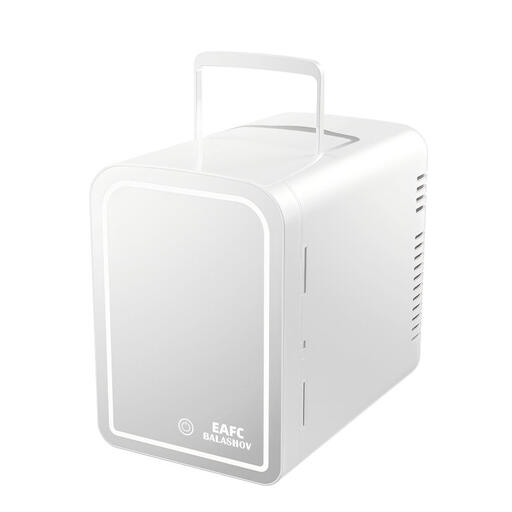
Why This Fits Their Persona: This is purpose-built as a skincare fridge. Its compact 6L size is perfect for a vanity or dressing table, holding serums, face masks and creams at a consistent, cool temperature to help preserve their active ingredients.
Its thermoelectric system provides gentle, quiet cooling ideal for cosmetics, avoiding the risk of freezing associated with overly powerful fridges. The small capacity is a feature, not a bug, designed specifically for beauty products.
The integrated LED light mirror on the door is a standout feature, combining storage and a functional beauty tool in one sleek unit. It also includes both AC and 12V DC power for use at home or on the go.
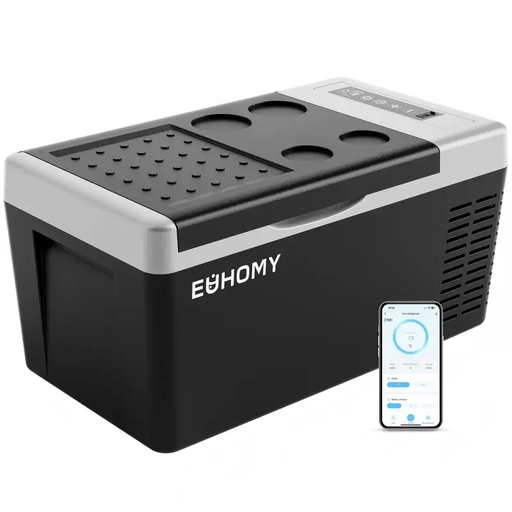
Why This Fits Their Persona: For serious mobile use like camping, caravanning or long-haul driving, reliable cooling is non-negotiable. This is a proper compressor-powered portable freezer that offers a wide temperature range (-20°C to +20°C).
It completely sidesteps the "cooler vs. fridge" trap by using a powerful compressor. This guarantees its performance, allowing it to freeze items even in a warm vehicle, unlike a basic thermoelectric cooler.
It features a 3-stage battery protection system to prevent draining your vehicle's battery. The anti-shock design also ensures it continues to run smoothly on bumpy roads, making it a reliable travel companion.

Why This Fits Their Persona: When you need extra, reliable cold storage for drinks, snacks or overflow groceries in a home office, garage or guest room, a proper compressor fridge is essential. This 46-litre model offers generous space in a compact, table-top footprint.
As a compressor-based fridge, it provides consistent cooling suitable for all food types. Its specified noise level of 41 dB is impressively quiet for a compressor model, avoiding the "surprise noise" pitfall in a living or working space.
The reversible door offers excellent installation flexibility, allowing you to place it in tight corners or awkward spaces without compromising access. The adjustable thermostat gives you proper control over food storage conditions.
We have compiled a complete, real-time list of products that fully satisfy these strict selection criteria and UK safety regulations.
1. How much does it cost to run a mini fridge in the UK? The running cost depends on the appliance's energy efficiency class and its annual energy consumption, measured in kilowatt-hours (kWh). For example, a compact fridge with an E rating and an annual consumption of around 85 kWh would cost approximately ?21 per year to run, based on an electricity rate of 25p per kWh. Always check the energy label for the specific kWh/annum figure to make an informed decision.
2. Can I keep a mini fridge in my bedroom? Yes, a mini fridge for a bedroom is a popular choice. To ensure it doesn't disturb your sleep, prioritise a model with a low noise rating. Thermoelectric coolers are often virtually silent. If you need a more powerful compressor model, look for one with a specified noise level of 42 dB or less.
3. What is the difference between a 12v cooler and a portable fridge? This is a crucial distinction. A 12v cooler or electric cool box typically uses thermoelectric technology, which cools the interior relative to the outside temperature. A portable compressor fridge, on the other hand, functions like your main kitchen appliance. It can achieve and maintain a specific cold temperature (and often freeze) regardless of how warm it is outside, making it the more reliable choice for storing perishable food on the move.