
24/7 Customer Support

Free returns

Same-day & Next-day Delivery

Quality Guaranteed

Unlock Your Welcome Offers: FREE Delivery | Up to 80% OFF | Free 30-day JoyPlus trial
Download the APP
A mini fridge can solve a practical space problem, but choosing the wrong type may leave you with limited storage, noticeable noise or disappointing cooling performance. UK shoppers often compare capacity and price first, while overlooking ventilation, power requirements and the difference between a compressor fridge and a thermoelectric cooler.
Before choosing a small fridge for a bedroom, office, student room, caravan or car, check these common buying traps.
A compact thermoelectric appliance may be advertised as a mini fridge, but it usually cools to a set number of degrees below the surrounding temperature rather than maintaining a fixed food-storage temperature. Its performance can reduce in a warm room, tent or parked vehicle.
These products are suitable for drinks, snacks, skincare and short journeys. They are not a direct replacement for a household fridge, and many cannot freeze food.
A fridge may offer useful litre capacity but still fail to fit beneath your worktop, inside a cupboard gap or beside a desk. Always compare the full external dimensions, including door clearance and ventilation space.
For example, an under-counter fridge around 54–55cm wide may fit a compact kitchen, but its depth and door swing still need checking. A portable car fridge must also fit securely on the seat or in the boot without blocking vents.
UK refrigeration products use the A–G energy label, with the annual energy consumption shown in kWh. The energy class alone does not tell you the likely cost. Multiply the annual kWh figure by your electricity tariff for a more useful estimate.
Also consider the appliance’s size. A larger fridge may use more electricity overall, even if it provides considerably more storage.
Choose capacity based on what you actually store:
Look for adjustable shelves, door bins and a crisper drawer if you plan to store fresh food. A drinks cooler with a dedicated chilled zone may be convenient, but check whether that section is intended for short-term use only.
A compressor-based compact fridge is generally more suitable for everyday food storage. It can maintain a more consistent internal temperature, although it may be heavier and produce a periodic compressor sound.
Thermoelectric models are lighter and often offer a cooler and warmer function. Their cooling is relative to room temperature, so check the stated temperature reduction rather than expecting freezer performance.
If you need frozen food, choose a fridge with freezer or a model with an icebox. Some under-counter fridges include a small freezer compartment, while larder fridges do not.
Noise matters in bedrooms, open-plan flats and offices. The listed models below specify noise levels of around 39–40 dB, although the perceived sound may vary with installation and room acoustics.
Leave the manufacturer-recommended ventilation clearance around the appliance. Do not cover heat-dissipation vents or place a portable fridge in direct sunlight.
For travel, check the power connection carefully. A 12V car fridge normally uses a vehicle socket, while some models also support 220–240V AC with a suitable adaptor. Disconnect portable appliances when the vehicle is parked for a long period to reduce the risk of draining the battery.
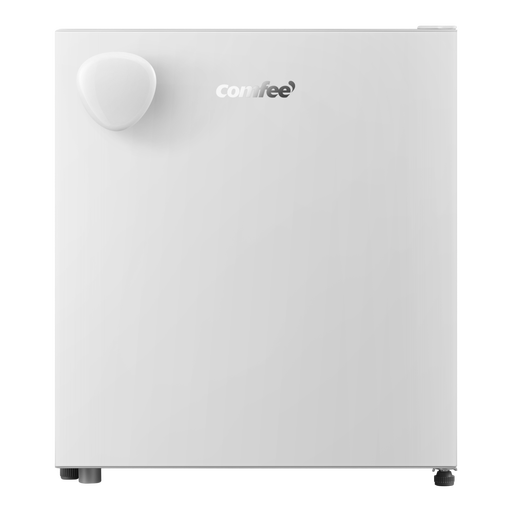
Why This Fits Their Persona: Its 43-litre capacity and 44.5cm width suit people living alone in a studio flat, student accommodation or compact bedroom.
The three-stage temperature adjustment and vegetable compartment provide more control than a basic drinks cooler.
43L capacity, 110 kWh annual consumption, height-adjustable storage and a compact 445mm body.
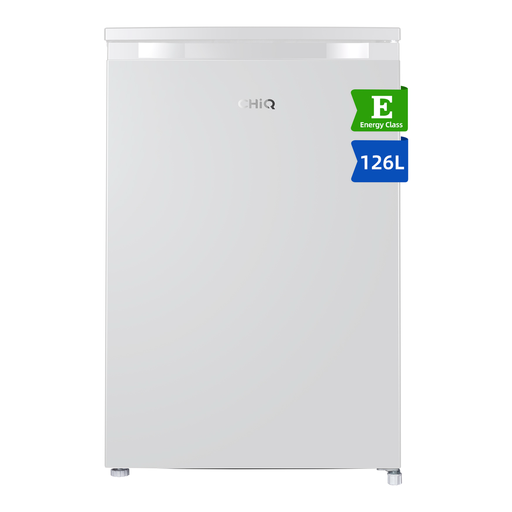
Why This Fits Their Persona: This freestanding larder fridge provides a fuller household-style layout for flats, utility rooms and open-plan kitchens.
Its 126L capacity, two shelves, crisper drawer and three door bins reduce the limitations of tiny personal fridges.
39 dB stated noise level, seven temperature settings, LED lighting and 545 × 562 × 850mm dimensions.
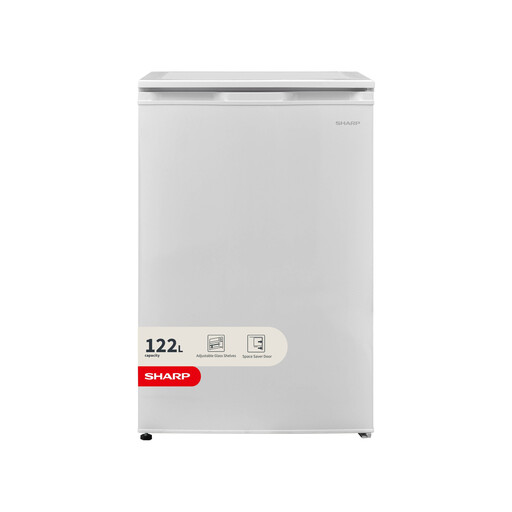
Why This Fits Their Persona: A practical choice for users needing a secondary fridge with an icebox, reversible door and under-counter dimensions.
The reversible hinge and flush-opening door help address awkward kitchen layouts; manual defrosting is clearly specified.
122L total capacity, 105L fridge space, icebox, 40 dB stated noise level and 145 kWh annual consumption.

Why This Fits Their Persona: Designed for commuters, campers and users wanting a personal drinks cooler in a car, bedroom or office.
The listing states that thermoelectric cooling cannot freeze, helping set realistic expectations before purchase.
AC and 12V DC power, cooling up to 18–22°C below ambient temperature and warming up to 66°C.
We have compiled a complete, real-time list of products that fully satisfy these strict selection criteria and UK safety regulations.
Yes, provided it has suitable ventilation and a stated noise level that works for you. Models around 39–40 dB may suit many bedrooms, but placement against a wall, uneven flooring and compressor cycling can affect perceived noise. Keep the door seal clean and avoid overfilling the appliance.
Check the product’s annual kWh figure on its energy information. For example, a model rated at 110 kWh per year would use approximately 110 units of electricity annually. Multiply this by your tariff to estimate the running cost. Actual consumption may vary with room temperature, settings, ventilation and how often the door is opened.
Only use it overnight when the vehicle’s power system is designed to supply it safely. A 12V car fridge may drain the battery if connected while the engine is off. For camping or longer stays, use a suitable portable power station or mains adaptor, keep vents clear and follow the manufacturer’s instructions.