
24/7 Customer Support

Free returns

Same-day & Next-day Delivery

Quality Guaranteed

Unlock Your Welcome Offers: FREE Delivery | Up to 80% OFF | Free 30-day JoyPlus trial
Download the APP
A mini fridge can solve a practical problem in a UK flat, student room, home office or campervan. It can keep drinks separate, create extra food storage or provide a convenient place for skincare and snacks. However, compact appliances are not all designed for the same job.
The most common buying mistakes come from three marketing traps:
Before choosing a small fridge, match its cooling technology, dimensions and power supply to the way you intend to use it.
There are two main types of compact refrigerator.
Thermoelectric mini fridges use a cooling chip rather than a compressor and refrigerant. They are generally compact and lightweight, making them suitable as a bedroom fridge, office fridge or personal skincare cooler. Their performance is linked to the surrounding temperature. For example, the AstroAI 4-litre model is specified to cool up to 20°C below ambient temperature and warm items up to 66°C. It cannot freeze.
A compressor cooler is more suitable for camping, long-distance driving or storing food that needs a controlled low temperature. The EUHOMY 49.4-litre model has a stated temperature setting range of -20°C to +20°C, allowing it to work as either a refrigerator or freezer. A compressor system may be heavier and can produce more operational noise, so check the stated decibel level and available space.
Consider both the advertised litres and the actual space available in your room, vehicle or kitchen. A 4–6-litre portable mini fridge may hold around six to eight standard drinks cans, while an under-counter fridge of 82–88 litres is designed for everyday groceries.
Measure:
For instance, the AstroAI 4-litre unit has external dimensions of 24 × 17.5 × 25.5 cm, while the COMFEE’ 88-litre under-counter fridge measures 44.5 × 47 × 82.7 cm. These serve very different purposes despite both being described as compact.
A 12V fridge is designed for a suitable vehicle accessory outlet, whereas an AC/DC mini fridge can be used at home and in a car. Check whether the product includes both cables and whether your vehicle socket remains powered when the ignition is off.
For a home appliance, look at the UK energy label and annual consumption in kWh. This gives a more useful comparison than a vague “energy-saving” description. The Sonlu 82-litre refrigerator is listed with Energy Class E and annual consumption of 84 kWh, while the EUHOMY 49.4-litre compressor cooler is listed as Energy Class C. Actual costs depend on your electricity tariff and usage conditions.
Never block ventilation openings. Portable compressor fridges also need to be secured in a car, van or boat to prevent movement during sharp turns or uneven travel.
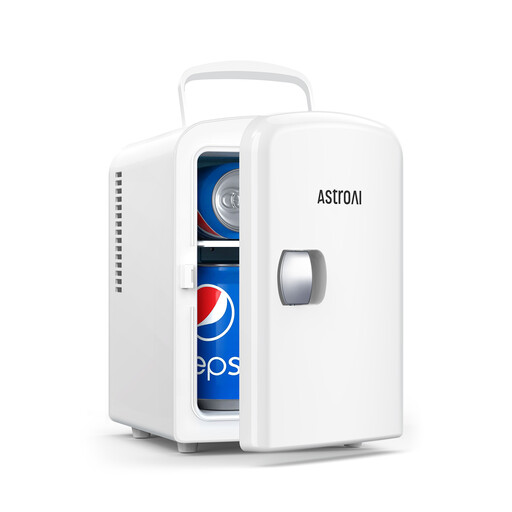
Why This Fits Their Persona: A practical entry point for a student room, desk, bedroom or occasional car trip where a full-size appliance would be unnecessary.
Its listed cooling limit clearly states that this thermoelectric unit cannot freeze, helping prevent confusion with a compressor freezer.
4-litre capacity, AC and 12V DC cables, plus cooling and warming modes.
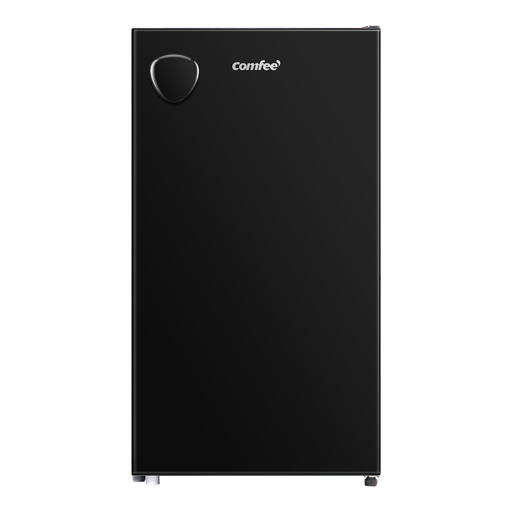
Why This Fits Their Persona: A suitable choice for a studio flat, home office, guest room or shared kitchen requiring organised daily food and drink storage.
The stated 88-litre capacity and 44.5 cm width make it easier to compare with the available space before ordering.
Reversible door, removable glass shelves, crisper drawer, interior light and Energy Class E.
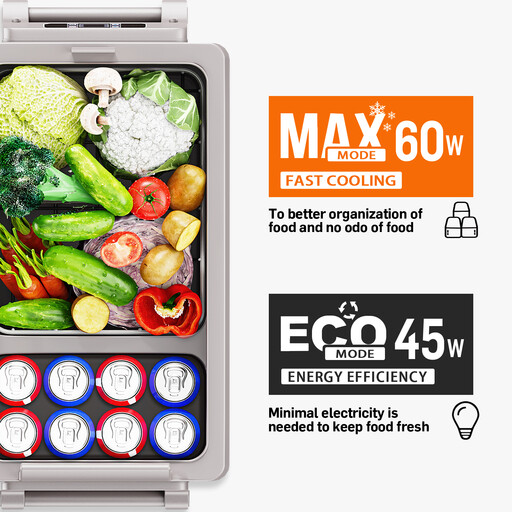
Why This Fits Their Persona: Built around travel, camping, boating, campervans and extended driving where chilled or frozen storage is required away from a kitchen.
Its compressor system, dual storage areas and stated -20°C to +20°C range distinguish it from a simple drinks cooler.
49.4-litre capacity, 12/24V DC and 240V AC compatibility, battery protection and adjustable temperature control.
Place a compact refrigerator on a stable, level surface and keep the ventilation area clear. Do not push an under-counter fridge tightly against a wall unless the manufacturer’s clearance requirements allow it. A reversible door still needs enough room to open fully.
For a car fridge, secure the appliance so it cannot slide during braking or cornering. Check the vehicle’s accessory outlet rating and disconnect the unit if the car will be parked for a long period. For home use, confirm that the appliance is designed for the UK’s 220–240V AC supply.
Do not overload shelves or block internal air circulation. Clean door seals regularly, keep hot food out until it has cooled appropriately and follow the supplied instructions for food storage and defrosting.
We have compiled a complete, real-time list of products that fully satisfy these strict selection criteria and UK safety regulations.
A small fridge can work well in a bedroom if it has suitable noise specifications, enough ventilation and a stable power connection. Thermoelectric models are often compact, but check the stated operating noise and remember that continuous power is required for cooling.
Only some compressor models are designed to freeze. A thermoelectric portable mini fridge generally cools relative to ambient temperature and cannot freeze. Check the listed temperature range before storing frozen food.
Running cost depends on the appliance’s annual kWh figure, electricity tariff, room temperature, usage and ventilation. Compare the energy label and annual consumption rather than relying only on terms such as “energy-efficient fridge”. Avoid leaving the door open repeatedly and maintain clear airflow around the appliance.